Languages
Friday, November 20, 2026



News and Views from the Global South
Gender
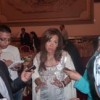
EGYPT: First Woman Candidate Begins Campaign
When post-revolution Egypt holds presidential elections next year, Buthaina Kamel is set to become the first woman in the country's modern history to run for the highest office. Although she knows her chances of winning are slim to none, she says she's doing it out of principle.
DR CONGO: Women Candidates Needed
Women make up just 12 percent of the roughly 18,000 candidates who will stand for election to parliament in the Democratic Republic of Congo's Nov. 28 elections.PHILIPPINES: Prisoners Find Their E-Families
For the first time since giving birth in prison 13 years ago, Sarah, an inmate in the Philippines’ largest detention centre for female convicts, saw her daughter via Skype video chat in her prison cell.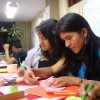
In Latin America, Closing the Gender Gap Brings Fresh Challenges
Over the past four decades in Latin America and the Caribbean, women have made remarkable strides in education, health, labour, and beyond, with girls now outperforming boys in school, the rate of working women more than doubling in many countries, and female participation rising in politics.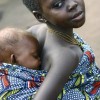
Seven Billion People, Seven Billion Possibilities, Says UNFPA
When Adnan Nevic was born in Bosnia-Herzegovina back in October 1999, he was hailed as the world's six billionth person, triggering a visit to Sarajevo by then Secretary- General Kofi Annan.POPULATION: Youth Bulge Adds to Pakistan’s Woes
Pakistan’s population explosion is posing a greater danger than militancy and religious intolerance, says noted medical doctor and demographer Farid Midhet.
Citizens of Nowhere
When Mona Kareem, a member of the Bidoun population of Kuwait, was 11 years old, a neighbour Kuwaiti woman asked her where she was from. When Kareem answered, "I am from Bidoun," the woman laughed at her. "There is no country called Bidoun. There is no Bidoun."
NICARAGUA: “We Women Want to Be Heard”
Fátima Hernández, a young Nicaraguan rape victim who has become a symbol in her country in her fight for justice, is now working to help women in a similar situation, and preparing to take her case to the Inter-American Commission on Human Rights.
MEXICO: Women Reject Normalisation of Gender Violence
Ninety percent of the non-governmental organisations in Mexico are founded and run by women, says journalist and women's rights activist Lydia Cacho Ribeiro, even as crimes against women remain cloaked in impunity.TUNISIA: Women Seek to Set Their Stamp
Nine months after a popular election toppled the dictatorship of former Tunisian president Zine Abidine Ben Ali, voters headed to the polls Sunday to cast their ballots for fresh leaders to rewrite the laws of the country's political system.DR CONGO: No Hope for Free and Fair Elections
With six weeks to go before the presidential and parliamentary elections in the Democratic Republic of Congo, civil society organisations say the elections will not be fair, as many doubt the ability of the country’s electoral authorities to ensure transparency.
Q&A: ‘Soil is Key to Global Warming, Food Security’
Luc Gnacadja, in his second three-year term as executive secretary, United Nations Convention to Combat Desertification (UNCCD), is widely seen as delivering on his commitment to manage the world's drylands.
GHANA: The Woes of Women Amid Climate Change
As streams dry out, groundwater levels dwindle, and forests and other vegetation yield to droughts or sever storms, women who live their lives in the rural areas of Ghana have to spend more time and energy finding water and food for their families.
SOUTH KOREA: Drylands Meet Deserts Gender
Delegates to the United Nations Convention to Combat Desertification’s (UNCCD) meeting underway in this South Korean city are convinced that women, though affected most by desertification, hold the key to addressing hunger through land regeneration.
PORTUGAL: Crisis Pushes Women into Prostitution
The severe financial and economic problems in Portugal are driving many women to desperation and pushing them into prostitution as a last resort to support their families.LIBERIA: Former Warlord Backs Johnson-Sirleaf for Second Term
Former warlord Prince Johnson, who placed third in Liberia’s election last week, has endorsed the re-election bid of President Ellen Johnson-Sirleaf, who was named a joint winner of the Nobel Peace Prize just days before the vote.
SOMALIA: Death Threats Fail to Stop Women’s Basketball
When Al-Shabaab militants called the Somali national women's basketball team captain, Suweys Ali Jama, and told her she had two options: to be killed or to stop playing basketball, she decided that neither was really an option at all.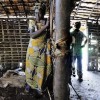
DR CONGO: No End to Mass Rapes: “It’s a Miserable Life”
Angeline Mwarusena, 61, sits on a small wooden bench in front of her hut, head bent, shoulders slumped. Her voice is barely audible. Four years ago, three soldiers from the Democratic Forces for the Liberation of Rwanda (FDLR) entered her home, hit her and raped her repeatedly. One after the other.
PAPUA NEW GUINEA: Women Call the Shots on Mega Copper Mine
Whether the world’s largest open-cut mine on this island territory of Papua New Guinea (PNG) will resume copper and gold production, after being mothballed for 22 years, will depend on how satisfied matrilineal landowners are with the proposals.
PERU: Campesinas Protect Traditional Diversity of Food Crops
Dina Apomayta is heir to the 3,500-year legacy of the Andean cultures of Tiwanaku and Lupaca, which venerated the land. And she and many other rural women in Peru continue to nurture the agricultural biodiversity that has been handed down from generation to generation.
Women in Rural Argentina Speak Out on Climate Change
Rural and indigenous women in northern Argentina, hit hard by the expanding agricultural frontier, deforestation and the spraying of toxic pesticides, spoke out about their problems and set forth proposals for discussion at the next global summit on climate change.« Previous Page — Next Page »


Women make up half the world's population, but don't nearly share half of the world's wealth, well-being and opportunity. Two-thirds of the world poor are women, disproportionally exposing women to precarious living conditions, disease and unmitigated natural disasters. The media, meanwhile, remains a male-dominated sector in much of the world, contributing to women's voices lacking a crucial amplifier to put their concerns on political agendas and unleash the development potential of their ingenuity. Rather than then stereotypical victims of local and global forces, women are also organizer, innovators, conservators and community builders. These are some of their stories.

The Week with IPS

NEXT STOP - SDGs
Tracking global progress towards a sustainable world
Tracking global progress towards a sustainable world
