Languages
Wednesday, August 19, 2026



News and Views from the Global South
Latin America & the Caribbean

Pandemic Hit Domestic Workers Especially Hard in Brazil
"Woman, poor, black and illiterate" - most domestic workers suffer quadruple discrimination in Brazil, which made them more vulnerable to the COVID-19 pandemic, says one of their leaders, Gloria Rejane Santos.
Tension over Migration Awaits New President and New Constitution in Chile
The failure of Chile's immigration policy, with its toll of deaths, xenophobic sentiments but also shows of solidarity, will be a pressing matter for the incoming administration of Gabriel Boric, who takes office on Mar. 11, and for the drafters of the new constitution, who will include the issue in the text that is to be ready in July.
Mexico Needs a Mining Industry Model for the Energy Transition
The debate in Mexico and at an international level is focused on certain minerals that are fundamental to the energy transition, such as cobalt, lithium and nickel. But there are other indispensable minerals that remain in the background.
Struggle in Guatemala Offers Hope for Latin America’s Indigenous People
A struggle for the defense of their territories waged by indigenous Maya Q'eqchi' communities in eastern Guatemala could set a historic precedent for Latin America's native peoples because it would ensure not only their right to control their lands but also their natural resources, denied for centuries.
Agricultural Power, Waning Industry Dictate Brazil’s Future
With its accelerated growth agriculture has emerged as a key sector of Brazil's economy, but it is failing on its own to spread prosperity and reduce poverty and inequality, with industry in decline.
Spate of Water Projects in Mexico Ignore Impacts
The Mexican government is prioritizing the construction and modernization of mega water projects, without considering their impacts and long-term viability, according to a number of experts and activists.
Scholar Spotlights Early Role of Rastafari Women
The Rastafari movement, which began in Jamaica during the 1930s, has become internationally known for its contribution to culture and the arts, as well as for its focus on peace and “ital” living. Major icons include reggae musicians Bob Marley, Peter Tosh, Bunny Wailer and Burning Spear, with the movement overall projecting a very male image.
Argentina Seeks a Way Out (Again) of its Economic and Social Labyrinth
Accustomed for decades to recurring economic crises, and hit hard in recent years by a steady loss of purchasing power, Argentines were informed on Friday Jan. 28 of a last-minute agreement with the IMF which, in the words of center-left President Alberto Fernández, takes "the noose off their necks".
Damaged Natural Infrastructure Exacerbates Urban Flooding in Brazil
People living in Jardim Pantanal, a low-income neighborhood on the east side of the Brazilian megalopolis of São Paulo, suffer floods every southern hemisphere summer. Many residents remember the three months their streets and homes were under water in late 2009 and early 2010.
Tap Community to Stop Human Trafficking, says Survivor
A single line at the end of the United States State Department 2021 Trafficking in Persons Report made headlines in Jamaica and had many perturbed. “Some police allegedly facilitated or participated in sex trafficking,” it read.
Heatwave and Drought Hit South America’s Crops and Economy
Brazil, Argentina and Paraguay, the three major agricultural producers in South America, are currently experiencing a prolonged period of drought and low water levels in their main rivers. This is severely impacting harvests, as well as river transport of important summer crops, with maize and soybeans the main casualties.
Community Organization and Solidarity in Peru Tackle Hunger in Pandemic
It's nine o'clock in the morning and Mauricia Rodríguez is already peeling garlic to season the day's lunch at the Network of Organized Women of Villa Torreblanca, one of more than 2,400 solidarity-based soup kitchens that have emerged in the Peruvian capital in response to the worsening poverty caused by the partial or total halt of economic activities in the country due to COVID-19.
Count Me in: Working Together for Disability Inclusion in Guatemala
“Persons with disabilities are capable and equal. It is time the world understands that,” says Antonio Palma, a UN Volunteer at the Resident Coordinator’s Office in Guatemala. Antonio, who has a visual impairment, expresses what many other persons with disabilities feel. Ignored, mistreated, misunderstood, underestimated, condescended to.
Afro-descendants in Costa Rica: A Movement for Justice & Equity
Jan André is a cheerful and outgoing young man, a superb dancer, and aspiring schoolteacher. Indeed, he wants to become the best schoolteacher in Costa Rica. Fortified by his own will and the encouragement of his family, he overcame violence and adversity to become an outstanding university student.
Discriminatory Sexual Violence Laws in Latin America Stigmatize Adolescent Victims of Abuse
Across Latin America and the Caribbean there is a culture of impunity for perpetrators of sexual violence. Crimes against women and girls often go unpunished and under-reported due to societal misconceptions about victimhood and the nature of sex crimes.
Uruguay Launches Sovereign Bond Linked to Climate Targets
Sustainable finance continues to expand in Latin America, as governments and companies take advantage of growing interest among investors in instruments that protect biodiversity and respond to the climate crisis. In 2020, more than US$16 billion of green, social and sustainable bonds were issued in the region.
Sugarcane Gas Opens New Horizons for Energy Agriculture – Video
 Nothing is wasted from sugarcane, one can conclude from the biomethane production process at the Cocal plant, a Brazilian company that produces sugar, ethanol, electricity and other by-products from sugarcane agro-industrial waste.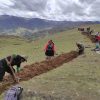
Rural Women in Peru Seed Water Today to Harvest It Tomorrow
"When I was a little girl we didn't suffer from water shortages like we do now. Today we are experiencing more droughts, our water sources are drying up and we cannot sit idly by," Kely Quispe, a small farmer from the community of Huasao, located half an hour from Cuzco, the capital of Peru's ancient Inca empire, told IPS.
Green Gas: Energy as a By-Product of Sugarcane in Brazil
First came sugar. For four centuries, it was the main sugarcane product in Brazil. But since the 1970s sugarcane has grown and diversified as a source of energy: ethanol, electricity and biogas.
Ecuador and the Pandora Papers: Death Threats and Impunity
In a ceremony in early October, the president of Ecuador and my opponent in the presidential elections, Guillermo Lasso, issued a warning to those "daring who seek to scrutinize" his assets. He was referring to the Pandora Papers published by the International Consortium of Investigative Journalists (ICIJ), which revealed how dozens of world leaders - including Lasso - hid billions of dollars to avoid paying taxes.
Energy Inequality in Latin America Exacerbated by Pandemic, High Prices
The effects of the covid-19 pandemic and high energy prices have had an impact on the consumption of polluting fuels in Latin America and the Caribbean, exacerbating energy poverty in the region.« Previous Page — Next Page » *#*

The Week with IPS

NEXT STOP - SDGs
Tracking global progress towards a sustainable world
Tracking global progress towards a sustainable world

