Languages
Friday, November 27, 2026



News and Views from the Global South
Latin America & the Caribbean

Novel Joint Committee Enhances Relations between the UAE and Panama
The visit by the United Arab Emirates foreign minister, Sheikh Abdullah bin Zayed Al Nahyan, to Panama ended Thursday Feb. 11 with the creation of a novel Joint Cooperation Committee on trade and investment.
Eight Cooperation Accords Strengthen Ties between Colombia and UAE
“I am honoured to be in Colombia at a time when important steps towards peace are being taken,” the foreign minister of the United Arab Emirates, Sheikh Abdullah bin Zayed Al Nahyan, said after meeting with Colombian President Juan Manuel Santos.
Microcephaly Revives Battle for Legal Abortion in Brazil
The Zika virus epidemic and a rise in the number of cases of microcephaly in newborns have revived the debate on legalising abortion in Brazil. However, the timing is difficult as conservative and religious groups are growing in strength, especially in parliament.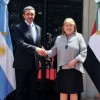
Argentina and United Arab Emirates Open New Stage in Bilateral Relations
With United Arab Emirates’ foreign minister Sheikh Abdullah bin Zayed Al Nahyan’s visit to Argentina, the two countries launched a new stage in bilateral relations, kicked off by high-level meetings and a package of accords.
Women of Haitian Descent Bear the Brunt of Dominican Migration Policy
A middle-aged woman arranges bouquets of yellow roses in a street market in Little Haiti, a slum neighbourhood in the capital of the Dominican Republic. “I don’t want to talk, don’t take photos,” she tells IPS, standing next to a little girl who appears to be her daughter.
Small-scale Fishing Is About Much More than Just Subsistence in Chile
“Fishing isn’t just for making a living, it’s also enjoyable,” said Pedro Pascual, a 70-year-old fisherman who has been taking his small boat out to sea off Chile’s Pacific coast in the early hours of the morning almost every day for the past 50 years, to support his family.
Brazil Wages War against Zika Virus on Several Fronts
Brazil is deploying 220,000 troops to wage war against the Zika virus, in response to the alarm caused by the birth of thousands of children with abnormally small heads. But eradicating the Aedes aegypti mosquito requires battles on many fronts, including science and the pharmaceutical industry.
Tackling Climate Change in the Caribbean: Natural Solutions to a Human Induced Problem
The world is still celebrating the Paris Agreement on Climate Change, the main outcome of the 21st Conference of the Parties of the United Nations Framework Convention on Climate Change. Its ambitions are unprecedented: not only has the world committed to limit the increase of temperature to “well below 2°C above pre-industrial levels,” it has also agreed to pursue efforts to “limit the temperature increase to 1.5 °C.”
United Arab Emirates Strengthens Ties with Argentina’s New Government
The new government of Argentina and the United Arab Emirates (UAE) are strengthening the relationship established by the previous administration, at a time when this South American country is seeking to bring in foreign exchange, build up its international reserves and draw investment, in what the authorities describe as a new era of openness to the world.
Energy from All Sources, a Game of Chance in Brazil
Brazil, which boasts that it has one of the cleanest energy mixes in the world, is now plagued by corruption, poor market conditions, and bad decisions – a near fatal combination.
Hydropower at Front and Centre of Energy Debate in Chile, Once Again
The Chilean government’s approval of a hydroelectric dam in the Patagonia wilderness has rekindled the debate on the sustainability and efficiency of large-scale hydropower plants and whether they contribute to building a cleaner energy mix.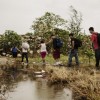
Mexico Creates First and Second-class Migrants
The Mexican government’s decision to grant humanitarian visas to Cuban migrants stranded in Costa Rica contrasts sharply with the poor treatment received by the tens of thousands of Central American migrants who face myriad risks as they make their way through this country on their long journey to the United States, social organisations and activists complain.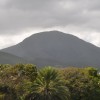
Nevis Has A Date With Geothermal Energy
Legislators on the tiny volcanic island of Nevis in the northern region of the Lesser Antilles say they are on a path to going completely green and have now set a date when they will replace diesel-fired electrical generation with 100 per cent renewable energy.
Precarious Nature of Public Employment Facilitated Mass Lay-offs in Argentina
Argentina’s new conservative government has already laid off 20,000 public employees since early December. Analysts have described the phenomenon as a “purge” of “militants” who supported the last administration, facilitated by the precarious employment conditions in the public sector, despite the steps taken to provide greater job stability over the last decade.
Caribbean Biodiversity Overheated by Climate Change
The nearly 7,000 islands and the warm waters of the Caribbean Sea are home to thousands of endemic species and are on the migration route of many kinds of birds. Preserving this abundant fauna requires multilateral actions in today’s era of global warming.
Jamaica’s Climate Change Fight Fuels Investments in Renewables
By year’s end, Jamaica will add 115 mega watts (MW) of renewable capacity to the power grid, in its quest to reduce energy costs and diversify the energy mix in electricity generation to 30 per cent by 2030.
Innovative Project to Provide Renewable Energy 24/7 to Chilean Village
A novel energy project in Chile will combine a pumped-storage hydroelectric plant operating on seawater and a solar plant, to provide a steady supply of clean energy to a fishing village in the Atacama Desert, the world’s driest.
Plan to Overcome Costa Rica’s Cuban Migrant Crisis Takes Off
After a nearly two-month wait, a group of 180 Cuban migrants, of the roughly 8,000 stranded in Costa Rica in their attempt to reach the United States, continued on their way as a result of a complex logistical process that emerged from diplomatic negotiations involving several countries in the region.
Drought Boosts Science in Dominican Republic
The recent lengthy drought in the Dominican Republic, which began to ease in late 2015, caused serious losses in agriculture and prompted national water rationing measures and educational campaigns.
Cash for the Climate Please, Caribbean Leaders Lament
Funding to address the financial flows needed for adaptation and mitigation of climate change remains an issue of concern for the Caribbean.
Soy Boom Revives Amazon Highway
The BR-163 highway, an old dream of the Brazilian military to colonise the Amazon jungle, was revived by agroexporters as part of a plan aimed at cutting costs by shipping soy out of river ports. But the improvement of the road has accentuated problems such as deforestation and land tenure, and is fuelling new social conflicts.« Previous Page — Next Page » *#*



The Week with IPS

NEXT STOP - SDGs
Tracking global progress towards a sustainable world

