Languages
Friday, November 13, 2026



News and Views from the Global South
Natural Resources

Fossil Fuel Subsidies Dampen Shift Towards Renewables
Despite evolving public awareness and alarm over climate change, subsidies for the production and consumption of fossil fuels remain a stubborn impediment to shifting the world’s energy matrix towards renewable sources.Philippines Makes Tentative Truce With Islamists
After two years of intensive negotiations, the Philippine government and the country’s largest rebel group, the Moro Islamic Liberation Front (MILF), have signed a final peace agreement, which paves the way for a lasting resolution of one of the world’s longest-running intra-state conflicts.
Egypt’s Generals Face a Watery Battle
Heavy reliance on water intensive crops, a major upstream dam project for the Nile basin, and rising groundwater levels pushing at pharaoh-era monuments will be pressing issues for the next Egyptian president - whether military or civilian.
U.S. Selling Coal Mining Rights at Undervalued Prices
The U.S. government is violating federal leasing policies when it sells land to certain coal-mining companies, according to a new audit from an official watchdog agency.
After Slowdown, Global Fight for Land Rights at Tipping Point
Global trends towards a strengthening of legal rights over land for local and indigenous communities appear to have slowed significantly in recent years, leading some analysts to warn that the fight for local control over forests has reached an inflection point with a new danger of backtracking on previous progress.
Caribbean Walks the Talk on Clean Energy Policy
Despite having an abundance of wind and sunshine, Caribbean countries have found that going green is requiring significant shifts in policy, and most importantly, significant financing.
Q&A: Africa’s Tremendous Progress Amid War and Famine
The issue of peace and security, particularly in South Sudan and the Central African Republic, are expected to dominate the discussions at the African Union’s (AU) semi-annual summit being held in Addis Ababa, Ethiopia, this week.
U.S. Tightens Development Safeguards
Development activists and rights watchdogs are applauding a surprise strengthening of environmental and human rights policies governing U.S. development funding and overseas financial assistance.U.S. Agency Accused of Safeguards Failure in Liberia Investment
Hundreds of Liberians have filed a complaint accusing a U.S. government agency of failure to carry out due diligence or ensure that safeguards were followed for investments made to a failed biomass project in Liberia.
The Future According to Mr. Clean (Energy)
Jigar Shah likes math. It inspires him. After all, crunching numbers allowed him to convince wary investors of the money-making potential of solar energy, allowing him to ignite an industry that was crippled by roadblocks.
Dammed Rivers Create Hardship for Brazil’s Native Peoples
The Itaparica hydroelectric power plant occupied land belonging to the Pankararu indigenous people, but while others were compensated, they were not. They have lost land and access to the São Francisco river, charge native leaders in Paulo Afonso, a city in northeastern Brazil.
Voluntary Fracking Certification Kicks Off in U.S.
A controversial new certification process that could cover a significant portion of the U.S. oil-and-gas “fracking” industry began accepting applications on Tuesday, indicating the formal start of an initiative that has the backing of some key industry players and some environmentalists – but by no means all of either.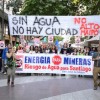
Alto Maipo Project Endangers Santiago’s Water Supply
A hydroelectric project under construction near the Chilean capital poses a threat to the supply of drinking water to more than six million people living in the Santiago Metropolitan Region.
Africa’s Billions that the Poor Won’t Touch
With its two-trillion-dollar economy, recent discoveries of billions of dollars worth of minerals and oil, and the number of investment opportunities it has to offer global players, Africa is slowly shedding its image as a development burden.
Pacific Trade Deal “Backtracking” on Environment Safeguards
An accord that would be the largest trade agreement ever negotiated appears to be rolling back environmental safeguards that have been a key part of U.S.-led trade deals for much of the past decade.
Tanzania Struggles to End Clashes Between Farmers and Herders
Tanzanian authorities are finding it increasingly difficult to deal with ongoing conflicts between farmers and pastoralists as they fight over limited land and water resources in this East African nation.
Eucalyptus Trees Make Way For Food Crops
 A project to reclaim agricultural land lost to eucalyptus plantations is bearing fruit in Cameroon.

Despite Legal Attacks, Conflict Minerals Ban Gets Stronger
Major manufacturing and business groups on Tuesday urged a court here to roll back a new U.S. regulation that would soon require major manufacturers to ensure that their global supply chains are free of minerals used to fund violence in the Great Lakes region of central Africa.
Christmas Storm Underlines Caribbean’s Vulnerability
Guyanese President Donald Ramotar says the death and destruction caused by intense rainfall in three Caribbean Community (CARICOM) countries over the Christmas holidays is a sign that the region has no time to lose in fortifying its resiliance to climate change.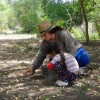
Seedpods Worth More than Gold in Argentina’s Arid North
Tired of the drought driving away their men and killing their livestock, the women of Guanaco Sombriana, a town in northern Argentina, have found a new source of income by using the seedpods of native trees that up to now merely provided shade in this arid landscape.
Farm Forecasts Try to Decode a Capricious Climate
In the southwest peninsula of Cedros, one of Trinidad’s driest areas, Jenson Alexander grows the cocoa used for many years by the British chocolate giant Cadbury.« Previous Page — Next Page »


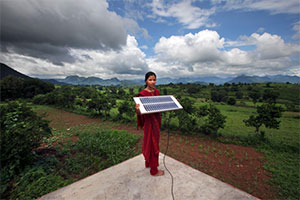 Bringing clean energy to rural India. Credit: Abbie Trayler-Smith / Panos Pictures / Department for International Development
Large reserves of oil, gas and minerals in developing countries generate opulent revenues. They could be used to stimulate economic growth and reduce poverty, but often result in environmental destruction and conflict, benefiting large companies and corrupt governments. Furthermore, competition over natural resources often manifests through geopolitical conflict. For example, before the US-Iraq war, Iraq’s domestic oil industry was nationalized. With US aggression came weakened Iraqi institutions and foreign intervention, thus eventually leading to the privatization of Iraqi oil, leaving the industry now largely dominated by Western companies. As another example, China’s rising investments within the lithium sector in South America are increasing the US-China rivalry across the Western Hemisphere. Notably, Bolivia has the largest reserves of lithium in the world, and the nation’s state-owned lithium extraction firm recently signed a contract with China’s CBC Consortium, while rejecting the entry of Western firms into the nation. In Bolivia’s case, rising Chinese investment in the nation’s lithium sector also raises concerns about environmental sustainability and the sociopolitical rights of Indigenous communities. More broadly, Sub-Saharan Africa holds nearly 30% of global reserves of critical minerals required for low-carbon technologies. Despite this, the region attracts less than 10% of global exploration investment, depicting a critical barrier to both the clean energy transitions and Sub-Saharan Africa’s economic development. Furthermore, resource wealth continues to fuel conflict like Sudan’s civil war, which has led to 9.1 million internally displaced people and is intensely connected to competition over gold, water, and agricultural land. IPS covers news about major oil, gas, and mining projects, their effects on the environment and local communities, and the ideas and actions of the interest groups involved.

The Week with IPS

NEXT STOP - SDGs
Tracking global progress towards a sustainable world
Tracking global progress towards a sustainable world
