Languages
Friday, November 13, 2026



News and Views from the Global South
Natural Resources

Mexican Communities On Guard Against Thirst for Oil
The Terra 123 oil and gas well in the southeastern Mexican state of Tabasco was in flames since late October, just 1.5 km from a community of 1,500 Oxiacaque indigenous villagers, who were never evacuated.
Baka Caught in the Maze of Modernism
Essomba Dominique, a Baka man from Mindourou in Cameroon’s East Region, sits dulled-eyed in front of his hut, known in the Baka language as the ‘mongoulou’.
Every Eucalyptus Felled Equals Gallons of Water
Sabina Shey Nkabiy, a farmer in Cameroon's North West Region, moves around these days with a million-dollar smile on her face. The mother of six, who used to trek 10 kilometres a day to farm, now harvests food in her backyard.
Farmers in Mozambique Fear Brazilian-Style Agriculture
Rodolfo Razão, an elderly small farmer in Mozambique, obtained an official land usage certificate for his 10 hectares in 2010, but he has only been able to use seven. The rest was occupied by a South African company that grows soy, maize and beans on some 10,000 hectares in the northeast of the country.
Coal Trains Run into Stiff Resistance in U.S.
Citizens and activists in the U.S. Pacific Northwest are fighting three different proposed coal terminals, including one in Oregon and two in Washington.Need for Firewood Raises Threat for Georgia’s Christmas Tree Trade
The South Caucasus country of Georgia is a source of much sought-after Christmas tree seeds. But its own forests are now under threat, as firewood is in increasing demand as a cheap source of heat for homes, schools and hospitals.
Mystery Oil Spill Turns Miles of Trinidad’s Beaches Black
Whether it is a case of sabotage or simply poor management practices by the state-owned PETROTRIN, as the union claims, a mysterious oil spill in south Trinidad is wreaking havoc on homes and wildlife in the area.
Nevis Embarks on Geothermal Energy Journey
The tiny island of Nevis in the northern region of the Lesser Antilles is one of the few remaining unspoiled places in the Caribbean. It is now seeking to become the greenest, joining a growing list of Caribbean countries pursuing clean geothermal power.
Food Security Can Come in Tiny, Wiggly Packages
It is known as the land of copper to the outside world, but there’s another c-word that does a roaring trade in Zambia, albeit locally - caterpillars.

U.S. Wind Industry Buffeted by Uncertainty
The U.S. wind industry looks set to enter a period of uncertainty, with an important government subsidy expiring at the end of the month and no clear plan for lawmakers to work towards an extension.
Mundurukú Indians in Brazil Protest Tapajós Dams
It took them three days to make the 2,000-km journey by bus from their Amazon jungle villages.
In Home Gardens, Income and Food for Urban Poor
Flowers burst out of old tires and rows of pepper plants fill recycled plastic tubs as herbs pop out of old pipes. As utilitarian as it is cheery, this rooftop array is one of several urban agriculture projects that are significantly improving livelihoods for the urban poor in this sprawling city.
Battling Extractive Industries in Romania
Authorities in Romania have been attempting to bulldoze through public opposition to push through controversial extractive projects such as gold mining at Rosia Montana and shale gas drilling at Pungesti.Off-Radar Gold Mine Sustains Kyrgyz Mountain Village
A generation after independence from the Soviet Union, most villages in Kyrgyzstan are ramshackle, broken places, scenes of hopelessness and despair. Able young people leave – for Bishkek, the capital, or for menial jobs in Russia. But thanks to a secret gold mine, one little mountain hamlet is different.
WTO Urged Not to Treat Water Like Widgets
As government representatives gather Tuesday in Indonesia for what could be final negotiations towards a global trade agreement under the World Trade Organisation (WTO), environmentalists and social justice campaigners are urging them to specify that water resources cannot be treated as commodities.
Uruguay’s Mega-Mining Law in Place – Before the Minerals
The Uruguayan government, which recently passed a law on large-scale mining, does not actually have a clear idea of the country’s mineral wealth and has only just now proposed a geological study to find out.
Saving Children From Loggers
Logging is the largest industry in the Solomon Islands, an archipelago located northwest of Fiji, where 80 percent of the islands are covered in tropical rainforest. But, although timber accounts for 60 percent of this South Pacific nation’s export earnings, most local communities have experienced no beneficial development.
When Calamity Strikes, Think Local
More than a month after Cyclone Phailin battered Orissa, tribes in the eastern Indian coastal state are still feeling its wrath. Besides the damage to their homes and hearths, it has also meant a loss of their traditional food.
Storms, Flooding Can Unleash a Toxic Soup
It’s a dirty, smelly business, but wastewater is gaining prominence across the Caribbean as countries from Jamaica in the west to Guyana in the south increasingly recognise its effects on the environment and the importance of improving its management.
Arab World Sinks Deeper into Water Crisis, Warns UNDP
The Arab world is widely perceived as blessed with an embarrassment of riches: an abundance of oil (Saudi Arabia), one of the world’s highest per capita incomes (Qatar), and home to the world's tallest luxury building (United Arab Emirates).
In Haiti, Planting Trees Is No Simple Matter
Reforestation and soil conservation programmes costing many thousands of dollars in this rural community have resulted in hundreds of small ledges built of straw or sacks of earth. In certain areas, the earthworks seem to be lasting, but in others, they are disintegrating.« Previous Page — Next Page »


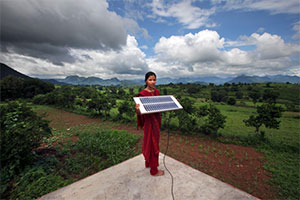 Bringing clean energy to rural India. Credit: Abbie Trayler-Smith / Panos Pictures / Department for International Development
Large reserves of oil, gas and minerals in developing countries generate opulent revenues. They could be used to stimulate economic growth and reduce poverty, but often result in environmental destruction and conflict, benefiting large companies and corrupt governments. Furthermore, competition over natural resources often manifests through geopolitical conflict. For example, before the US-Iraq war, Iraq’s domestic oil industry was nationalized. With US aggression came weakened Iraqi institutions and foreign intervention, thus eventually leading to the privatization of Iraqi oil, leaving the industry now largely dominated by Western companies. As another example, China’s rising investments within the lithium sector in South America are increasing the US-China rivalry across the Western Hemisphere. Notably, Bolivia has the largest reserves of lithium in the world, and the nation’s state-owned lithium extraction firm recently signed a contract with China’s CBC Consortium, while rejecting the entry of Western firms into the nation. In Bolivia’s case, rising Chinese investment in the nation’s lithium sector also raises concerns about environmental sustainability and the sociopolitical rights of Indigenous communities. More broadly, Sub-Saharan Africa holds nearly 30% of global reserves of critical minerals required for low-carbon technologies. Despite this, the region attracts less than 10% of global exploration investment, depicting a critical barrier to both the clean energy transitions and Sub-Saharan Africa’s economic development. Furthermore, resource wealth continues to fuel conflict like Sudan’s civil war, which has led to 9.1 million internally displaced people and is intensely connected to competition over gold, water, and agricultural land. IPS covers news about major oil, gas, and mining projects, their effects on the environment and local communities, and the ideas and actions of the interest groups involved.

The Week with IPS

NEXT STOP - SDGs
Tracking global progress towards a sustainable world
Tracking global progress towards a sustainable world
