Languages
Tuesday, November 10, 2026



News and Views from the Global South
Human Rights

Yezidis in Armenia: From Reincarnation to Exodus
There are those cows watching the fight in the mud of rusty Soviet cars; there are those tethered dogs that bark next to bathtubs full of rainwater, or those cats that frolic in freedom. This is Armenia, a state of three million deep in the heart of the Caucasus region.
Pelosi’s Trip to Taiwan, And Its Aftermath: Management of Missteps
Coral Bell, one of the finest strategic thinks of contemporary times had famously, but somewhat optimistically, advocated that peace-treaties be written without first fighting the wars. Her image of a 'crisis slide' saw the process beginning when adversaries are persuaded that there is no way out other than going to war. Thereafter it becomes an inexorable descent to the abyss of a military conflict. This simple but incontrovertible logic was extrapolated from her perception of global politics through the lens of a 'classical realist'. So, can it be argued that China and the United States are slowly but surely approaching this dangerous watershed point? Rapidly evolving events following Speaker Nancy Pelosi's recent trip to Taiwan sadly point to this possibility.
Why Electoral Malpractices are the Leading Form of Governance in Africa
Once again, Kenya finds itself at a crossroads. The current events in Kenya illustrate how and why electoral malpractices and not democracy and human rights are the leading form of governance in Africa.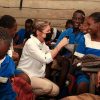
It Takes a Village to Raise and Support a Child in a Humanitarian Crisis
As we come together to celebrate people helping people on this year’s World Humanitarian Day, we honor the courageous and remarkable humanitarians delivering on the frontlines to help us achieve our goals for peace, universal human rights, and education for all.
Afghanistan: What Went Wrong?
After the horrendous tragedies of 9/11 in the year 2001, the US intervened in Afghanistan. Promising statements such as "we are going to smoke them [Al-Qaeda and their Taliban protectors] out" and "we are after ending terrorism" received warm receptions.
Chinese Fleet Threatens Latin America’s Fish Stocks
Illegal and excessive fishing, mainly attributed to Chinese fleets, remains a threat to marine resources in the eastern Pacific and southwest Atlantic, as well as to that sector of the economy in Latin American countries bathed by either ocean.
Rushdie Joins 102 International Writers to Demand Freedom of Expression in India
On the eve of India’s 76th Independence Day, the president of the country, Droupadi Murmu, received a letter signed by 102 international writers, including authors from India and the Indian diaspora expressing “grave concerns about the rapidly worsening situation for human rights” and calling for the release of imprisoned writers and “dissident and critical voices”.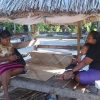
An Unexpected Treasure
When University of Arizona political economy professor, William Mishler needed Kiribati census and household income data for a project he was working on with Millennium Challenge Corporation (MCC) he turned to the Pacific Data Hub (PDH) to access the microdata he needed.
Refugees Face Often Neglected Mental Health Challenges – Report
While refugees globally face insecurity and uncertainty, a new World Health Organization (WHO) report highlights that they also face poorer health outcomes.
Stagflation: From Tragedy to Farce
Half a century after the 1970s’ stagflation, economies are slowing, even contracting, as prices rise again. Thus, the World Bank warns, “Surging energy and food prices heighten the risk of a prolonged period of global stagflation reminiscent of the 1970s.” In March, Reuters reported, “With surging oil prices, concerns about the hawkishness of the Federal Reserve and fears of Russian aggression in Eastern Europe, the mood on Wall Street feels like a return to the 1970s”.
Afghan Refugees, Medical Visitors Bemoan Treatment in Pakistan
Afghan refugees living in Pakistan face a host of problems, ranging from seeking medical treatment to shelter, business, police harassment and violence. Many of those affected have been there for four decades.
Gender Equality & Women’s Rights Wiped out Under the Taliban
In the year that has passed since the Taliban’s takeover in Afghanistan we have seen daily and continuous deterioration in the situation of Afghan women and girls. This has spanned every aspect of their human rights, from living standards to social and political status.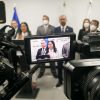
Journalism Under Attack by Neo-Populist Governments in Central America
Practicing journalism in Guatemala, Nicaragua and El Salvador is becoming increasingly difficult in the face of the persecution of independent media outlets by neo-populist rulers of different stripes, intolerant of criticism.
‘Aid Organizations Must Include the Youth Voice’ August 12, 2022—International Youth Day
Today marks International Youth Day, a global celebration of the transformative power of young people. Introduced by the United Nations General Assembly in 1999, the event was inaugurated not only to observe the power of the youth voice, but to serve as a promise from those in power to activate the power of youth across the development sector.
Democracy in Iraq Under Threat Following the Storming of Parliament
The storming of the Iraqi parliament by supporters of Al-Sadr was motivated by years of political impasse — threatening Iraq's democracy and peace
A Safe Haven for Ousted Political Leaders Escaping Executions and Hangings
When world political leaders, mostly presidents and prime ministers, are ousted from power following military coups or street demonstrations, they flee to “safe havens” to avoid being jailed, executed by firing squads or hanged in public. Perhaps one of the secure “safe havens”—and a popular “political retirement home”-- is Saudi Arabia, a traditionally authoritarian regime, which has provided sanctuary for leaders from Uganda, Tunisia, Pakistan, Yemen and Qatar.
Pariah Solidarity Between Myanmar & Russia
On August 3rd residents of the Myanmar capital Naypyitaw were suddenly awakened by the sound of military helicopters in the air. The helicopters hovered over the city all day. The way to the regime's foreign ministry was also blocked for hours.
Zimbabwe Makes First Journalist Arrests Under Cybersecurity Law
Zimbabwe's press freedom credentials suffered further criticism with the arrest of two journalists from a privately-owned newspaper charged with transmitting "false data messages."
Aid Workers Encounter Courage, Damage, Dislocation and Resilience in War-Torn Ukraine
During Todd Bernhardt’s visit to Ukraine’s conflict zones, he encountered untold damage to hospitals, healthcare clinics, and communities. The Senior Director of Global Communications at the International Medical Corps also encountered enormous courage.
Colombia’s New President May Need U.S. Blessing to Realize his Domestic Agenda
For the first time in its contemporary history, Colombia has a left-wing government. The presidency of Gustavo Petro, who took the reins August 8, marks a significant break from the political status quo. He also represents a stiff test for U.S. influence in Latin America.
April Fool’s Inflation Medicine Threatens Progress
The world economy is on the brink of outright recession, according to the International Monetary Fund (IMF). The Ukraine war and sanctions have scuttled recovery from the COVID-19 pandemic.« Previous Page — Next Page »





One world, one humanity, now one court to defend its rights. Another step towards universal human rights, but not remotely a step far enough. The United Nations adopted the Universal Declaration of Human Rights more than half a century ago, but that has done little to stop violations the world over, just as the Geneva Convention has not protected prisoners of war enough. Democracy itself and the freedom it presupposes has not been protective enough. This is the century to move from politicisation of human rights towards humanising political ways. IPS keeps an eye on that difficult path.

The Week with IPS

NEXT STOP - SDGs
Tracking global progress towards a sustainable world
Tracking global progress towards a sustainable world
