Languages
Sunday, November 29, 2026



News and Views from the Global South


Connecting the Dots for the Transforming Education Summit
Look around the world at this very moment. Whether we look at it in stark numbers and statistics, whether we look at it as a generational loss of basic human rights, including the right to an education, or whether we look inwardly and feel the unspeakable human suffering and devastation taking place, we all agree: we are at a historically low point in our collective humanity.
School Meal Programs Getting Back on Track in Central America, Despite Hurdles
A group of preschool students enthusiastically planted cucumbers and other vegetables in their small school garden in southern El Salvador, a sign that school feeding programs are being revived as the world emerges from the COVID-19 pandemic.
Traditional, Time-Tested Methods and a Modern App Helps Beat Climate Change
Even as erratic weather and extremely high temperatures increase pest infestation and affect harvests, a combination of traditional methods, integrated pest management through intercropping and multilayering is helping farmers in Ahmednagar and Aurangabad districts of Maharashtra, India.
Twilight for the 1951 Refugee Convention
Twilight for the 1951 Refugee Convention is becoming a 21st century reality for an increasing number of countries worldwide.
How Putin Underestimated Ukraine
In the eyes of the Kremlin leadership, the basic precondition of the successful war against Ukraine has been the perceived power of the Russian Armed Forces and possible superiority over the Ukrainian forces.
The Mayan Train and the Fight for Mexico’s Ancient Jungle
Along the wide slash of white earth in southwestern Mexico there are no longer trees or animals. In their place, orange signs with white stripes warn visitors: "Heavy machinery in motion," "No unauthorized personnel allowed".
United Nations & its Leadership Challenged by an Existential Crisis
The other day a friend asked me “Can Russia be expelled from the General Assembly by a two-thirds majority?” Almost impossible to do that, I responded.
Ukrainian President’s Plea: Expel Russia or be Ready to Close Down the UN
A legendary quote attributed to Joseph Stalin most likely applies to the United Nations too. “How many divisions does the Pope have?” asked the Soviet leader, interrupting a speech by Winston Churchill in a bygone era.
Wake-Up Call as Millions of Africa’s Children at Risk of Missing Out on Education – Report
Marisol Ntalami is one of 747,161 candidates who sat for the national Kenya Certificate of Secondary Education in 2020. “I come from a pastoral community. My father has five wives and many children. I am the only girl in the family to have completed primary school and now secondary school. My mother fought very hard for me to stay in school. I am a first-year university student studying actuarial science,” she tells IPS.
How a Massive Climate Project Can Help Win Peace for Ukraine – And Help African Job + Food Crises
How would the late Archbishop Desmond Tutu have reacted to the Russian Invasion of Ukraine? Differently than you might think. The invasion of Ukraine is a mass human tragedy. It is killing Ukrainians, exposing families to violent atrocities, and has driven a refugee crisis of over 4 million people and counting. The war in Ukraine has also reawakened our fear of global war - even nuclear war - and the importance we place on global peace.
China’s Entry into the Muslim World
The retrenchment of American power in the Middle East and the larger Muslim world, coupled with the war in Ukraine, has provided a geopolitical breather for China. Beijing is effectively deploying this to make strategic inroads into the region, given this vacuum and focus on Europe.
Egypt’s Tourism Hit by Ukraine Crisis
Tourism to Egypt’s GDP is as vital as the Nile to its people. After Egypt’s tourism sector began to recover following the Russian plane crash in 2015. Then COVID hit, and now the Ukrainian war shot a bullet through its heart.
Bennett Is Siding with the Ruthless Killer Putin
Prime Minister Bennett’s “neutrality” in the Russian war against Ukraine is outrageous and contemptable. It runs contrary to every moral principle that Israel is supposed to stand and fight for. Bennett must join the Western alliance in opposing Putin — a merciless tyrant who is committing crimes against humanity and must pay for it
Warning: Climate Crisis Is Now the Single Biggest Health Threat Facing Humanity
While the world’s top scientists and experts continue their arduous work to finally submit to politicians at the 27th session of the Conference of the Parties (COP 27) in Sharm El-Sheikh, Egypt (7-18 November 2022), a new alert now emerges: the climate crisis has already become the single biggest health threat to humankind.
US Migration Policy Is Enriching Cartels at the Busiest, and Most Dangerous, Part of the US-Mexico Border
“The migrants try to organize themselves to stay safe,” a humanitarian worker told me as we stood near a town square in Reynosa, Mexico, steps away from the U.S. border. More than 2,000 people from many countries, blocked from asking for asylum in the United States, were packed into this square block, living under tents and tarps, amid port-a-potties and cooking fires. Children were everywhere.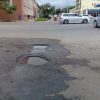
Zimbabwe Unsafe Roads Could Drive the Economy Around the Bend
When driving at night in Zimbabwe, watch out for a pair of eyes on the road and slow down. You may hit a giraffe inside a pothole. So goes an often-told joke.
Proposed Animal Protection Legislation Ignores Rights of Local Communities to Practice their Approach to Conservation
On the battleground that has become African wildlife conservation, rural communities find themselves in the middle of a tug-of-war that is bound to the past on one side, and their future, on the other.
Perils of Hunger, Food Insecurity in Southern Africa- Challenges & Opportunities
Food systems are under severe stress around the world now. The thresholds of tolerance are already exceeding limits with millions facing acute food and water scarcity throughout all continents. Over a quarter of Africa’s population are facing hunger and food insecurity. Conflict, droughts, flooding, rising unemployment, inequality, economic crises, and the impacts of Covid-19 pandemic have been ravaging the Continent on an unprecedented scale.
Deepening Stagflation: Out of the Frying Pan into the Fire
The world is sailing into a perfect storm as key leaders seem intent on threatening more war, albeit while proclaiming the noblest of intentions. By doing so, they block international cooperation to create conditions for sustainable peace and shared prosperity for all.
Indian Agriculture Towards 2030
India began its journey as an independent nation in 1947 with fresh memory of the Bengal Famine of 1943 which claimed 1.5 to 3 million lives. Against this backdrop, the First Five Year Plan (1951-56) prioritized agriculture which, however, shifted to heavily industrialization in the second Plan.
Palm Oil for Biodiesel in the Amazon: Sustainable Fuel or Deforestation Risk?
Oil palm, known as dendezeiro in Brazil, can produce up to ten times more vegetable oil per hectare than other crops, but it is regularly condemned as harmful to the biodiversity of tropical forests in Asia, Africa and Latin America. Now, its cultivation looks set to advance in the Brazilian Amazon.« Previous Page — Next Page »


Want to keep up with the latest news and views from the Global South? Sign up for IPS Daily News Report for daily emails with our top stories about international development, climate change, gender and more. (Formerly IPS TerraViva since 1993).

The Week with IPS

NEXT STOP - SDGs
Tracking global progress towards a sustainable world
