
Thursday, November 19, 2026



News and Views from the Global South
IPS UN: Inside the Glasshouse
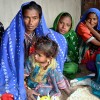
U.N. Urged to Reaffirm Reproductive Rights in Post-2015 Agenda
The U.N.'s post-2015 development agenda has been described as the most far-reaching and comprehensive development-related endeavour ever undertaken by the world body.
OPINION: Step Up Efforts Against Hunger
At the 1996 World Food Summit (WFS), heads of government and the international community committed themselves to reducing the number of hungry people in the world by half. Five years later, the Millennium Development Goals (MDGs) lowered this level of ambition by only seeking to halve the proportion of the hungry.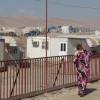
Geographical Divide in Maternal Health for Syrian Refugees
At the largest refugee camp in Iraqi Kurdistan, young Syrian mothers and pregnant women are considered relatively lucky.
New Fund to Build on “Unprecedented Convergence” Around Land Rights
Starting next year, a new grant-making initiative will aim to fill what organisers say has been a longstanding gap in international coordination and funding around the recognition of community land rights.
Is Newly-Renovated U.N. Readying For Balkanisation of World?
When world political leaders arrive next week for the annual ritual of addressing the United Nations, they will be speaking inside a newly renovated General Assembly hall - part of a hefty 2.1-billion-dollar, seven-year refurbishing project - with an extended seating capacity for 204 member states, 11 more than the current 193.Promoting Human Rights Through Global Citizenship Education
Amid escalating conflicts and rampant violations of human rights all over the world, spreading “human rights education” is not an easy task. But a non-governmental organisation from Japan is beginning to make an impact through its “global citizenship education” approach.Nuclear Deal with Iran Likely to Enhance U.S. Regional Leverage
A successful agreement on Iran’s nuclear programme could significantly enhance U.S. leverage and influence throughout the Greater Middle East, according to a new report signed by 31 former senior U.S. foreign-policy officials and regional experts and released here Wednesday.
Latin America at a Climate Crossroads
World leaders gathered at the Climate Change Summit during the United Nations General Assembly on Sep. 23 will have a crucial opportunity to mobilise political will and advance solutions to climate change.
U.N. Pushes Climate-Smart Agriculture – But Are the Farmers Willing to Change?
United Nations Secretary-General Ban Ki-moon is expected to make a strong pitch to world political leaders at the U.N. Climate Summit in New York on Sep. 23 to accept new emissions targets and their timelines.
Pushing for Cities to Take Lead on Climate Change
If former New York mayor Michael Bloomberg had used the Vélib’ - Paris’ public bicycle sharing system - to arrive at the headquarters of the Organisation for Economic Cooperation and Development here Wednesday, he might have sent a stronger message about the need for cities to be “empowered to take the lead in combating climate change”.
U.N. Launches Ambitious Humanitarian Plan for Gaza
The UN agency for Palestinian refugees has launched an ambitious recovery plan for Gaza following the 50-day devastating war between Hamas and Israel which has left the coastal territory decimated.
Tackling Climate Change and Promoting Development: A “Win-Win”
A widespread perception exists that developing countries must make a choice between tackling climate change and fighting poverty. This assumption is incorrect, according to the authors of a new report on green growth.
Will the Upcoming Climate Summit Be Another Talkathon?
As the United Nations hosts a Climate Summit Sep. 23, the lingering question is whether the meeting of world leaders will wind up as another talk fest.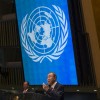
OPINION: A Climate Summit to Spark Action
On Sep. 23, I have invited world leaders from government, business, finance and civil society to a Climate Summit in New York so they can show the world how they will advance action on climate change and move towards a meaningful universal new agreement next year at the December climate negotiations in Paris.
World’s Most Unequal Region Sets Example in Fight Against Hunger
Latin America and the Caribbean, the world’s most unequal region, has made the greatest progress towards improving food security and has become the region with the largest number of countries to have reached the first Millennium Development Goal (MDG) of halving the proportion of undernourished people.
Declining Majority Still Supports “Active” U.S. Role in World Affairs
Despite elite concerns about growing “isolationism” in the U.S. electorate, nearly six in 10 citizens believe Washington should “take an active part in world affairs,” according to the latest in a biennial series of major surveys of U.S. foreign-policy attitudes.
U.N. Climate Summit: Staged Parade or Reality Show?
The much-ballyhooed one-day Climate Summit next week is being hyped as one of the major political-environmental events at the United Nations this year.
‘Breaking Silence’ on the Slave Trade
The Oscar-winning film 12 Years a Slave recently generated international discussion about the barbarity of slavery, but it is not alone in the attempt to break the silence around the 400 years of the transatlantic slave trade and to “shed light” on the lasting historical consequences.
U.S. Bypasses Security Council on Impending Invasion of Syria
The U.N. Security Council (UNSC), the only international body empowered to declare war and peace, continues to remain a silent witness to the widespread devastation and killings worldwide, including in Palestine, Syria, Iraq, Libya, Yemen and Ukraine.
OPINION: Bishop Appeals to U.N. to Rescue Minorities in Northwestern Iraq
For decades, the minority Christian population of Iraq has been suffering hardships. But in the summer months of 2014 - and since the beginning of the military campaign by ISIS (Islamic State in Iraq and al-Sham, also known as ISIL or Islamic State) - the situation has gone from bad to intolerably worse.
OPINION: Ebola Crisis Reversing Development Gains in Liberia
As the Ebola crisis continues to take a toll on people’s lives and livelihoods in West Africa, the focus is increasingly not just on the health aspects of the crisis, but also on its social and economic consequences.« Previous Page — Next Page »


It was dubbed "The Glass House" by U.S. ambassador James Wadsworth in 1966. Half a century later, the United Nations has gradually expanded its role as agent of peace and protector of the world's vulnerable populations, while simultaneously facing internal pressures to become more inclusive, increase transparency and maintain legitimacy in the post-Cold War political and economic order. Highlighting the local impacts of global policies on economic development, environment, health and human rights, IPS's coverage goes beyond the edicts of the Security Council to illuminate the power struggles, successes and shortcomings of the 193-member institution as it grapples with crises like climate change, armed conflict, poverty and HIV/AIDS.

The Week with IPS
