Languages
Monday, November 9, 2026



News and Views from the Global South
Africa

Finding the Sweet Spot of Africa’s Agriculture
Africa is a continent where, at least outwardly, we like to celebrate our diversity—the rich variety that can be found in our many cultures, languages, fashions, flora and fauna. That’s why it’s perplexing to see such a large segment of the African population depending on a very small number of food crops, like maize, rice and wheat.
Yemeni Refugees Still Stuck on Wrong Side of the Water
Tears emerge from the slit of 20-year-old Gada’s black niqab face veil. After more than a minute’s silence she still can’t answer the question: How bad was it in Yemen before you left?
At the Nexus of Water and Climate Change
With the clock counting down towards the November climate summit in Marrakech, Morocco, where parties to the climate treaty agreed in Paris will negotiate implementation, it's clear that managing water resources will be a key aspect of any effective deal.
Migrant Labour Fuels Tensions in Mauritius
They come from Bangladesh, China, India and Madagascar, mainly to run the machines in the textile industry here. But they do all kinds of other jobs too, from masons to bakers, house cleaners and gardeners.
Drought Deals Harsh Blow to Cameroon’s Cocoa Farmers
Tanchenow Daniel fears he will lose more than half a tonne of his cocoa yield during the next harvest at the end of this month.
Kenya Has Made Impressive Gains Under New Constitution, but the Hard Work is Just Beginning
On August 27 Kenyans will be celebrating not just the promulgation of the new Constitution six years ago, but also the tangible gains made throughout the country.Chatterjee, new Resident Coordinator, to lead 25 UN agencies in East Africa
Siddharth Chatterjee, the Representative of the UN Population Fund (UNFPA) in Kenya, has been appointed UN Resident Coordinator, where he will lead and coordinate 25 UN agencies in East Africa. At the same time, he will also serve as the Resident Representative of the UN Development Programme (UNDP).
Nurturing African Agriculture
 While agriculture could be the driving force to lift millions of Africans out of poverty and alleviate hunger, its full potential remains untapped. For example, only between five and seven percent of the continent’s cultivated land is irrigated, leaving farmers vulnerable to climate shocks like the devastating El Nino-driven drought in southern Africa. That's why international agencies like the U.N. Food and Agriculture Organization (FAO) are forging key partnerships to enhance agricultural production, sustainable natural resource management and increased market access.

Deadly Yellow Fever Spreading, Amid Global Vaccine Shortages
As deadly yellow fever spreads to seven provinces of the Democratic Republic of Congo (DRC), new measures have been introduced to ensure that as many people as possible are immunised, despite global shortages of the yellow fever vaccine.
Arable Lands Lost at Unprecedented Rate: 33,000 Hectares… a Day!
Humankind is a witness every single day to a new, unprecedented challenge. One of them is the very fact that the world's arable lands are being lost at 30 to 35 times the historical rate. Each year, 12 million hectares are lost. That means 33,000 hectares a day!
The Economic Partnership Agreement has never made much sense for Tanzania
The EPA issue has once again re-emerged when, in early July, Tanzania informed East African Community( EAC) members and the European Union (EU) that it would not be able to sign the Economic Partnership Agreement (EPA) between European Union (EU) and the six EAC member states.
Ethiopian Food Aid Jammed Up in Djibouti Port
Bags of wheat speed down multiple conveyor belts to be heaved onto trucks lined up during the middle of a blisteringly hot afternoon beside the busy docks of Djibouti Port.
Youth Key to the Success of the SDGs in Kenya
Consider this: in 1956 Sweden and Kenya’s population was roughly at 7 million. Today Sweden has about 9.8 million, while there are about 44 million Kenyans. Fertility levels are declining gradually and Kenyans are living longer. It is estimated that there will be 85 million people in Kenya by 2050, with three quarters of these being below 35 years. While Kenya’s median age is 19, Sweden’s is 42.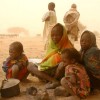
War on Climate Terror (II): Fleeing Disasters, Escaping Drought, Migrating
"No one can deny the terrible similarities between those running from the threat of guns and those fleeing creeping desertification, water shortages, floods and hurricanes.”
Kenya’s Health Sector Challenges Present the Ideal Setting for Creating Shared Value
The increased budgetary allocations to the health sector by county governments point to an acknowledgement not only of the enormous challenges facing the sector, but also of good health as a prerequisite to overall development.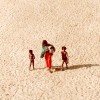
War on Climate Terror (I): Deserts Bury Two Thirds of African Lands
Two-thirds of the African continent is already desert or dry-lands. But while this vast extension of the second largest continent on Earth after Asia is “vital” for agriculture and food production, nearly three-fourths of it is estimated to be degraded to varying degrees.
Education: An Elusive Dream for Cameroon’s Indigenous Peoples
It is a sunny afternoon in Boui, a small village in the Boumba and Ngoko Division of Cameroon’s South East Region. A primary school teacher is drawing some wild animals on the blackboard. Then she turns to the class of fifteen pupils.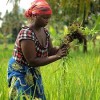
African Farmers Can Feed the World, If Only…
Can African farmers feed the world?. Apparently the answer is “yes.” Bold as it may sound, this statement is based on specific facts: Africa is home to 60-65 per cent of the world’s uncultivated arable land and 10 per cent of renewable freshwater resources, and it has registered a 160 per cent increase in agricultural output over the past 30 years.
Sustainable Development in Africa Will Not Be Achieved Without Women’s Full Participation
In some parts of the world, the proverbial “glass ceiling” is shattering. As Theresa May and, most likely, Hillary Clinton join Angela Merkel at the leadership of three major world powers, women’s leadership in politics is on the ascent.
Pan African Parliament Endorses Ban on FGM
After years of wrangling and debates among African leaders, the movement to end female genital mutilation (FGM) is gaining real momentum, with a new action plan signed this week by Pan African Parliament (PAP) representatives and the U.N. Population Fund (UNFPA) to end FGM as well as underage marriage.
Climate-Smart Agriculture for Drought-Stricken Madagascar
Mirantsoa Faniry Rakotomalala is different from most farmers in the Greater South of Madagascar, who are devastated after losing an estimated 80 percent of their crops during the recent May/June harvesting season to the ongoing drought here, said to be the most severe in 35 years.« Previous Page — Next Page »





The Week with IPS

NEXT STOP - SDGs
Tracking global progress towards a sustainable world
Tracking global progress towards a sustainable world
