Languages
Saturday, November 14, 2026



News and Views from the Global South
Africa
KENYA: Women Set to Make Their Mark in Politics
The August 2012 elections in Kenya will open doors to massive political participation by women for the first time ever.MAURITIUS: Women Find a Political Voice, Locally
Under a new gender quota law introduced in Mauritius, at least one-third of the candidates in local elections must be women. But the adoption of a national quota is not yet on the horizon, even though just 18 percent of legislators are women and there are only two female cabinet ministers.KENYA: Walking Metres Rather Than Kilometres to Fetch Water
The acute lack of water in Kenya means families have to trek long distances every day to fetch water. In both rural and urban areas, people often walk as far as 30 kilometres or more to collect water from rivers, streams or wells. But thanks to self-help projects backed by NGOs, some communities are coming up with solutions.Nigeria on Edge Trying to Avert North-South Clashes
Africa’s top oil producer is on edge, poised to deter possible sectarian clashes between Muslims in the north and Christians in the south, while Christians are becoming more vulnerable to attacks from Islamist militants.KENYA: Inflation Deflates New Year Joy
Kenyans entered the New Year with less pomp and colour that has characterised previous new year celebrations. Due to the harsh economic situation and the fact that it is time for most students to go back to school, many families shied away from entertainment places to save that elusive shilling for their school-going children.SUDAN: No Clear Studies on Impacts of Merowe Dam
The multi-billion dollar Merowe Dam on the Nile River more than doubled Sudan's electricity supply, but its environmental impacts are still unknown to the public, and communities whose villages were flooded have not yet received compensation.
SOMALIA: Rebuilding Among the Rubble
With vehicles and donkey carts packed with their belongings, Somalis are returning, four years after they fled, to their partially standing, bullet-scarred and mortar-shelled neighbourhoods in former Al-Shabaab controlled areas of Mogadishu.SWAZILAND: Small Loans for Young Entrepreneurs to Help Fight Crisis
While the Swazi economy is teetering on the brink of collapse, the government is banking on the future by providing funds to help young people set up businesses.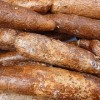
NIGERIA: Not Everyone Pleased with New Vitamin A-Fortified Cassava
Using hybridisation and selective breeding, researchers in Nigeria have developed three new yellow varieties of cassava, a staple crop in much of Africa, which they say will help fight malnutrition caused by vitamin A deficiency in the region.
CAMEROON: The Taps Have Run Dry
Mama Rosalie of Damas quarter in the capital of Cameroon trudges down a narrow, winding footpath, headed for a narrow stream running far below, a 20-litre water container in her right hand.KENYA: Medical Waste Poses Serious Threat to Scavengers
For Collins Otieno, the onset of a new day ushers in mixed fortunes that can either earn him some money or expose him to infection, as he struggles to make ends meet by scavenging for waste.MAURITIUS: Thirsty for Ideas to Address Water Woes
Mauritius plans to privatise its water sector, as rains become rare, and century-old pipes continue to leak almost 50 percent of the water available, added to waste by the population, mismanagement and over-consumption.ZAMBIA: “People Are Not Dead Until They Have Died”
"I had no power, I could not even walk. I just had to be lifted by someone. When bathing, when going to the toilet, when going anywhere," Geoffrey Mwila says in a soft voice.SWAZILAND: Processing Plant Threatens Water in Capital
A multi-million dollar iron-ore reprocessing plant in the northern part of Swaziland, owned by Indian mining company Salgaocar, is threatening the water security of local communities and even the country’s capital city, Mbabane.SOMALIA: Taking Schools Back From Militants
Schools are beginning to re-open slowly in areas of capital Mogadishu that were until recently controlled by the militant Islamic group al-Shabaab. But an estimated 80 percent of students have not yet returned.SIERRA LEONE: The Isolation of Epilepsy Sufferers
Elizabeth Zainab Kargbo was a successful young woman, eight months pregnant and working in Sierra Leone’s civil service, when she had her first seizure.DR Congo Troops ‘Killed Civilians’ After Vote
Security forces in the Democratic Republic of Congo have been responsible for the deaths of at least 24 people since President Joseph Kabila's re-election was announced on Dec. 9, Human Rights Watch says.SIERRA LEONE: Local Communities Divided Over Mining in Rainforest
Sierra Leone’s Gola Rainforest remains a centre of contention as the local community here plan to take their chief to court next week over a controversial 50-year land lease to a mining company.
Moving Towards a Food-Secure Ghana
In Dundo village in Nyankpala district, Northern Ghana, 10 women are busy weeding a rice field on a piece of land donated to them by the village chief.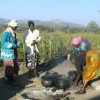
CLIMATE CHANGE: Waiting for the “Heavens to Weep”
Duduzile Sibanda takes a break from preparing her long stretch of land for her maize crop in rural Mberengwa, in Zimbabwe’s Midlands province. She wipes her brow under the scorching sun and looks upwards. The sparse clouds are a cause of concern as she studies the sky and wonders aloud when the "heavens will weep."
KENYA: A Shelter for Safe Delivery
The Garissa Maternal Shelter in North Eastern Province, Kenya is the only such facility in an area with the country’s highest maternal mortality rate. At 1,000 deaths per 100,000 live births, it is almost double the country’s average.« Previous Page — Next Page »


The Week with IPS

NEXT STOP - SDGs
Tracking global progress towards a sustainable world
Tracking global progress towards a sustainable world
