Languages
Sunday, November 15, 2026



News and Views from the Global South
Africa

HORN OF AFRICA: Human Trafficking on the Rise Amid Drought and Famine
Amina Shakir (not her real name) fled the drought and famine in Somalia for a better life in Kenya. But she did so illegally, placing her faith in the hands of a criminal network headed by Mukhalis or agents in Swahili. In the end her faith was misplaced as she was "sold" into employment upon finally reaching Kenya.
IBSA: In Conflict with the EU
When the G20 leaders meet for their fifth summit in Cannes, France, on Thursday, they will be confronted with several worsening global economic and trade issues. Among them is how to strengthen the international trading system and how to overcome the developmental deficit that continues to create an uneven playing field for poor countries.
WEST AFRICA: Niger River under Pressure from Dams
Several major new dams are being constructed on the Niger River. It's a positive sign of growing investment in agriculture and energy, but it also has some observers worried.ZIMBABWE: Forcing Parents to Top Up Teachers’ Salaries Cannot Continue
As concerns deepen about the quality of education in Zimbabwe, parents can expect an indefinite extension of subsidising teacher salaries as the cash- strapped government struggles to meet the bloated civil service wage bill.
AFRICA: Regulating the Rush for Land
The adoption of international guidelines to regulate so-called land grabs has been pushed to next year after negotiators failed to agree on conditions for large-scale land investments and enforcement.
DR CONGO: Women Candidates Needed
Women make up just 12 percent of the roughly 18,000 candidates who will stand for election to parliament in the Democratic Republic of Congo's Nov. 28 elections.
LESOTHO: Government to Turn its Back on Textile Industry
Lesotho’s textile sector – the country’s largest employer - is regarded by many as the only way out of the poverty trap in a tiny kingdom where more than half of the population lives on less than 1.25 dollars a day. But what many do not know is that the government and the World Bank have unofficially turned their backs on the sector and will soon cut important subsidies.
KENYA: “Hold Your Heart” Delayed Justice for Missing Insurgency Victims
Three years after her husband’s disappearance, Phyllis Chamnai Kipkeyo from Mount Elgon, Kenya cannot stop thinking about him. She does not know if he is dead or alive. All she knows is that he was one of the over 300 people said to have disappeared during an insurgency in the region between 2006 and 2008.WEST AFRICA: Solar Panels Light Up Remote Villages
Frequent power cuts have led people in rural areas of Burkina Faso, Mali and Senegal to turn to solar energy for electricity.
GHANA: Stigma Surrounding Breast Cancer Stymies Prevention Efforts
Mary Mingle thought she had a boil on her breast, so she bought some medication and tried to treat it at home. Two months later, bothered by persistent pain, she went to the doctor.
SOUTH SUDAN: Protecting Cattle Saves People
With his bright orange hair, Angelo Waranyang cuts a striking figure as he strides amongst his cattle. His hair colour – dyed with a mixture of cow urine and ash from burnt dung – is symbolic of the close connection that he and the majority of South Sudanese have with their revered animals.DR CONGO: No Hope for Free and Fair Elections
With six weeks to go before the presidential and parliamentary elections in the Democratic Republic of Congo, civil society organisations say the elections will not be fair, as many doubt the ability of the country’s electoral authorities to ensure transparency.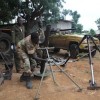
SUDAN: Bombing the Homeless
Hawa Jundi sat on the ground outside a makeshift shelter where she and her family now live. A violent storm was moving in and lightning streaked toward the earth as the wind began blowing hard against the tarpaulin tied to a frame of sticks.
AFRICA: “The Man Who Stopped the Desert”
Yacouba Sawadogo, a peasant farmer from Burkina Faso, is known as the "man who stopped the desert." But when he first tried to save his arid land from desertification by planting the trees that have since grown into a 15-hectare forest, people in his village thought he was mad.
GHANA: The Woes of Women Amid Climate Change
As streams dry out, groundwater levels dwindle, and forests and other vegetation yield to droughts or sever storms, women who live their lives in the rural areas of Ghana have to spend more time and energy finding water and food for their families.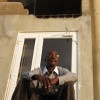
GHANA: Former Convicts Find New Hope
At the age of 56, Frazer Ayee has a lot to look back on. He has been an armed robber and a kidnapper. He was involved in uprisings in Togo and Liberia. In 1988 he was sentenced to death by Ghana’s defunct tribunal system, a brainchild of then dictator Jerry John Rawlings.LIBERIA: Former Warlord Backs Johnson-Sirleaf for Second Term
Former warlord Prince Johnson, who placed third in Liberia’s election last week, has endorsed the re-election bid of President Ellen Johnson-Sirleaf, who was named a joint winner of the Nobel Peace Prize just days before the vote.
SOMALIA: Death Threats Fail to Stop Women’s Basketball
When Al-Shabaab militants called the Somali national women's basketball team captain, Suweys Ali Jama, and told her she had two options: to be killed or to stop playing basketball, she decided that neither was really an option at all.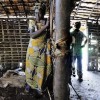
DR CONGO: No End to Mass Rapes: “It’s a Miserable Life”
Angeline Mwarusena, 61, sits on a small wooden bench in front of her hut, head bent, shoulders slumped. Her voice is barely audible. Four years ago, three soldiers from the Democratic Forces for the Liberation of Rwanda (FDLR) entered her home, hit her and raped her repeatedly. One after the other.Entrepreneurs Could Develop Africa and the World
He started with four rabbits and a will to succeed. Seven years later, Samuel Agossou has built a home for his family and employs a dozen other young people in his business.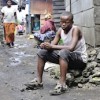
DR CONGO: Lasting Effects of War Destroy Children’s Future
Five years into democracy, with the elections just a few weeks away, the majority of Congolese children continue to face a bleak future.« Previous Page — Next Page »


The Week with IPS

NEXT STOP - SDGs
Tracking global progress towards a sustainable world
Tracking global progress towards a sustainable world
