Languages
Monday, November 9, 2026



News and Views from the Global South
Asia-Pacific

‘Cyclone College’ Raises Hopes, Dreams of India’s Vulnerable Fisherfolk
Ten years have now passed, but Raghu Raja, a 27-year-old fisherman from the coastal village of Nemmeli in southern India’s Kanchipuram district, still clearly remembers the day he escaped the tsunami.
Uzbekistan Gears Up to Vote for Rubberstamp Parliament
Uzbekistan's parliamentary elections on Dec. 21 will offer voters a choice, but no hope for change.
Aboriginal Knowledge Could Unlock Climate Solutions
As a child growing up in Far North Queensland, William Clark Enoch would know the crabs were on the bite when certain trees blossomed, but now, at age 51, he is noticing visible changes in his environment such as frequent storms, soil erosion, salinity in fresh water and ocean acidification.
UNIDO Development Initiative Gains Momentum in ACP Nations
The inclusive and sustainable industrial development (ISID) initiative of the U.N. Industrial Development Organisation to promote industrial development for poverty reduction, inclusive globalisation and environmental sustainability is gaining momentum in the countries of the African, Caribbean and Pacific (ACP) group.
CORRECTION/Filipino Children Make Gains on Paper, But Reality Lags Behind
Mae Baez sees some of the darkest sides of communications technology.
What Future for the ACP-EU Partnership Post-2015?
“There are still prospects for a meaningful ACP-EU partnership, capable of contributing and responding concretely and effectively to the objectives of promoting and attaining peace, security, poverty eradication and sustainable development,” according to the top official of the African, Caribbean and Pacific Group of States (ACP).
Georgia Confronts Domestic Violence
The issue of domestic violence is moving to the forefront of public attention in Georgia after a series of killings of women at the hands of their respective spouses or ex-spouses made headlines in local mass media.
Mangrove Conservation Paves the Way to a Sustainable Future
 When the Asian tsunami washed over several Indian Ocean Rim countries on Boxing Day 2004, it left a trail of destruction in its wake, including a death toll that touched 230,000.

Leading Investigative Reporter Detained in Azerbaijan
Authorities in Azerbaijan took steps Dec. 5 to muzzle Khadija Ismayilova, an investigative journalist who is the country’s most vocal government critic. A Baku court granted a motion to hold Ismayilova in jail pending a criminal trial, while her Facebook page mysteriously went dark.
Civil Society Support for Marshall Islands Against Nuclear Weapons
Ahead of the Dec. 8-9 Vienna Conference on the Humanitarian Impact of Nuclear Weapons, activists from all over the world came together in the Austrian capital to participate in a civil society forum organised by the International Campaign to Abolish Nuclear Weapons (ICAN) on Dec. 6 and 7.
Indonesia’s New President Promises to Put Peat Before Palm Oil
Last week, Indonesia's new president, Joko Widodo, ordered the country’s Ministry of Environment and Forestry to review the licenses of all companies that have converted peatlands to oil palm plantations.
Dushanbe Considering Bill to Restrict NGO Funding
It looks like Tajikistan is following a regional trend by drafting legislation that may sharply restrict the activities of foreign-funded non-governmental organisations. Activists say the bill threatens to hinder the operations of hundreds of organisations working on everything from human rights to public health.
OPINION: Improve North Korean Human Rights By Ending War
On Nov. 18, a committee of the United Nations General Assembly voted 111 to 19, with 55 abstentions, in favour of drafting a non-binding resolution referring North Korea to the International Criminal Court (ICC).
Kyrgyzstan Debates Russian-Style “Foreign Agents” Law
Kyrgyzstan must protect itself from Arab Islamists and gay-loving Americans; so say supporters of a sweeping draft law that could shutter many non-governmental organisations and, like a Russian bill adopted in 2012, label foreign-funded activists as “foreign agents.”
Illegal Logging Wreaking Havoc on Impoverished Rural Communities
Rampant unsustainable logging in the southwest Pacific Island states of Papua New Guinea and Solomon Islands, where the majority of land is covered in tropical rainforest, is worsening hardship, human insecurity and conflict in rural communities.
Elections Offer Little Solace to Sri Lanka’s Poor
Priyantha Wakvitta is used to seeing his adopted city, Colombo, transform into a landscape of bright sparkling lights and window dressing towards the end of the year.
Women on the Edge of Land and Life
November is the cruelest month for landless families in the Indian Sundarbans, the largest single block of tidal mangrove forest in the world lying primarily in the eastern Indian state of West Bengal.
Filipino Farmers Protest Government Research on Genetically Modified Rice
Jon Sarmiento, a farmer in the Cavite province in southern Manila, plants a variety of fruits and vegetables, but his main crop, rice, is under threat. He claims that approval by the Philippine government of the genetically modified ‘golden rice’ that is fortified with beta-carotene, which the body converts into vitamin A, could ruin his livelihood.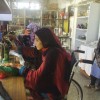
Pakistan’s Paraplegics Learning to Stand on their Own Feet
When a stray bullet fired by Taliban militants became lodged in her spine last August, 22-year-old Shakira Bibi gave up all hopes of ever leading a normal life.
Will Myanmar’s ‘Triple Transition’ Help Eradicate Crushing Poverty?
Myanmar is never out of the news for long. This has been the case since a popular uprising challenged military rule in 1988. For over two decades, the country was featured in mainstream media primarily as one unable to cope with its own internal contradictions, a nation crippled by military rule.
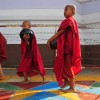
Will Myanmar’s ‘Triple Transition’ Help Eradicate Crushing Poverty?
Myanmar is never out of the news for long. This has been the case since a popular uprising challenged military rule in 1988. For over two decades, the country was featured in mainstream media primarily as one unable to cope with its own internal contradictions, a nation crippled by violence.« Previous Page — Next Page »





The Week with IPS

NEXT STOP - SDGs
Tracking global progress towards a sustainable world
Tracking global progress towards a sustainable world
