Languages
Tuesday, November 10, 2026



News and Views from the Global South
Asia-Pacific

“Sex School” Breaks Taboos in Kyrgyzstan
It starts out like any gymnastics class: A teacher guides a roomful of women through stretching and breathing exercises. The yoga, ballet and tai chi moves train pelvic muscles, the stomach and legs.
North Korea Doing Fine Without the South
If the North Korea of the 1990s was seen as a starving nation that produced an exodus of hungry people, then the picture should be even gloomier now – six years after it stopped receiving South Korea’s generous aid. But it’s not. The nation of 24 million people, widely said to be the most secretive in the world and a nuclear threat, appears to have weathered the years well.
Smuggled Medicines Save Lives
They are contraband, yet a large number of Pakistanis have come to depend on drugs made in India and smuggled into Pakistan. Patients as well as doctors say these are cheap and effective, even as law enforcers look the other way.
Sun Smiles on a Cold Desert
Surendar Mohan, a catering assistant at the residential school Jawahar Navodiya Vidyalya, looks thankfully up at the sun from this cold high-altitude desert in northwest India.
Ayurveda Offers Balm to Cancer Patients
Balakrishnan, a labourer from Kochi in the southern Indian state of Kerala, was suffering from oral cancer. He was admitted to the Regional Cancer Centre (RCC) in Thiruvananthapuram. After the first course of radiation therapy, the 60-year-old could not eat or drink because of severe pain and infection in the mouth.
Poverty Rises Amidst Gold
Natural reserves such as gold, copper, nickel, gas and timber are being extracted in the western Pacific island states of Papua New Guinea and Solomon Islands to feed the soaring economies of East and South East Asia. But despite these Pacific nations recording economic growth rates of 6-11 percent over the past seven years, opportunities for human development have not been grasped.Chinese Shadow-Boxing Hurts Ties With Philippines
Dissatisfied with the Philippines’ response to the 2010 Manila hostage crisis, which led to the death of eight Hong Kong residents and injuries to seven others, authorities took the unprecedented decision late January to impose travel restrictions against Filipino officials. The restrictions took effect Feb. 5.
Myanmar Ethnic Strife Spills Over to Malaysia
Two Myanmar Buddhist politicians who were visiting Malaysia narrowly escaped a late night assassination attempt outside a leading shopping mall in Kuala Lumpur this month. The incident has raised fears of an overseas spillover of the religious violence that has engulfed their state of Rakhine in recent years.
Students Take On the Army
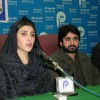
Disturbed by civilian casualties and moved by the plight of people living like refugees in their own country, students from Pakistan’s Federally Administered Tribal Areas (FATA) are demanding an end to army operations against militants on their native soil.
USAID Unveils Five-Year Plan in Afghanistan
Even as most international military forces are slated to leave Afghanistan by the end of 2014, USAID, the foreign aid arm of the U.S. government, is emphasising its sustained commitment to developing Afghanistan’s economy after the withdrawal.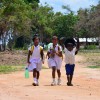
After War Comes Peace, Not Prosperity
Sri Lanka’s war-battered Northern Province had reason to celebrate when the results of a countrywide exam were announced last December. Of the 16,604 students from the province who sat for the exam, 63.8 percent secured the required marks for entry into prestigious national universities.
An Iran in Flux Marks 35th Anniversary of Revolution
Thirty-five years ago today, millions of Iranians embraced a religious leader promising freedom from a corrupt monarchy and national independence. Now many want a better standard of living and improved civil rights.
India’s Gay Voices Crackle to Life
It is Wednesday afternoon in Bangalore, known as India’s tech city for being the hub of information technology companies. In her small four by four-foot studio, Vaishalli Chandra, channel manager of QRadio which is dedicated to the Gay, Lesbian, Bisexual and Transgender (LGBT) community, is in conversation with Ankit Bhuptani, a 21-year-old gay youth from Mumbai.Philippines Makes Tentative Truce With Islamists
After two years of intensive negotiations, the Philippine government and the country’s largest rebel group, the Moro Islamic Liberation Front (MILF), have signed a final peace agreement, which paves the way for a lasting resolution of one of the world’s longest-running intra-state conflicts.
Doctors Resist Deadly Vaccine
A spate of sudden infant deaths following vaccination in India has prompted leading paediatricians to call for stronger regulatory mechanisms to evaluate new vaccines for safety and efficacy before their acceptance into the national immunisation programme.
Energies Clash in Tokyo Election
Tokyo, one of the largest and most energy-guzzling cities in the world, is set to hold elections for a new governor Feb. 9. Analysts say it could prove crucial in stopping the Japanese government from restarting some nuclear reactors this year.
Poverty Wages Unraveling Cambodia’s Garment Industry
Cambodia’s garment industry is regularly plagued with strikes and protests. But when armed security forces opened fire on striking workers in the capital city of Phnom Penh on Jan. 3, killing five and injuring dozens, it suddenly became clear that this was not just another protest.
Misread Telexes Led Analysts to See Iran Nuclear Arms Programme
When Western intelligence agencies began in the early 1990s to intercept telexes from an Iranian university to foreign high technology firms, intelligence analysts believed they saw the first signs of military involvement in Iran’s nuclear programme. That suspicion led to U.S. intelligence assessments over the next decade that Iran was secretly pursuing nuclear weapons.
Pakistan Caught Between Talking and Fighting
Whether to make war or peace with the Taliban has become a dilemma for the Pakistani government.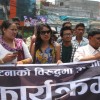
Dalit Women Face Multiplied Discrimination
Maya Sarki, a resident of Belbari in eastern Nepal, was returning home one summer evening last year when she was attacked. She was forced down on the ground and her attacker attempted to rape her.
Protesters Resist an ‘Indian Fukushima’
Activists opposed to India’s plans to massively increase civilian nuclear power production are aghast that a plan for an Indo-Japanese nuclear cooperation deal is gaining pace even while Japan is struggling to cope with the fallout of the March 2011 Fukushima nuclear disaster.« Previous Page — Next Page »





The Week with IPS

NEXT STOP - SDGs
Tracking global progress towards a sustainable world
Tracking global progress towards a sustainable world
