Languages
Thursday, November 12, 2026



News and Views from the Global South
Asia-Pacific

Jeju Island Base Divides Korean, International Green Groups
As construction of a hotly contested naval base on South Korea’s Jeju Island advances, there’s a showdown underway.
It’s Either Orangutans Or Cheap Palm Oil
When four men were sentenced to eight months in jail in March for the ‘murder’ of orangutans, it was the first time that people associated with Indonesia’s booming palm oil industry were convicted for killing man’s close relations in the primate family.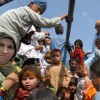
Back Home With Help and Hope
Thousands who fled their homes in the Taliban-led violence over the past three years have now returned to rebuild their lives, and their homes.
Is the Staggering Rise of the South Sustainable?
Growth in developing economies (DEs) has accelerated significantly in the new millennium.
Activists Score in Fight Against Nuclear Power
A new wave of anti-nuclear protests in Japan this summer, sparked by the disastrous meltdown at a power plant last year, suggests that civil society is no longer willing to allow the government to take the lead in deciding the nation’s energy policy.
Free Trade with China? No, Gracias
There is little likelihood that South America’s Mercosur trade bloc will take up China’s proposal to establish a free trade agreement, at least in the short term. Experts and industrialists fear an invasion of cheap Chinese goods, and unequal competition.Equal Parts Tolerance and Extremism in Indonesian Islam
Scattered across 17,000 islands on the Indian and Pacific oceans, the world's largest Muslim country has found its own blend of Islam: equal parts religion, secularism and contradictions.
Elderly Find Few Places to Call Home
Mr. Jayakumar (73), a philanthropic bachelor hailing from a prosperous industrial family in the southern Indian state of Karnataka, decided at the age of 70 that it was time to settle down.
Ahmadis Lose Hope This Ramadan
As millions around the world enter the third week of the Ramadan fast, the fraternity that typically unites Muslims during the holy month does not extend to Pakistan’s Ahmadi community, which is facing worse persecution than ever before.
OP-ED: Weapons into Ploughshares, and Crises into Opportunity
The crisis that started a few years ago with the collapse of major financial institutions in the United States is now centred in Europe and threatens other parts of the world. Many emerging countries in Asia and Latin America that had thus far avoided contamination because of their sound economic and fiscal policies and their timely adoption of domestic consumption stimulus packages are now beginning to experience secondary effects.
Droughts Bring Climate Change Home to Nepali Farmers
Farmers in this fertile central district of south Nepal are convinced that an intense drought between May and early July that destroyed their maize crops is the result of climate change.
From the Ashes of Tragedy, Lessons for Disaster Management
At 4:30 a.m. on the morning of Jul. 30, sleeping passengers in carriage S 11 on the Chennai-bound Tamilnadu Express were awoken by a blazing fire, as the train approached the east coast town of Nellore, just two and a half hours shy of its final destination.
Climate-Battered South Asia Looks to Rio+20 Formula
Far-flung South Asian communities, from the high Himalayan slopes to the Indian Ocean coasts, united in the face of extreme and uncertain weather, continue to hold on to the hope that the Rio+20 focus on disaster risk reduction (DRR) will positively influence national policies.
An Unconventional Road to Peace
In a country where talk of a ceasefire brings representatives from 11 different armed ethnic groups to the table, Myanmar’s chief peace negotiator, Railway Minister Aung Min, is experimenting with an unusual solution to decades of separatist struggles.
Pakistan Faces a ‘Youth Bomb’
“This is just a trailer of the horror that awaits us,” says noted demographer Farid Midhet, referring to Pakistan’s bulging population and the possibly corresponding link to rising crime, including murders, robberies, rioting and extremist activity.
Q&A: U.N. Spotlights Pirates in the Malacca Strait at Expo 2012
At the Yeosu World Expo 2012, the U.N. commemorated the thirtieth anniversary of the U.N. Convention of the Law of the Sea (UNCLOS), highlighting efforts to quell the global scourge of piracy.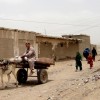
Pakistan Says Goodbye to Refugees Not Leaving
Pakistan faces increased international pressure to extend the stay of Afghan refugees as it seeks to push them back to war-torn Afghanistan.South Korea Showcases Role as Donor at Expo 2012
When South Korea took the initiative to integrate a development cooperation programme into this year’s World Expo, it stepped up its efforts to gain credibility as a donor on the international stage.
India Drowning in Waste, Experts Warn
Almitra Patel, a civil engineer by qualification, says she was first alerted to India’s huge problem of inadequate waste disposal when she noticed that the frogs in the marshlands near her farmhouse, on the city’s outskirts, had stopped croaking.
Q&A: South Korea Steps Up as Marine Conservation Champion
When South Korea picked an oceans theme for the 2012 Yeosu World Expo, it became host to the largest marine-themed event in history, with the potential to make a concrete contribution to sustainable development and simultaneously buoy the Korean global image.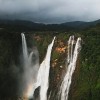
UNESCO Protection Crucial – and Controversial
It took six years for a dedicated team of scientists from the Wildlife Institute of India, wildlife officials from six Indian states and officials from the federal ministry to secure international protection for one of India’s most precious biological reserves.« Previous Page — Next Page »





The Week with IPS

NEXT STOP - SDGs
Tracking global progress towards a sustainable world
Tracking global progress towards a sustainable world
