Languages
Sunday, November 22, 2026



News and Views from the Global South
Latin America & the Caribbean

PERU: Fujimori’s Lawyers See Opportunity in Reduction of Death Squad Sentences
Former Peruvian president Alberto Fujimori's defence lawyers said the Supreme Court decision to reduce the prison sentences of army intelligence agents found guilty of human rights abuses is "relevant" to his case.
Children Injured in Police Crackdown on Chile’s Mapuche Indians
“We have been trampled by this racist Chilean state, which oppresses us. The police force represses all Mapuche people…they shoot at us in cold blood.”Paraguay Opens Doors to Unregulated Foreign Investment
In his first month as president of Paraguay, Federico Franco has thrown open the doors of his country to foreign investments that have raised questions about environmental safety.
Military Service Leaves Culture of War Behind in Guatemala
“I feel proud to be a part of this change. Malnutrition cannot be wiped out in just two or three years, but this is the beginning and I want to be a part of it,” says Isabela Tzoc, a civic service volunteer involved in a youth programme aimed at fighting extreme poverty in Guatemala.
Bolivia’s Indigenous Women Seek the Political Kingdom
A growing number of Bolivia's indigenous women are participating in politics, ready to break the barriers of gender and ethnicity.
Climate Change and Poverty, a Deadly Cocktail for Dominicans
"Nobody mourns the poor, you know." That is the grim conclusion of a resident of La Ciénaga, one of the many poverty-stricken settlements clustered along the banks of the Ozama River in the Dominican capital, and which are at the mercy of the weather.
Voracious Lionfish on Caribbean’s Menu
In a case of "if you can’t beat them, eat them," Caribbean countries have embarked on a new strategy to deal with the invasive lionfish, whose voracious appetite is wiping out fish stocks from Bermuda to Barbados in what scientists believe to be the worst marine invasion in history.Assault on Colombian Trade Unions Continues Unabated
Two months after a free-trade agreement between the United States and Colombia went into effect, workers and activists are warning that U.S.-stipulated labour reforms have not been fully implemented and have yet to result in promised improvements in the lives of workers.Mexican Official: CIA ‘Manages’ Drug Trade
The U.S. Central Intelligence Agency and other international security forces "don't fight drug traffickers", a spokesman for the Chihuahua state government in northern Mexico has told Al Jazeera, instead "they try to manage the drug trade".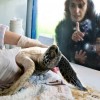
Sea Turtles Trapped by Sudden Drop in Temperature in Uruguay
A record number of sea turtles are turning up on Uruguayan beaches along the Atlantic Ocean and Río de la Plata this Southern hemisphere winter, suffering from cold shock and hypothermia.
Scientists Discover New Threats to Corals
Most corals thrive only in shallow waters, where there is enough light for them to grow. But the rapid rise in sea level, due to the melting of polar ice, is making these conditions increasingly scarce.
“We Tripantu”, the Mapuche people’s new year celebration
 "We Tripantu" means "rising of the new sun," and is the new year celebration of the Mapuche people, held over the shortest days of the year in the southern hemisphere, coinciding with the winter solstice.

U.N. Urged to Take Lead in Aiding Cholera-Stricken Haiti
U.S. legislators are appealing to the United Nations to take a greater role in addressing Haiti's cholera outbreak, now in its third year and which has has left thousands dead.Guyana’s Gold Boom Brings Pollution and Conflict
Pedro Melville, 62, a father of nine from Guyana's northwestern gold and manganese mining district of Matthew’s Ridge, sees the impacts of unchecked prospecting on the local environment every day.
Women Rights Defenders Targeted in Mexico
There has been an alarming increase over the past two years in violence against women human rights defenders and journalists in Mexico, according to women’s human rights organisations.
Caribbean Moves to Protect Rights of HIV-Positive Workers
Thirty years into the HIV and AIDS epidemic, Caribbean countries are slowly putting necessary legislation in place to ensure the rights of workers despite their HIV/AIDS and chronic disease status.
Prison Study Programme Shuns Argentine “Dirty War” Criminals
A group of prisoners convicted of crimes against humanity committed during Argentina's last dictatorship (1976-1983) have put university and prison authorities in a difficult position by asking to enrol in an academic study programme for inmates financed by the state.To Reduce Teen Pregnancies, Start with Educating Girls
Each year, 16 million girls aged 15-19 give birth. 50,000 of them die from complications related to pregnancy and childbirth. And 95 percent of those births occur in developing countries.
Mexican Activists Defend Internet Freedom
Mexican advocates of internet freedom are mobilising to protest their government's decision to sign the Anti-Counterfeiting Trade Agreement (ACTA), a multilateral treaty whose stated aim is to protect intellectual property right through enhanced international cooperation and enforcement.
New Waste-to-Energy Facility Helps Barbados Toward Greener Economy
When it comes to pursuing a greener path to economic development, the tiny Caribbean island of Barbados is not about to allow its small size and limited resources to get in its way.Chile Debates Control over Lithium Production
The Chilean government's decision to invite companies to tender offers for mine lithium resources has been widely rejected by mining trade unions and legislators of the opposition.« Previous Page — Next Page »


The Week with IPS

NEXT STOP - SDGs
Tracking global progress towards a sustainable world
Tracking global progress towards a sustainable world

