Languages
Friday, November 6, 2026



News and Views from the Global South
Millennium Development Goals (MDGs)

Q&A: A Portrait of the Superstars of Celebrity Activism
Start a global debate about the underlying reasons why poverty exists – and do it through cinema.
Sex Education Is Also a Right
Learning about respect in a relationship, sexual orientation, sexuality, gender equality and family planning forms part of the right to sex education that is still not enjoyed by all children and adolescents in Latin America.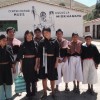
Getting an Education – a Heroic Feat for Native Children in Bolivia
Even before the sun comes up, Reinaldo starts out on the two-hour journey to the school he attends in a small native village in Bolivia, hiking along steep, narrow paths that take him across ravines and rivers.
People’s Tribunal Defends Native Villages from Dams
"What do we stand to lose because of the dam? We will lose everything!" said Maria Abigail Agredani, a member of the committee for this indigenous community in the western Mexican state of Jalisco, reporting the damage that will be caused by the hydroelectric complex being built nearby.
Q&A: “The Main Challenge for Ecofeminism Is Its Own Contradictions”
We must work "for all of the human rights of women," not just sexual and reproductive rights, said Coca Trillini, describing the challenges facing the ecofeminist movement that she has embraced since becoming an activist in Católicas por el Derecho de Decidir (CDD - Catholics for Choice).
New Era Augurs More of the Same for Impoverished Maya People
The Maya Indians of Central America and Mexico will have little to celebrate when the current era comes to an end on Dec. 21. The extreme poverty and marginalisation they face contrast sharply with the plans for lavish celebrations to lure tourists.
Billions in Subsidies Prop up Unsustainable Overfishing
Calls are mounting for the world's big fishing powers to stop subsidising international fleets that use destructive methods like bottom trawling in foreign coastal waters, drastically reducing the catch of local artisanal fishers who use nets and fishing lines.
Brazil Emerging as Key Player at U.N.
When a U.N. member state agrees to hold an international conference in its capital, the host country is not only offered the privilege of chairing the mega meeting but also given pride of place as the keynote opening speaker.
The Sun Rescues Rural Cameroonians from “Incessant Darkness”
In the small farming village of Sabongari, in Cameroon’s North West Region, the need for kerosene to light bush lamps and petrol to run electric generators has been replaced by the need for something much cheaper and cleaner: sunshine.
India Poised to Supply Free Drugs to 1.2 Billion People
As the northern Indian state of Rajasthan rolls out an ambitious universal healthcare plan, the discontent of the state’s doctors stands in stark contrast to the joys of the 68 million people who will benefit from the scheme.
Despite Poverty Pacific Islands Score on Child Mortality
The Pacific Islands are making steady progress on reducing child mortality, but most are struggling to eradicate poverty and generate employment for young and rapidly growing populations.
For Champions of Degrowth, Less Is Much More
The concept of degrowth is not a very comfortable one in overdeveloped countries such as the United States.
Farm Holds Out Hope for Peace and Development in DR Congo
Dairy cattle are again grazing on the rolling green hills of North Kivu province, in the eastern Democratic Republic of Congo. Twenty years ago, an explosion of ethnic violence tore through this region, and the restoration of the Lushebere farm can be seen as both a sign and a guarantee of a fragile peace.New Media Law, New Voices in Argentina
"We don't need other people to speak for us any more. We have our own voice now," Armando Kispe of Queta, a Kolla indigenous community, said enthusiastically at the Pachakuti radio station high on the puna plateau in the northwestern Argentine province of Jujuy.
Better Governance to Achieve Food Security
Despite a sudden increase in July this year, prices of cereals on world markets remained fairly stable. But there are no grounds for complacency, as cereals markets remain vulnerable to supply shocks and disruptive policy measures. In this context, the good harvests that are expected in the Southern Hemisphere are important.
Indigenous Seek Profits From Forests
Kenya’s Ogiek community, the indigenous group of hunter-gatherers who were evicted from the Mau Forest three years ago, say they will no longer sit by and watch logging companies profit from the resources of their traditional home while they live in poverty in tented camps around the forest without even the most basic of services, like sanitation.Mexico’s Homeless Are Targets of “Social Cleansing”
Non-governmental organisations in Mexico are presenting a complaint Friday Nov. 2 before the Inter-American Commission on Human Rights about government mistreatment and "social cleansing" of thousands of people living on the street in several of the country's cities.
Q&A: “Smallholder Agriculture Needs to Be Seen as a Business”
The countries of the developing South should remove the barriers still faced by small-scale farmers, because smallholders play a key role in economic growth, says Carlos Seré, the International Fund for Agricultural Development’s (IFAD) chief development strategist.
Foreign Farmers Undermine Food Security in Zambia
Increased agricultural development in Zambia will actually compromise the country’s food security as peasant farmers continue to be driven off their customary land to pave the way for large-scale local and foreign agribusiness, according to the University of Zambia’s dean of the school of agriculture, Dr. Mickey Mwala.
Q&A: Food Production Accounts for 29 Percent of Greenhouse Gases
Food production, including agriculture, represent 29 percent of the greenhouse gases that are causing global warming, say scientists with the Consultative Group on International Agricultural Research (CGIAR).
Greening Havana
Sandra Ribalta is no longer satisfied with getting more and more people involved in the task of greening the neighbourhood of Las Cañas in the Cuban capital. She is now working to raise awareness of "climate change, as the key reason for reforestation."« Previous Page — Next Page »





The Week with IPS

NEXT STOP - SDGs
Tracking global progress towards a sustainable world
Tracking global progress towards a sustainable world
