Languages
Sunday, November 8, 2026



News and Views from the Global South
Poverty & MDGs

ZAMBIA: No Longer “Waiting for the Mangoes to Ripen”
Eight years ago when Mary Sitali’s husband divorced her, by sending a traditional letter to her parents saying that he no longer wanted her and they could "marry her to any man of your choice - be he a tall or a short man, the choice being entirely yours," she returned to her village in rural Zambia with their two children and no way of supporting them.
GHANA: Father’s Fight to Save Daughter from Genital Mutilation
When Jack Sabadgou left Ghana for Switzerland 10 years ago, he left his infant daughter behind to be raised by her mother. Now he wants his child back, and he is running out of time in a bid to save her from the banned traditional practice of female genital mutilation.
Africa’s Urban Slum Children Among Most Disadvantaged
Each day after school, nine-year-old Nelly Wangui hurries home with a bundle of firewood balanced on her head. The paper bag in which she carries her schoolbooks sits precariously on top of the stack and every now and then she reaches out to ensure that her books have not fallen down.Argentina Losing Regional Leadership Position in Health
In Latin America, Argentina spends the most on healthcare. It has a vast infrastructure, highly qualified health professionals and the necessary material resources. But other countries in the region are achieving better and faster health outcomes with fewer resources.Africa’s Urban Slum Children Among Most Disadvantaged
Each day after school, nine-year-old Nelly Wangui hurries home with a bundle of firewood balanced on her head. The paper bag in which she carries her schoolbooks sits precariously on top of the stack and every now and then she reaches out to ensure that her books have not fallen down.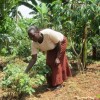
Rural Women Are Leading the Way – Will the World Follow? – Part 2
The United Nations’ 56th session of the Commission on the Status of Women (CSW) begins today in New York, with the empowerment of rural women high on a list of priorities for this year.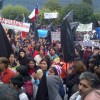
Social Unrest on the Rise in Southern Chile
The police have cracked down hard on demonstrators in the southern Chilean region of Aysén, who have been protesting the area's isolation and high local prices of fuel and food for the past two weeks.
Rural Women Are Leading the Way – Will the World Follow? – Part 1
Agriculture currently provides a livelihood for roughly 1.3 billion smallholder farmers and landless workers, of which nearly half – close to 560 million – are women.SPAIN: Demonstrators Protest Bank Bailouts and Spending Cuts
Demonstrators in nearly two dozen cities in Spain raised their voices Friday to protest against the use of public funds to bail out banks while the budgets for basic services like education and health are being slashed.
ARGENTINA: Three-Quarters of “Breadbasket” Is Drylands
How has Argentina managed to maintain its image as one of the world's breadbaskets when a full three-fourths of its territory consists of drylands? This was one of the questions raised by the scientists who decided to create the National Observatory on Land Degradation and Desertification this year.NGOs Urge “Solution from Within” For Somalia
While the international community discusses Somalia's future in London and Brussels, European and Somali non-governmental organisations are calling for a radical shift from a military to a humanitarian approach as the only solution to the country's war-torn condition.
Rural Women in Latin America Face Myriad Hurdles
"Sometimes I think of giving it all up,” Aura Canache, a small farmer in Venezuela, told IPS. “My neighbours get loans and aid, but I never have. The farm assistance plans are for men, although there are many women living off the countryside too.”
Wanted: Climate-Smart Agriculture
As the links between food security and climate change become increasingly inextricable, the necessity for sustainable agriculture is now a universal concern.
BRAZIL: A Curse on Hydropower Projects in the Amazon?
"Perhaps it's the curse of Rondônia," joked Ari Ott, referring to teething troubles with the first turbine of the Santo Antônio hydroelectric plant which was intended to kick off a new cycle of huge power projects in Brazil's Amazon jungle region.
Women, Victims of War, Have No Seat at Negotiating Table
When the U.N. Commission on the Status of Women (CSW) held its inaugural meeting in London back in 1946, the U.S. delegate, Eleanor Roosevelt, read an open letter to "the women of the world" calling on governments to encourage women everywhere to participate in national and international affairs.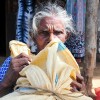
ECONOMY: Sri Lankan Poor Hit by Triple Whammy
First the government devalued the Sri Lankan rupee by three percent in November. Then interest rates were hiked. And to cap that U.S. sanctions hit Iran, which meets 90 percent of this country’s oil needs.
Somalis Hopeful of London Meeting Despite Media Scepticism
With an international meeting aimed at resolving the political crisis in Somalia set to take place Thursday, the local media in this East African nation is awash with scepticism, referring to the efforts as a new system of re-colonising the country.
Afghan Refugees Hounded in Pakistan
The Khyber Pakhtunkhwa government recently launched a harsh crackdown on illegal Afghan immigrants who have been pouring across the border into Pakistan, going so far as to request federal government permission to deal with the situation, which has deep social and economic implications for the host country.
Q&A: How to Reverse the “Feminisation of Poverty”
The phrase "financing for gender equality" may sound dry, but it lies at the heart of some of the most intractable problems faced by women around the world today – and whether the political will exists to allocate real resources to solving them or simply pay lip service.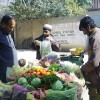
Afghan Refugees Hounded in Pakistan
The Khyber Pakhtunkhwa government recently launched a harsh crackdown on illegal Afghan immigrants who have been pouring across the border into Pakistan, going so far as to request federal government permission to deal with the situation, which has deep social and economic implications for the host country.GUATEMALA: Zero Hunger Plan Must Focus on Production, Experts Say
“We don’t want a repeat of welfare-oriented programmes, because they are unsustainable,” said Rony Palacios of the National Network for the Defence of Food Sovereignty in Guatemala, criticising President Otto Pérez Molina’s Zero Hunger plan.« Previous Page — Next Page »





