Languages
Saturday, October 17, 2026



News and Views from the Global South
UNFCCC
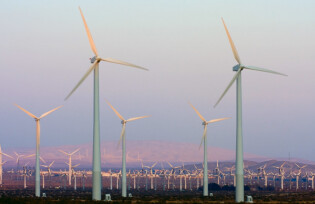
Global Emissions Falling Too Slowly, Expert Urges Renewables Push, Fair Finance
A decade has passed since the adoption of the Paris Agreement, and a United Nations synthesis report released ahead of COP30 in Belém shows that "Parties are bending their combined emission curve further downwards, but still not quickly enough."
Banks Embed Climate Risk, Gender and Sustainability in Finance Products
As climate shocks intensify across East Africa, from failed rains in Kenya’s arid north to devastating floods in Tanzania’s coastal belt, the region’s banks are emerging as unlikely but powerful players in the resilience race.
Bending the Curve: Overhaul Global Food Systems to Avert Worsening Land Crisis
Current rates of land degradation pose a major environmental and socioeconomic threat, driving climate change, biodiversity loss, and social crises. Food production to feed more than 8 billion people is the dominant land use on Earth. Yet, this industrial-scale enterprise comes with a heavy environmental toll.
Guyana’s New Oil Fields Both Blessing and Curse
The recent discovery of large volumes of oil offshore of Guyana could prove to be a major headache for the country, as the Caribbean Community (CARICOM) and other Alliance of Small Island States (AOSIS) members press for keeping global temperature rise to 1.5 degrees C above pre-industrial levels as provided for in the historic Paris Climate Agreement.
Kenya Greens Drylands to Combat Land Degradation
Faced with growing degradation that is swallowing large swathes of land in arid and semiarid areas, Kenya is heavily investing in rehabilitation efforts to stave off the threat of desertification.
Jamaica’s Climate Change Fight Fuels Investments in Renewables
By year’s end, Jamaica will add 115 mega watts (MW) of renewable capacity to the power grid, in its quest to reduce energy costs and diversify the energy mix in electricity generation to 30 per cent by 2030.
Africa Sees U.N. Climate Conference as “Court Case” for the Continent
As the clock ticks towards the United Nations climate change conference (COP21) in Paris in December, African experts, policy-makers and civil society groups plan to come to the negotiation table prepared for a legal approach to avoid mistakes made during formulation of the Kyoto Protocol.
Opinion: Paris Will Be Make or Break for the Planet
December 2015 will define the course of humanity’s survival at the crunch U.N. climate conference in Paris, known in technical jargon as the 21st Conference of Parties (COP21).
Opinion: Women in the Face of Climate Change
After surviving the storm surge wreaked by Typhoon Haiyan in the Philippines in November 2013, women in evacuation centres found themselves again fighting for survival … at times from rape. Many became victims of human trafficking while many more did anything they could to feed their families before themselves.
Climate Change Shrinking Uganda’s Lakes and Fish
Climate change is reducing the size of several species of fish on lakes in Uganda and its neighbouring East African countries, with a negative impact on the livelihoods of millions people who depend on fishing for food and income.
Zimbabwe’s Forest Carbon Programme Not All It Seems
The efficacy of attempts to sustainably manage forests and conserve and enhance forest carbon stocks in Zimbabwe is increasingly coming under scrutiny as new research warns that the politics of access and control over forests and their carbon is challenging conventional understanding.
Zimbabwe’s Climate Change Ambitions May be Too Tall
With the U.N. Climate Change conference later this year in Paris fast approaching, Zimbabwe's climate change commitments face the slow progress on an issue that continues to stalk other developing countries – climate finance.
Financial Inclusion Key to Climate Risk Reduction for Zambia’s Smallholders
In the advent of unpredictable weather, smallholder rain-dependent agriculture is increasingly becoming a risky business and the situation could worsen if, as seems likely, the world experiences levels of global warming that could lead to an increase in droughts, floods and diseases, both in frequency and intensity.
Small Victories at Bonn Climate Talks
As climate talks wind down in Bonn, Germany, observers of the negotiations say that despite some progress on a draft text, key issues remain unresolved and will carry over at least until the next round in August.
Climate Change: Some Companies Reject ‘Business as Usual’
When it comes to climate change, business as usual is simply “not an option”.
African Women Mayors Join Forces to Fight for Clean Energy
When some 40,000 delegates, including dozens of heads of state, descend on Paris for the United Nations Climate Change Conference later this year, a group of African women mayors plan to be there and make their voices heard on a range of issues, including electrification.
U.N. Climate Talks Advance Link Between Gender and Climate Change
A week of climate negotiations in Geneva, Switzerland Feb. 8-13 are setting the stage for what promises to be a busy year. In order to reach an agreement in Paris by December, negotiators will have to climb a mountain of contentious issues which continue to overshadow the talks.
Climate Finance Flowing, But for Many, the Well Remains Dry
For more than 10 years, Mildred Crawford has been “a voice in the wilderness” crying out on behalf of rural women in agriculture.
Charting a Course for Survival, or Oblivion?
Hopefully, on Earth Day today, high-level ministers from all countries are thinking about what they can bring to the table at a key set of meetings on climate change in early May.
IPCC Climate Report Calls for “Major Institutional Change”
Greenhouse gas emissions rose more quickly between 2000 and 2010 than anytime during the previous three decades, the world’s top climate scientists say, despite a simultaneous strengthening of national legislation around the world aimed at reducing these emissions.
Hard-Hit CDM Carbon Market Seeks New Buyers
Since they first emerged as a result of the 1997 Kyoto Protocol, carbon offset markets have been a key part of international emissions reductions agreements, allowing rich countries in the North to invest in “emissions-saving projects” in the South while they continue to emit CO2.Next Page »





The Week with IPS

NEXT STOP - SDGs
Tracking global progress towards a sustainable world
Tracking global progress towards a sustainable world
