Languages
Saturday, October 3, 2026



News and Views from the Global South
Active Citizens

Hold the Rich Accountable in New U.N. Development Goals, Say NGOs
When the World Economic Forum (WEF) met last January in Switzerland, attended mostly by the rich and the super-rich, the London-based charity Oxfam unveiled a report with an alarming statistic: if current trends continue, the world’s richest one percent would own more than 50 percent of the world’s wealth by 2016.Gates Foundation Slammed for Plan to Privatise African Seed Markets
The Bill and Melinda Gates Foundation (BMGF) has been attacked by activists over alleged support of a plan to privatise African agricultural markets.
Salvadoran Maquila Plants Use Gang Members to Break Unions
Textile companies that make clothing for transnational brands in El Salvador are accused of forging alliances with gang members to make death threats against workers and break up their unions, according to employees who talked to IPS and to international organisations.
Four Fast Facts to Debunk Myths About Rural Women
We are lucky to live in a country that has long since abandoned the image of the damsel in distress. Even Disney princesses now save themselves and send unsuitable “saviours” packing. But despite the great strides being made in gender equality, we are still failing rural women, particularly women farmers.
CSW 59 Wraps up as Delegates Look Towards 2016
The Commission on the Status of Women, one of the biggest events on the calendar for United Nations headquarters in New York City, is over for another year.
Opinion: Measurement Matters – Civic Space and the Post-2015 Framework
For those of us interested in a vibrant civil society, it seems to be best of times and the worst of times.
Opinion: Water and Sanitation in Nigeria – Playing the Numbers Game
In Nigeria, it’s all about the numbers. My nation recently became the largest economy in Africa by some distance, with a GDP of well over 500 billion dollars.
Lip-Service But Little Action on U.N. Business and Human Rights Principles in Latin America
“I would tell institutions and companies that are aware of the enormous damage they do to the soil, plants and the environment, to respect the decisions of the people. They are attacking life and health,” complained Taurino Rincón, an indigenous Mexican.
Opinion: ‘We Owe It to More Than Half of the Global Population to Do a Better Job’
Undoubtedly, we are at a crucial time in the advancement of gender equality.
Development and Taxes, a Vital Piece of the Post-2015 Puzzle
Public funds are vitally important to achieving the Sustainable Development Goals (SDGs), making corporate tax avoidance trends a pressing issue for post-2015 Financing for Development discussions.
Opinion: Sustainable Development Goals Could Be a Game-Changer for Water
Suppose money was being deposited and withdrawn from your bank account, but you didn’t know how much. And suppose you knew you had bills coming due, but you didn’t know when or what amount would be required to cover them.
Victims of Clerical Sex Abuse Join Forces in Latin America
Victims of sexual abuse by Catholic priests in Latin America are taking the first steps towards grouping together in order to bolster their search for justice – a struggle where they have found a new ally: filmmaking.
Women in the Philippines at the Forefront of the Health Food Movement
When Tinay Alterado’s team from ARUGAAN, an organisation of women healthcare advocates, visited Eastern Visayas, a region of the Philippines devastated by Typhoon Haiyan in November 2013, they noticed that the relief and rescue sites were flooded with donated milk formula, which nursing mothers were feeding to their babies in vast quantities.
Why Investors Should Think Twice before Investing in Coal in India – Part 2
In November last year, India’s power minister Piyush Goyal announced that he plans to double coal production in India by the end of this decade and, in an effort to enhance production, the Indian government has started a process of auctioning coal blocks.
World’s Richest One Percent Undermine Fight Against Economic Inequalities
The growing economic inequalities between rich and poor – and the lopsided concentration of wealth and power in the hands of the world’s one percent - are undermining international efforts to fight global poverty, environmental degradation and social injustice, according to a civil society alliance.
Nobel Peace Laureate Calls for Global Human Compassion to Combat Child Slavery
Nobel Peace Laureate Kailash Satyarthi has called for globalised human compassion to combat the global and persistent problems of child labour and child slavery.
Banana Workers’ Strike Highlights Abuses by Corporations in Costa Rica
A strike that has brought activity to a halt since January on three major banana plantations on Costa Rica’s southern Caribbean coast, along the border with Panama, has highlighted the abuses in a sector in the hands of transnational corporations and has forced the governments of both countries to intervene.
Unseen and Unheard: Afghan Baloch People Speak Up
 Balochistan, divided by the borders of Iran, Pakistan and Afghanistan, is a vast swathe of land the size of France. It boasts enormous deposits of gas, gold and copper, untapped sources of oil and uranium, as well as a thousand kilometres of coastline near the entrance to the Strait of Hormuz.
Despite the wealth under their sandals, the Baloch people inhabit the most underdeveloped regions of their respective countries; Afghanistan is no exception.
Balochistan, divided by the borders of Iran, Pakistan and Afghanistan, is a vast swathe of land the size of France. It boasts enormous deposits of gas, gold and copper, untapped sources of oil and uranium, as well as a thousand kilometres of coastline near the entrance to the Strait of Hormuz.
Despite the wealth under their sandals, the Baloch people inhabit the most underdeveloped regions of their respective countries; Afghanistan is no exception. 
Opinion: Rape in Conflict: Speaking Out for What’s Right
Earlier this month, President Barack Obama delivered an impassioned speech marking the 50th Anniversary of the civil rights march from Selma to Montgomery, Alabama and the bloody attack on civil rights marchers by police.
Women Turn Drought into a Lesson on Sustainability
When a group of women in the remote village of Sadhuraks in Pakistan’s Thar Desert, some 800 km from the port city of Karachi, were asked if they would want to be born a woman in their next life, the answer from each was a resounding ‘no’.
Veto Costs Lives as Syrian Civil War Passes Deadly Milestone
As the long drawn-out Syrian military conflict passed a four-year milestone over the weekend, the New York-based Global Centre for the Responsibility to Protect (R2P) summed it up in a striking headline: 4 years, 4 vetoes, 220,000 dead.« Previous Page — Next Page »


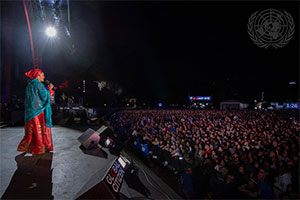 Global Citizen Festival in New York. Credit: UN Photo/Eskinder Debebe
Active citizens are committed to social change because they know that it is achievable. However, major political challenges face active citizens across the world. For example, in authoritarian regimes in Latin America where the hegemonic party has been in power for decades on end, protestors and human rights activists face enormous repression and struggle to materialize their advocacy into concrete results. The same can be said for Africans, where a shift towards elected government in recent decades has yet to translate into an effective voice in decision-making. Now, the Strengthening Citizen Demand for Good Governance, which uses evidence-based approaches – funded by DFID's Governance and Transparency Fund – seeks to raise their voices.
In 2025, the CIVICUS Monitor’s People Power Under Attack report revealed that civic freedoms are severely limited in 122 of 198 countries and territories, and only 7.2% of the global population now lives in countries where civic space is open. Through partnership with the Overseas Development Institute (ODI) and CIVICUS, IPS reporters across the continent will seek to define the extent and limits of state capability, government accountability and the responsiveness of leaders to the needs of citizens.

The Week with IPS

NEXT STOP - SDGs
Tracking global progress towards a sustainable world
Tracking global progress towards a sustainable world
