Languages
Thursday, November 19, 2026



News and Views from the Global South
Civil Society
Conservatives and Nationalists At Centre Stage in Poland
A mix of conservative Catholicism and nationalism has become the predominant view in Polish public debate, with some worrying effects.
Liberated Homs Residents Challenge Notion of “Revolution”
Al-Waer, Homs’s most populated area and the city’s last insurgent holdout, might soon achieve the truce that Hom’s Old City saw in May this year when, in an exchange deal, the insurgents left their strongholds.
Amid Scepticism, U.N. Trumpets Successes in Cutting Poverty
With 17 months before the Millennium Development Goals (MDGs) reach their targets by the December 2015 deadline, the United Nations is trumpeting its limited successes - but with guarded optimism.
Burundian Women Want a Greater Say in Running of Country
As Burundi heads towards the 2015 general elections, and despite a quota of 30 percent women’s representation in parliament, women in this southeast African nation feel that they are yet to have a significant say in the management of their country.
Obama Urged to Sanction Mozambique over Elephant, Rhino Poaching
Environmentalists are formally urging President Barack Obama to enact trade sanctions on Mozambique over the country’s alleged chronic facilitation of elephant and rhinoceros poaching through broad swathes of southern Africa.
Rights Experts Urge Action on Gender Equality in Taiwan
Prominent international human rights experts are calling on the Taiwan government to quickly enact a comprehensive anti-discrimination act, revamp the law on citizenship and take a wide range of other actions to curb gender discrimination.
Gun Lobbyists, Minus Weapons, Gather at World Body
When the United Nations hosted its biennial review meeting on the illicit trade in small arms last month, the conference room was overflowing both with pro-gun and anti-gun lobbyists.
A Third Term for DR Congo President Expected to Wreak Social Havoc
Proposals to review the Democratic Republic of Congo’s constitution to permit President Joseph Kabila to seek a third term of office, if accepted, will only plunge the Congolese further into poverty and insecurity, experts warn.
Inequality Blocks Path to “Gold” in Latin America
Inequality, poor infrastructure and declining trade are some of the problems that Latin America needs to overcome if the region truly wishes to achieve a “golden age”, according to Peru’s President Ollanta Humala.
Looking to Africa’s LDCs to Learn How to Save the Lives of Millions of Mothers and their Babies
Every year, three million newborn babies and almost 6.6 million children under five die globally, but if the rest of the world looked towards the examples of two of Africa's least-developed countries (LDCs), Rwanda and Ethiopia, they would perhaps be able to save these children.
Ethnic Cleansing Goes Unpunished in the ‘Land of the Pure’
It has been two years since he survived an attack on his life, but 24-year-old Quwat Haider, a member of Pakistan’s minority Hazara community, still finds it hard to narrate the events that scarred him for life.
Syrian Kurds Have Their Own TV Against All Odds
Rudi Mohamed Amid gives his script one quick, last glance before he goes live. "Roj bas, Kurdistan (Good morning, Kurdistan)," he greets his audience, with the assuredness of a veteran journalist. However, hardly anyone at Ronahi, Syrian Kurds' first and only television channel, had any media experience before the war.
Plagued By Dengue Fever, Sri Lanka Looks to the Weatherman
What’s the connection between weather forecasts and the mosquito-borne dengue virus? It’s not just a question for science nerds; in Sri Lanka, health officials believe answering this question could save lives.
Zambian Churches Slow to Use ‘Socio-political Influence’ to Fight for Climate Justice
It seems that churches in Zambia are becoming more pragmatic in their approach by advocating for better policies and training of vulnerable communities on climate change adaptation mechanisms.
U.S. Reaction to New Immigrant Influx Could Violate International Law
Rights advocates and lawmakers are expressing increased concern over the United States’ handling of the sudden influx of tens of thousands of undocumented child and female migrants from Central America.
After Losing Vote, U.S.-EU Threaten to Undermine Treaty
The United States and the 28-member European Union (EU) have assiduously promoted - and vigourously preached - one of the basic tenets of Western multi-party democracy: majority rules.
Moscow Protest Highlights Litany of Abuses Suffered by Russia’s Drug Users
A protest in Moscow Thursday marking the U.N. International Day Against Drug Abuse and Illicit Trafficking has highlighted the ‘torture’ drug users are put through in the Russian criminal justice system.
Community Resilience Tops U.N.’s Disaster Relief Agenda
The Bangkok Declaration on Disaster Risk Reduction in Asia and the Pacific adopted at the close of the 6th Asian Ministerial Conference On Disaster Risk Reduction (AMCDRR) here today emphasised community-based solutions, and reflects a growing global desire to focus more on grassroots actions in the face of catastrophic climate change.
This is What Happened to the 18,000 People Forcefully Relocated to an Arid Zimbabwean Government Farm
 When the Tokwe-Mukosi dam’s wall breached, so started the long, painful and disorienting journey for almost 18,000 people who had lived in the 50-kilometre radius of Chivi basin in Zimbabwe’s Masvingo province as even those not affected by the flood were removed from their homes.

Battle Stations: Civil Society Fights Radio and TV Spectrum Auctions
Pressure from social organisations has temporarily halted concessions of television broadcasting frequencies in El Salvador, a country where the struggle for spectrum ownership has political and ideological overtones, as well as economic ones.
Zimbabwe’s Unfolding Humanitarian Disaster – We Visit the 18,000 People Forcibly Relocated to Ruling Party Farm
As the villagers sit around the flickering fire on a pitch-black night lit only by the blurry moon, they speak, recounting how it all began. They take turns, sometimes talking over each other to have their own experiences heard. When the old man speaks, everyone listens. “It was my first time riding a helicopter,” John Moyo* remembers.« Previous Page — Next Page »


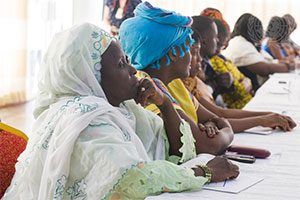 Representatives of Civil Society, Sierra Leone. Credit: UN Photo/Eskinder Debebe
Civil society faces mounting threats worldwide, even as it remains essential for democratic accountability, especially in countries struggling with economic instability and social inequality. However, at the same time, nations with weak democratic governance structures also systemically suppress the power of civil society. Human rights activists across the Global South frequently challenge issues such as political persecution and gender oppression, but in return face state-sanctioned punishment for their advocacy. Imprisonment and exile are common mechanisms of punishment that seek to erode the strength of civil society. The 2026 World Press Freedom Index has reached its lowest level in 25 years, with more than half of the world’s countries now falling into the "difficult" or “very serious” category for press freedom. IPS seeks to highlight the work of civil society across the Global South as well as the challenges that they face.
Updated by Yilan Batista and Shuli Wong August 2026

The Week with IPS

NEXT STOP - SDGs
Tracking global progress towards a sustainable world
Tracking global progress towards a sustainable world
