Languages
Thursday, November 19, 2026



News and Views from the Global South
Civil Society

Russian Law Corners Drug Users
As local authorities prepare to put an end to opioid substitution treatment (OST) programmes in the newly annexed Crimean peninsula, drug users there say they are being forced to choose between a return to addiction and becoming refugees.
Court Upholds Most of U.S. “Conflict Minerals” Law
The United States’ second-highest court has upheld most of a landmark U.S. law requiring companies to ascertain and publicly disclose whether proceeds from minerals used to manufacture their products may be funding conflict in central Africa.
Is Puerto Rico Going the Way of Greece and Detroit?
Puerto Rican society has been shaken to its foundations by the announcement in February by Standard & Poor's and Moody's credit rating agencies that they had downgraded the island's creditworthiness to junk status.
Conflict Fuels Child Labour in India
Early in the morning, 14-year-old Sumari Varda puts on her blue school uniform but heads for the village pond to fetch water. “I miss school. I wish I could go back,” she whispers, scared of being heard by her employer.
Russians Blend Loyalty to Nazarbayev with Pro-Kremlin Sentiments
On a hillside in northeastern Kazakhstan, south of the Russian border, a simple and stark slogan looms over the city of Oskemen: “Kazakhstan,” reads the message in giant white letters arrayed across the green slope.
Yakama Nation Tells DOE to Clean Up Nuclear Waste
The Department of Energy (DOE), politicians and CEOs were discussing how to warn generations 125,000 years in the future about the radioactive waste at Hanford Nuclear Reservation, considered the most polluted site in the U.S., when Native American anti-nuclear activist Russell Jim interrupted their musings: “We’ll tell them.”
Emerging Nations Opt for Arms Spending Over Development
Secretary-General Ban Ki-moon, who has relentlessly advocated drastic cuts in global military spending in favour of sustainable development, will be sorely disappointed by the latest findings in a report released Monday by the Stockholm International Peace Research Institute (SIPRI).
Whales Find Good Company
Posters with the words “Do you know who caught your seafood?” are now appearing on buses, trains and other venues in Boston. They are part of a campaign organised by a coalition of U.S. environmental groups called Whales Need Us, to draw attention to the links between Icelandic whalers and fish sold in the U.S.
Taliban Screens a New Silence
Mushfiq Wali, a 22-year-old shoemaker in northern Pakistan, loves watching films in the local Pashto language. But he says the Taliban are a killjoy: their bomb attacks have led to the closure of movie theatres, again. “They don’t spare anything that brings happiness.”
Iraqi Sunnis Seek a Say
Sunni Muslims have set up a new party amidst uncertainties as to whether elections can be held as scheduled in the troubled western regions of Iraq. Polling for the 328-seat Iraqi parliament is due Apr. 30.Government, Opposition in Televised Group Therapy in Venezuela
Government and opposition leaders in Venezuela held a nationally televised debate as a first step to working towards solutions for the economic, social and political crisis marked by over two months of protests.
“Sanitation for All” a Rapidly Receding Goal
World leaders on Friday discussed plans to expand sustainable access for water, sanitation and hygiene, focusing in particular on how to reach those in remote rural areas and slums where development projects have been slow to penetrate.

Soaring Child Poverty – a Blemish on Spain
“I don’t want them to grow up with the notion that they’re poor,” says Catalina González, referring to her two young sons. The family has been living in an apartment rent-free since December in exchange for fixing it up, in the southern Spanish city of Málaga.
Indigenous Leaders Targeted in Battle to Protect Forests
Indigenous leaders are warning of increased violence in the fight to save their dwindling forests and ecosystems from extractive companies.
New Treatments May Defuse Viral Time Bomb
Mohamed Ibrahim first learned he had hepatitis C when he tried to donate blood. Weeks later he received a letter from the blood clinic telling him he carried antibodies of the hepatitis C virus (HCV). He most likely acquired the disease from a blood transfusion he received during surgery when he was a child.
U.S.-Colombia Labour Rights Plan Falls Short
Three years after Colombia agreed to U.S. demands to better protect labour rights and activists, a “Labour Plan of Action” (LPA) drawn up by the two nations is showing mixed results at best, according to U.S. officials and union and rights activists from both countries.
Colombia’s Breadbasket Feels the Pinch of Free Trade
“Things are getting worse and worse,” Enrique Muñoz, a 67-year-old farmer from the municipality of Cajamarca in the central Colombian department of Tolima, once known as the country’s breadbasket, said sadly.
Taliban Provokes New Hunger for Education
Following scattered defiance of the Taliban earlier, a new wave of students is now heading for education in schools and colleges across the troubled north of Pakistan.
Biofortified Beans to Fight ‘Hidden Hunger’ in Rwanda
Joane Nkuliye considers herself an activist. She is part of a select group of farmers producing biofortified crops on a commercial scale in Rwanda.
Political Web Spun for ‘Youngistan’
As India votes in its 16th general election Apr. 7-May 12, the youth, comprising nearly half the country’s 814 million voters, could prove decisive. And the internet is being used increasingly to target youth in the world’s largest democratic exercise.
Cuba’s Youth Were the Target of USAID’s ZunZuneo
The generations born in Cuba in the last two or three decades, permeated by the influences of societies that differ radically from the one their government is trying to build, are in the eye of the ideological storm that feeds the conflict between Havana and Washington.« Previous Page — Next Page »


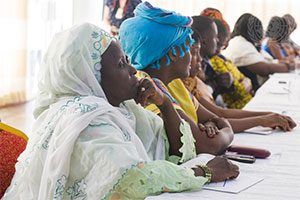 Representatives of Civil Society, Sierra Leone. Credit: UN Photo/Eskinder Debebe
Civil society faces mounting threats worldwide, even as it remains essential for democratic accountability, especially in countries struggling with economic instability and social inequality. However, at the same time, nations with weak democratic governance structures also systemically suppress the power of civil society. Human rights activists across the Global South frequently challenge issues such as political persecution and gender oppression, but in return face state-sanctioned punishment for their advocacy. Imprisonment and exile are common mechanisms of punishment that seek to erode the strength of civil society. The 2026 World Press Freedom Index has reached its lowest level in 25 years, with more than half of the world’s countries now falling into the "difficult" or “very serious” category for press freedom. IPS seeks to highlight the work of civil society across the Global South as well as the challenges that they face.
Updated by Yilan Batista and Shuli Wong August 2026

The Week with IPS

NEXT STOP - SDGs
Tracking global progress towards a sustainable world
Tracking global progress towards a sustainable world
