Languages
Thursday, November 19, 2026



News and Views from the Global South
Food and Agriculture

Zimbabwe’s Unfolding Humanitarian Disaster – We Visit the 18,000 People Forcibly Relocated to Ruling Party Farm
As the villagers sit around the flickering fire on a pitch-black night lit only by the blurry moon, they speak, recounting how it all began. They take turns, sometimes talking over each other to have their own experiences heard. When the old man speaks, everyone listens. “It was my first time riding a helicopter,” John Moyo* remembers.
Higher Food Prices Can Help to End Hunger, Malnutrition and Food Waste
The choice of foods displayed on supermarket shelves can be quite bewildering. This abundance encourages us to take it for granted that we will always be able to buy the food we want at affordable prices.
Siberian Global Warming Meets Lukewarm Reaction in Russia
People in Siberia must prepare to face frequent repeats of recent devastating floods as well as other natural disasters, scientists and ecologists are warning, amid growing evidence of the effects of global warming on one of the world’s most ecologically diverse regions.
Women Herders Bring Change
When Sangan Bhai, a humble man in the Kutch region of India’s western state of Gujarat, was offered a position as an executive member of the local camel breeder’s association, he made a decision that surprised his community: instead of accepting the prestigious post he offered his wife’s name instead.
Picture the World as a Desert
Try to imagine an expanse of barren land, stretching for miles, with no trace of greenery, not a single bough to cast a sliver of shade, or a trickle of water to moisten the parched earth. Now imagine that desert expanding by 12 million hectares a year. Why? Because it’s already happening.
Op-Ed: Overcoming the Twin Hurdles of Inequality and Climate Change
Two major injustices – inequality and climate change – are threatening to undermine the efforts of millions of people to escape poverty and hunger.
Op-Ed: Not Only Hunger, but Malnutrition Too
Continued growth in developing countries, along with poverty-reduction policies, have helped to improve both income and food security globally.
Post-2015 Development Agenda – Will the Voices of the Hungry be Heard?
The Millennium Development Goals (MDGs) will expire in 2015 and be replaced with the Sustainable Development Goals (SDGs), which are intended to strengthen the international community's engagement with eradicating poverty and hunger.
Mauritian Sugar Farmers Squeezed by Low Prices as Bagasse and Ethanol Become Popular By-products
While Mauritius has been forced to transform its sugar industry because of low prices for the commodity, the country’s small-scale sugarcane farmers who contribute to it say they are barely earning a living.
Wheat Smugglers Bring High Prices, and Hunger
With its lush valleys and well-watered plains, Pakistan’s northwestern Khyber Pakhtunkhwa (KP) province produces plenty of food for the local population, including 10 million tons of wheat every year. So why are the people of this bountiful mountainous region going hungry?
Flexible Biofuel Policies for Better Food Security
Modern biofuels have become a fact of life, part of a quest for more cost-effective and environmentally sustainable businesses and lifestyles. But to be truly sustainable, biofuel production must strike a balance between its benefits and its potential hidden costs, between energy security and food security.
Climate Legislation Up Against ‘Abenomics’ in Japan
Undaunted by Japan’s national consensus to boost the economy, which has been mired in lackluster growth for decades, environmentalists are taking baby steps towards incorporating climate change into national legislation.
Nearly One-Third of World’s Population Is Overweight
Over two billion people - or 30 percent of the world’s population - are either obese or overweight, and no country has successfully reduced obesity rates to date, according to a new study published this week by the British medical journal, The Lancet.
Sri Lanka Waits in Vain for the Rain
Stuck in mid-day rush hour traffic, commuters packed tight into a tin-roofed bus in Sri Lanka’s capital, Colombo, peer expectantly up at the sky that is beating a savage heat down on the city.
Small Farmers’ Loss of Land Increases World Hunger
The world is increasingly hungry because small farmers are losing access to farmland. Small farmers produce most of the world’s food but are now squeezed onto less than 25 percent of the world’s farmland, a new report reveals. Corporate and commercial farms, big biofuel operations and land speculators are pushing millions off their land.
To Grow Or Not To Grow GMO Crops
“I want to grow genetically modified organisms (GMOs) because I want to feed my family with biotech products. In no way do I want to eat biological food because I think it’s not so healthy or nutritious.”
U.S. Pledges to Reduce Child Stunting by Two Million Globally
The U.S. government has pledged to reduce the number of chronically malnourished children around the world by at least two million over the next half decade, receiving an initial positive response from the development community.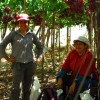
Seasonal Agricultural Workers Left Out of Chilean Boom
Tens of thousands of women employed as seasonal workers in rural areas of Chile suffer high levels of poverty and poor working conditions, even though their labour generates huge profits for agricultural exporters.
Hemp Defies Hurdles to Make a Comeback in Spain
Spain is experiencing a resurgence of hemp, one of the species of cannabis with the lowest THC content, which has been used for millennia to produce textile, medicinal and food products.
Permaculture Poised to Conquer the Caribbean
Erle Rahaman-Noronha is not a revolutionary, not in any radical sense at least. He is not even that exciting. In truth, Rahaman-Noronha is merely a man with a shovel, a small farm, and a big dream. But that dream is poised to conquer the Caribbean.
Caribbean Forced to Choose Between Climate Change Impact and MDGs
Climate change is forcing the nine-member Organisation of Eastern Caribbean States (OECS) to choose between expending scarce resources to deal with its impact or other pressing development goals.« Previous Page — Next Page »


 Farming on the Outskirts of Juba. Credit: UN Photo/JC McIlwaine
Promoting human and planetary health is a central focus of the United Nations, as laid out in the 2030 Sustainable Development Goals (SDGs). World hunger and unsustainable farming practices continue to be pressing concerns for the world. According to the 2025 State of Food Security and Nutrition in the World report by the Food and Agriculture Organization (FAO), 673 million people faced hunger in 2024. There are stark regional disparities, with the FAO projecting that 60% of the world population facing hunger will reside in Africa by 2030. Globally, the prevalence of food insecurity has remained consistently higher for women than men.
Sustainable and efficient national food systems are essential in preserving health, education, environmental well-being, peace, economy, and security. However, creating sustainable food systems can be a challenging endeavor, as food production takes a heavy toll on the environment. The agricultural sector accounts for a significant portion of greenhouse gases. Finding safe, sustainable, and ethical strategies to feed the world is crucial in ensuring planetary longevity. A recent initiative from 2023, the EU Regulation on Deforestation-free Products (EUDR), seeks to advocate for sustainable food systems. The main driver of deforestation is the expansion of agricultural land used to produce commodities like cattle, wood, cocoa, coffee, etc. The EUDR is part of the 2020 European Green New Deal and the EU Biodiversity Strategy for 2030 and aims to limit Europe’s consumption of products linked with deforestation by requiring that companies prove that their products are deforestation-free. Despite aiming to achieve major strides in sustainability, policies such as EUDR also raise socioeconomic concerns for targeted countries. Many emerging Latin American economies are impacted by the policy, and have raised the question of how developing countries can grapple with the tensions between economic development and advancing sustainability.
IPS has been at the forefront of providing compelling and insightful stories on communities facing hunger as well as the cost of food production. IPS uses statistics from FAO, the World Food Programme (WFP) and the International Fund for Agricultural Development (IFAD) to bring relevant and hard-hitting facts to readers. This gathering of information and data from such organizations helps bring the best stories from IPS journalists working in the different regions in consultation with experts on the ground.

The Week with IPS

NEXT STOP - SDGs
Tracking global progress towards a sustainable world
Tracking global progress towards a sustainable world

