Languages
Thursday, November 19, 2026



News and Views from the Global South
Food and Agriculture

Cooperatives Cushion the Blows of Hunger
“One in eight people goes to sleep hungry every day,” according to the ‘State of Food Insecurity in the World 2012’, a document released annually by the Food and Agriculture Organisation (FAO).Treaty Tolls Death Knell for Mexican Countryside
The Trans-Pacific Strategic Economic Partnership Agreement negotiations, which Mexico is to join in December, are threatening to eliminate the last defences of the country’s agricultural sector.
Q&A: Health Impacts of Genetically Modified Foods Still Unknown
In 1994, genetically modified produce, in the form of tomatoes, first appeared in grocery stores in the United States. Numerous other types of produce have been genetically modified since, and consuming them has become common practise. But because the phenomenon is so recent, the long-term effects of eating such foods remain unknown.
The Face of Food Security Is Female
In a major endorsement for investment in women - the bulk of food growers in the developing world - United Nations Secretary General Ban Ki-moon said food security could not be achieved without women, and that the world's hungry also needed leaders to prioritise actions.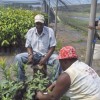
Amid Food Crisis, Caribbean Agriculture Going to Seed
With the average age of a farmer in the Caribbean now 62 years old, there is growing concern that commercial agriculture is on a path to extinction – a dire scenario for a region already shouldering a massive food import bill.Argentina – Fighting the Worst Child Obesity Rate in the Region
Pediatricians and nutritionists stress that there is no single factor explaining why Argentina is the country in Latin America with the highest rate of obese and overweight children.
Cooperatives Help Women Farmers Tighten Ranks
It is a tried and tested truth that when women come together in groups they can address their issues more powerfully than they can as individuals.
Agricultural Waste Boosts Energy Production in Argentina
A joint project by the energy and agriculture authorities in Argentina is seeking to boost electricity generation from forestry waste and other rural products which have enormous potential, according to experts.
Senegal Finds the Cooperative Way to More Food
Over the past two years, millet production has reached record levels in Dya, a rural community in the Kaolack region of central Senegal, where the Agricultural Value Chains Support Project (PAFA) is supporting two farmers' collectives.
India to Conserve Biodiversity at Grassroots
India’s National Biodiversity Authority (NBA) is actively promoting decentralised grassroots livelihoods as the best way to conserve biodiversity as mandated by the Nagoya Protocol on access and benefit sharing (ABS).
Record Number Seeks Food Aid in the U.S.
Against the backdrop of a spreading global economic crisis, exacerbated by changing climate patterns, the global aim of guaranteeing food security for all by 2015 appears to be far from being achieved.
Communal Land Titling at a Standstill in Peru
The titling of the lands of indigenous and peasant communities has been at a practical standstill for two years, with many of the corresponding files lost or incomplete. But the promotion of foreign investment is moving full steam ahead in the same regions.
Giving Women Land, Giving them a Future
Clarisse Kimbi barely ekes out a living from a tiny parcel of land in Kom village in the North West Region of Cameroon. Today, the mother of six finds it hard to put food on the table for herself and her children. But five years ago she, her husband and children were considered well-off.Village Project Helps Rural Producers in Senegal
Increased harvests in the northern Senegalese community of Léona provide evidence of the benefits of multifaceted support for agriculture. But as their yields grow, farmers are calling for consistent policy to protect markets for their crops.
Q&A: Disaster Resilience Starts with Grassroots Women
Women and girls can be powerful agents of change, but they are disproportionately affected by disasters because of social roles, discrimination and poverty.
Rural Women in Peru Cope “Where Life Is Very Sad”
When the crops in her rural highlands community in southern Peru were covered with a thick layer of ice one night, Felícitas Quispe, 43, organised her neighbours to make an effort to keep people from starving to death.
Cooperatives Summit Celebrates Power in Diversity
The migratory seeds of cooperatives were sown and first thrived in Europe, but have since adapted to the climate of nations worldwide.
Groups Rewarded in Their Fight for Fair Food
The Korean Women's Peasant Association won the 2012 Food Sovereignty Prize for its efforts on behalf of the survival of small-scale and ecologically sustainable farming in South Korea.Progress in Reducing Hunger ‘Tragically Slow’
WASHINGTON, October 11, 2012 (IPS) – At least 20 countries are currently at either "alarming" or "extremely alarming" levels of hunger, according to new research released here on Thursday.

Africa Seeks to Grow More, Buy Less
Africa can ensure food security by producing wheat. New research presented in Addis Ababa, Ethiopia this week shows that the continent has the potential to be self-sufficient.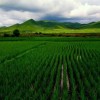
South-South Cooperation Transcends Sharing Technical Knowhow
When the United Nations commemorated the Day of South-South Cooperation last month, Secretary-General Ban Ki-moon singled out a new development that transcends sharing technical know-how: coordination of government policy among developing nations.« Previous Page — Next Page »


 Farming on the Outskirts of Juba. Credit: UN Photo/JC McIlwaine
Promoting human and planetary health is a central focus of the United Nations, as laid out in the 2030 Sustainable Development Goals (SDGs). World hunger and unsustainable farming practices continue to be pressing concerns for the world. According to the 2025 State of Food Security and Nutrition in the World report by the Food and Agriculture Organization (FAO), 673 million people faced hunger in 2024. There are stark regional disparities, with the FAO projecting that 60% of the world population facing hunger will reside in Africa by 2030. Globally, the prevalence of food insecurity has remained consistently higher for women than men.
Sustainable and efficient national food systems are essential in preserving health, education, environmental well-being, peace, economy, and security. However, creating sustainable food systems can be a challenging endeavor, as food production takes a heavy toll on the environment. The agricultural sector accounts for a significant portion of greenhouse gases. Finding safe, sustainable, and ethical strategies to feed the world is crucial in ensuring planetary longevity. A recent initiative from 2023, the EU Regulation on Deforestation-free Products (EUDR), seeks to advocate for sustainable food systems. The main driver of deforestation is the expansion of agricultural land used to produce commodities like cattle, wood, cocoa, coffee, etc. The EUDR is part of the 2020 European Green New Deal and the EU Biodiversity Strategy for 2030 and aims to limit Europe’s consumption of products linked with deforestation by requiring that companies prove that their products are deforestation-free. Despite aiming to achieve major strides in sustainability, policies such as EUDR also raise socioeconomic concerns for targeted countries. Many emerging Latin American economies are impacted by the policy, and have raised the question of how developing countries can grapple with the tensions between economic development and advancing sustainability.
IPS has been at the forefront of providing compelling and insightful stories on communities facing hunger as well as the cost of food production. IPS uses statistics from FAO, the World Food Programme (WFP) and the International Fund for Agricultural Development (IFAD) to bring relevant and hard-hitting facts to readers. This gathering of information and data from such organizations helps bring the best stories from IPS journalists working in the different regions in consultation with experts on the ground.

The Week with IPS

NEXT STOP - SDGs
Tracking global progress towards a sustainable world
Tracking global progress towards a sustainable world

