Languages
Thursday, November 19, 2026



News and Views from the Global South
Food and Agriculture
Food Security and the Failure of Mechanisation in DRC
Mechanisation was expected to transform agriculture in the Democratic Republic of Congo's central province of East Kasaï. But a project to offer tractors for ploughing land has fallen flat.
Europe Thinks Again About Food
Present day European farming is based on the Common Agricultural Policy (CAP), which was created over six decades ago by countries emerging from severe food shortages that swept the continent during and after the Second World War.
Cambodia’s Hydro Plans Carry Steep Costs
The Cambodian government has committed to the construction of two dams along the Mekong River in order to meet a huge demand for electricity, but environmental groups warn that severe repercussions loom for this strategy.
Q&A: Water and Food Security Are Inseparable
With the U.N. ominously warning of an impending food crisis following severe droughts in farmlands in the United States, Brazil, Russia and at least two rain-deprived states in India, the world will once again turn its attention to a finite natural resource: water.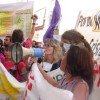
Activists in Argentina Expect Landmark Ruling against Agrochemicals
After more than a decade of campaigning against toxic agrochemicals, a group of women from a poor neighbourhood in the northern Argentine city of Córdoba have brought large-scale soybean growers to trial for the health damages caused by spraying.
Livelihoods Drying Up on Malawi’s Lake Chilwa
Fisherfolk and farmers living near Malawi’s second-largest water body, Lake Chilwa, are relocating en masse and scrambling for space around its shores as the lake has dried to dangerously low levels.Cash Grants Replace Food Aid for Niger Families in Need
When her name is called, Rékia Djibo leaves the group of women gathered in front of the school in Toula, and takes a confident step towards the door. Djibo is one of the recipients of a cash transfer from the World Food Programme here on the outskirts of the southwestern Niger city of Tillabéri.Senegalese Cooperative Gives Youth Reasons to Stay at Home
Like many other young Senegalese, Pape Mokhtar Diallo long dreamed of escaping his rural home in northern Senegal for a better life. Three times he tried and failed to go overseas. But the establishment of an agricultural cooperative here in the village of Boyinadji has put another dream within his grasp.
Food Activists See Portents of New and Deeper Hunger Crisis
Food rights activists from around the world will descend on the coastal U.S. state of Florida next week to protest homelessness and hunger facing millions of people in the United States and across the globe.Mauritanian Women Turn to Poultry to Fight Poverty
The building is standing empty now, but Fatimetou Mint M'Barkenni is looking forward to when it is again filled with the soft cheeping of day-old chicks. Earlier in the year, she raised a first batch of broiler chickens as part of a pilot project, to boost rural incomes and food security here at Bourate, in rural Mauritania.
Surviving on a Meal a Day in Ghana’s Savannah Zone
In order to ensure that he and his family survive this year's failed harvest, Adams Seidu, like farmers in other rural communities in Ghana’s Northern Region, has implemented a strategy for survival. They are using what Seidu calls the "one-zero-one strategy" for children, and the "zero-zero-one strategy" for adults.
Lean Times Get Leaner in Northern Cote d’Ivoire
Salimata Coulibaly, director of a medical centre in the town of Korhogo in the northern Cote d’Ivoire region of Savanes, stood before a chart displaying before-and-after photos of local children – one taken when each child arrived at the centre, and one after he or she responded to treatment for malnutrition.Plant Diseases Threaten Food Security in Kivu, DR Congo
Plant diseases affecting bananas and cassava are gaining ground in two provinces in the eastern part of the Democratic Republic of Congo, according to South Kivu's provincial minister for agriculture, Gisèle Batembo.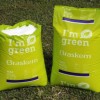
Biopolymers and the Dream of a Green Petrochemical Industry
Brazil leads global production of biopolymers, an industry that generates fewer greenhouse gas emissions than fossil fuel-based plastic manufacture. But "green plastics" made from sugarcane have a sour aftertaste.
Cuban Higher Education Changing in Times of Reform
Enrolment in Cuban universities fell by 25.8 percent during the past school year, as young people are being oriented toward fields with more employment opportunities, such as agriculture, in the context of sweeping economic reforms that are also affecting public education.
From the Field to the Rubbish Heap
Agriculture provides a livelihood to the majority of the population in Papua New Guinea, a developing island nation of approximately seven million in the south west Pacific. However, the loss and waste of an estimated half of all fresh produce between harvesting and marketing is threatening improvements to food security and local incomes.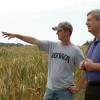
U.S. Drought Exposes “Hydro-Illogical” Water Management
The historic drought withering much of the United States this summer has revealed a need for strategies to better manage water supplies that could remain under severe pressure both this year and in the longer term.
It’s Either Orangutans Or Cheap Palm Oil
When four men were sentenced to eight months in jail in March for the ‘murder’ of orangutans, it was the first time that people associated with Indonesia’s booming palm oil industry were convicted for killing man’s close relations in the primate family.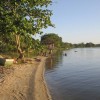
Fishing Communities in Brazil Fight for Survival
His father and other fishermen fought back with sickles, hoes and other work tools against the armed men sent by the purported owner of the land where they lived in order to evict them. But then the military police came and knocked down eight of their houses.
Swapping Trash for Fresh Produce in Mexico City
Isabel Becerril has come with some friends to the “barter market” in the Mexican capital, to exchange 40 kgs of recyclable refuse for fresh produce, sweets and plants. “This is the first time I have come here, and I like it,” the university student tells IPS, with her ecological bag in hand.DRC Farmers Reap Benefits of Soil Fertility
Just two years ago, rice farmers on the Ruzizi plain in the eastern part of the Democratic Republic of Congo were content to harvest 2.5 tonnes of rice per hectare. The adoption of new techniques has seen their output rise to between six and eight tonnes, with smallholder farmers also increasing their local market share.« Previous Page — Next Page »


 Farming on the Outskirts of Juba. Credit: UN Photo/JC McIlwaine
Promoting human and planetary health is a central focus of the United Nations, as laid out in the 2030 Sustainable Development Goals (SDGs). World hunger and unsustainable farming practices continue to be pressing concerns for the world. According to the 2025 State of Food Security and Nutrition in the World report by the Food and Agriculture Organization (FAO), 673 million people faced hunger in 2024. There are stark regional disparities, with the FAO projecting that 60% of the world population facing hunger will reside in Africa by 2030. Globally, the prevalence of food insecurity has remained consistently higher for women than men.
Sustainable and efficient national food systems are essential in preserving health, education, environmental well-being, peace, economy, and security. However, creating sustainable food systems can be a challenging endeavor, as food production takes a heavy toll on the environment. The agricultural sector accounts for a significant portion of greenhouse gases. Finding safe, sustainable, and ethical strategies to feed the world is crucial in ensuring planetary longevity. A recent initiative from 2023, the EU Regulation on Deforestation-free Products (EUDR), seeks to advocate for sustainable food systems. The main driver of deforestation is the expansion of agricultural land used to produce commodities like cattle, wood, cocoa, coffee, etc. The EUDR is part of the 2020 European Green New Deal and the EU Biodiversity Strategy for 2030 and aims to limit Europe’s consumption of products linked with deforestation by requiring that companies prove that their products are deforestation-free. Despite aiming to achieve major strides in sustainability, policies such as EUDR also raise socioeconomic concerns for targeted countries. Many emerging Latin American economies are impacted by the policy, and have raised the question of how developing countries can grapple with the tensions between economic development and advancing sustainability.
IPS has been at the forefront of providing compelling and insightful stories on communities facing hunger as well as the cost of food production. IPS uses statistics from FAO, the World Food Programme (WFP) and the International Fund for Agricultural Development (IFAD) to bring relevant and hard-hitting facts to readers. This gathering of information and data from such organizations helps bring the best stories from IPS journalists working in the different regions in consultation with experts on the ground.

The Week with IPS

NEXT STOP - SDGs
Tracking global progress towards a sustainable world
Tracking global progress towards a sustainable world

