Languages
Tuesday, November 17, 2026



News and Views from the Global South
Food and Agriculture

Bewildering Biodiversity – A Success Story of Food Security for Indigenous Peoples in India
 The 2013 National Food Security Act of the Government of India seeks, according to its preamble, to “provide for food and nutritional security by ensuring access to adequate quantity of quality food at affordable prices to people”.
Despite rapid economic growth and gains in reducing poverty, India has with among the highest levels of hunger and malnutrition in the world.

Latin American Legislators Find New Paths to Fight Hunger
With eight specific commitments aimed at pushing through laws and policies on food security and sovereignty, family farming and school feeding programmes, legislators from 17 countries closed the Sixth Forum of the Parliamentary Front Against Hunger in Latin America and the Caribbean.
Opinion: Progress Against Undernutrition, But Uneven
At the end of 2014, an estimated 795 million people – one in nine people worldwide – were estimated to be chronically hungry. All but 15 million of the world’s hungry live in developing countries, i.e., 780 million are in developing countries, where the share of the hungry has declined by less than half – from 23.4 per cent in 1991 to 12.9 per cent.
When the Rains Came in Dokolo and Karamoja
Households in Northern Uganda are recovering from a prolonged dry spell which has devastated harvests and led to food shortages. Long-awaited rains are expected to replenish pastures, and communities are being encouraged to plant short-term crops. But those that can, fear losing their produce again, when the rains stop.
Latin America to Push for Food Security Laws as a Bloc
Lawmakers in the Parliamentary Front Against Hunger in Latin America and the Caribbean decided at a regional meeting to work as a bloc for the passage of laws on food security – an area in which countries in the region have show uneven progress.
Zimbabweans Align with Climate-Smart Agriculture Amid Food Deficits
With droughts wreaking havoc in vast areas of Zimbabwe, a majority of people here are fast falling in line with climate-smart agriculture (CSA) as food deficits continue.
“Bringing Private Funds into Land Restoration is Risky”
The world loses 23 hectares to land degradation each and every minute, adding up to the disappearance of 12 million hectares worldwide – an area half the size of the UK.Nepali Farmers Get Climate Smart
Bimala Bajagain, a farmer and mother of three, wears a fading red kurta and appears older than her age at 35. She offers us plates of salted guavas at the porch of her quake-damaged house.
One-Third of Papua New Guineans Suffering Drought Crisis
An estimated one-third of the population of Papua New Guinea, the most populous Pacific Island state, is now suffering in from the country’s worst drought this century and experts predict El Nino’s influence will carry on through March 2016.
Improved Post-Harvest Fish Handling Brings Hope to Western Zambia
Hadon Sichali has been in the fish trade for over 22 years. But he says only now does he feel a true businessman—but why?
Acute Malnutrition: A Community Fights Back
In the semi-darkness of her hut in Berdaballa, a forest village 610 km northeast of Mumbai, 28-year old Babita Mavaskar sat with her newborn baby boy watching him checked by a paramedic in an important antenatal exam. After about 20 minutes the health worker emerged from the shelter and made a big announcement, “All is well. Everything, the weight, temperature and height … is normal.”
From Bangladesh to Bihar
Times are a-changing for Bihar, a state popularly described as a state of mind. The recent elections have brought back Nitish Kumar as the chief minister for the fifth time. Since his first innings as a developmental CM from 2005, he has transformed Bihar from being an archetype of India’s backwardness to one of its fastest growing states. Besides improving governance, he has also politically empowered women in that benighted state. Not surprisingly, the women’s vote was decisive for his electoral success. He now has the historic opportunity to shift gears towards sustainable gender-based development.
Climate Change Bites Kenyan Tea Farmers
You wouldn't typically expect heavy rainfall and frost in East Africa. But the Earth's climate is changing - and this is affecting one of the world's largest tea-producing regions, in central Kenya.
Latin American Legislators, a Battering Ram in the Fight Against Hunger
Lawmakers in Latin America are joining forces to strengthen institutional frameworks that sustain the fight against hunger in a region that, despite being dubbed “the next global breadbasket”, still has more than 34 million undernourished people.
El Nino Creates Topsy Turvy Weather in Sri Lanka
Residents in the Sri Lankan capital Colombo and outlying areas have been waking up to misty mornings of late. A decade ago, regular mist in this area just above the equator would have been a noteworthy event. These days, it is a regular occurrence in some parts north of the capital.Climate Change May Increase World’s Poor by 100 Million, Warns World Bank
The UN’s heavily-hyped Sustainable Development Goals (SDGs), which were approved by more than 160 world leaders at a summit meeting in September, are an integral part of the world body’s post-2015 development agenda, including the eradication of hunger and poverty by 2030.
Frequent Floods Intensify Migration, Food Security in Pakistan’s Mountainous North
Ishaq Khan shivers as he recounts an unfortunate flash flood in 2010, which covered his maize and potato crop with mud and washed away over a dozen fruit trees he planted 45 years ago.
School Meals Bolster Family Farming in Brazil
“That law should have existed since the end of slavery, which threw slaves into the street without offering them adequate conditions for working and producing, turning them into semi-slaves,” said Brazilian farmer Idevan Correa.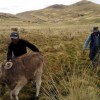
Parliamentary Forum to Set New Goals Against Hunger
Undertaking the challenge of pushing for new legislation to guarantee food security in their countries, legislators from Latin America and the Caribbean, together with guest lawmakers from Africa and Asia, will hold the Sixth Forum of the Parliamentary Front Against Hunger Nov. 15-17.
Caribbean Agriculture Looks to Cope with Climate Change
Climate change represents a clear and growing threat to food security in the Caribbean with differing rainfall patterns, water scarcity, heat stress and increased climatic variability making it difficult for farmers to meet demand for crops and livestock.
Urgently Needed: Studies Linking Land Degradation, Migration, Conflict and Political Instability
Some 135 million people could be displaced by 2045 as a result of land desertification, according to a recent UK ministry of defence report. This figure could rise to 200 million who are displaced by other climate change impacts like natural disasters by 2050, said British environment refugee specialist Norman Myers.« Previous Page — Next Page »


 Farming on the Outskirts of Juba. Credit: UN Photo/JC McIlwaine
Promoting human and planetary health is a central focus of the United Nations, as laid out in the 2030 Sustainable Development Goals (SDGs). World hunger and unsustainable farming practices continue to be pressing concerns for the world. According to the 2025 State of Food Security and Nutrition in the World report by the Food and Agriculture Organization (FAO), 673 million people faced hunger in 2024. There are stark regional disparities, with the FAO projecting that 60% of the world population facing hunger will reside in Africa by 2030. Globally, the prevalence of food insecurity has remained consistently higher for women than men.
Sustainable and efficient national food systems are essential in preserving health, education, environmental well-being, peace, economy, and security. However, creating sustainable food systems can be a challenging endeavor, as food production takes a heavy toll on the environment. The agricultural sector accounts for a significant portion of greenhouse gases. Finding safe, sustainable, and ethical strategies to feed the world is crucial in ensuring planetary longevity. A recent initiative from 2023, the EU Regulation on Deforestation-free Products (EUDR), seeks to advocate for sustainable food systems. The main driver of deforestation is the expansion of agricultural land used to produce commodities like cattle, wood, cocoa, coffee, etc. The EUDR is part of the 2020 European Green New Deal and the EU Biodiversity Strategy for 2030 and aims to limit Europe’s consumption of products linked with deforestation by requiring that companies prove that their products are deforestation-free. Despite aiming to achieve major strides in sustainability, policies such as EUDR also raise socioeconomic concerns for targeted countries. Many emerging Latin American economies are impacted by the policy, and have raised the question of how developing countries can grapple with the tensions between economic development and advancing sustainability.
IPS has been at the forefront of providing compelling and insightful stories on communities facing hunger as well as the cost of food production. IPS uses statistics from FAO, the World Food Programme (WFP) and the International Fund for Agricultural Development (IFAD) to bring relevant and hard-hitting facts to readers. This gathering of information and data from such organizations helps bring the best stories from IPS journalists working in the different regions in consultation with experts on the ground.

The Week with IPS

NEXT STOP - SDGs
Tracking global progress towards a sustainable world
Tracking global progress towards a sustainable world

