Languages
Sunday, November 29, 2026



News and Views from the Global South
Development & Aid

Q&A: Battle for Human Rights in Rio Is “Far From Over”
Human rights should be explicitly recognised as an indispensable ingredient of sustainable development at the Rio+20 summit in Brazil, says Navanethem Pillay, United Nations High Commissioner for Human Rights.Students Flock to Online Black Market
Former university graduates, current students and professors are embroiled in an unusual scandal this exam season, as news reports filtering in from around the Balkans reveal a major online trade in stolen final papers.Moringa Leaves Saving Lives in DRC
Seated under a tree, biologist Zozo Bazomba welcomes a steady stream of visitors to the Action Nature et Médecine centre in Bumbu commune in the DRC. Suffering from a range of ailments, they have come from across Kinshasa, the capital, in search of sachets of powdered moringa leaves.
Sudanese Refugees Dying of Thirst
Sudanese refugees have started dying as a camp in South Sudan ran out of water four days ago after a massive influx of people fled across the border to escape war and hunger.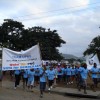
Waking Up to the Price of Corruption
Weeks ahead of a national election in Papua New Guinea, 3000 people gathered in the capital, Port Moresby, for the sixth annual Sir Anthony Siaguru Walk against Corruption organised by Transparency International, PNG, to peacefully protest about an issue that affects every aspect of citizens’ lives.
Q&A: Volunteer Spirit Alive in Rio
When the Rio+20 summit gets underway in Brazil next week, the estimated 50,000 to 60,000 participants will not only include world leaders, government delegates and U.N. staffers but also a staggering array of activists from the far corners of the world.
Malawi Businesses Lose Out after AU Summit Cancelled
Small and large businesses in Malawi are counting their losses following the cabinet’s decision not to host the African Union summit in July.
Trade Pact with Europe Still a Tough Sell to Africa, Pacific Bloc
Caught between a proverbial rock and a hard place, African and Pacific countries are still unsure whether they should follow the lead of their Caribbean counterparts and sign a wide-ranging Economic Partnership Agreement (EPA) with Europe.
Mauritius introduces new ways to collect blood
 The Mauritius blood bank is introducing new ways to get the youth to give blood. The drive could also help the country reach one of its MDG goals.
Audio Slide Show
Q&A: Women Must Be at the Forefront of Rio+20, and Beyond
Unlocking women's energies and allowing them to become drivers of change could fuel the motor of sustainable development.
Honduras Committed to Protecting Marine Treasures
Honduras, in the heart of Central America, normally makes headlines for its political upheavals and violence. But sometimes there is good news, too. It is one of only a few countries with a shark sanctuary off its coasts, and it has just created a protected area around a reef of a coral species formerly on the brink of extinction.
Crisis Sows Community Gardens in Spain
The economic crisis is fuelling the search for less individualistic ways of life in Spain, and a growing interest in urban agriculture has given rise to flourishing community gardens on vacant lots in cities and towns.Communal Violence Threatens Democratic Change in Myanmar
The outbreak over the past week of communal violence between Buddhists and Muslims in Rakhine State seriously threatens the ongoing reform process in Myanmar, according to experts here.Pakistanis Blame CIA for Fresh Polio Cases
Pakistan’s efforts to contain polio in areas bordering Afghanistan may have received a setback following the conviction of a doctor who allegedly ran a fake vaccine programme to locate Al-Qaeda chief Osama bin Laden.
Setting Goals to Protect Half the Planet
The high seas, crucial regions of the world's oceans that are beyond national jurisdiction, account for 45 percent of the planet, but are today under severe threat from overfishing and pollution.
Indigenous Message to Rio+20: Leave Everything Beneath Mother Earth
Indigenous leaders from all over South America are making their way by foot, canoe and eventually on buses to be part of the Kari-Oca Caravan to Rio de Janeiro, to talk to world leaders at the United Nations Conference on Sustainable Development, Rio+20.
Defining Green Economy May Stymie Rio Summit
The thematic battle at the U.N. Conference on Sustainable Development (UNCSD) in Brazil next week will be primarily around the new concept of a "green economy" - and how best to define it.
Q&A: “We All Have to Start Being City Changers”
Building the cities of the future requires not only smarter planning but a profound shift toward greater equity and social justice, says Joan Clos, executive director of the U.N. Human Settlements Programme, or UN-HABITAT.
Tension Around Possible Islamic State in Northern Mali
Tuareg and Islamist rebel groups which seized control of northern Mali in March are trying to find common ground for the joint administration of the territory. Residents of the region fear that individual and collective freedoms will not be respected if such an alliance sets up an Islamic state.
Biggest Economies Still Lagging on Renewables
On the eve of the Rio+20 Summit in Brazil, the U.S.-based Natural Resources Defense Council (NRDC) released a report Monday ranking the world's biggest countries on their use of renewable energy.
Health Warnings Loud and Clear on Cigarettes in Argentina
This month, Argentina will join the growing list of Latin American countries that compel tobacco companies to display health warnings about the dangers of smoking on cigarette packs, illustrated with graphic images.« Previous Page — Next Page »


 2026 High-level Political Forum on Sustainable Development. Credit: UN Photo/Eskinder Debebe
In 2015, the United Nations and its Member States adopted the Sustainable Development Goals (SDGs) in an effort to make the world a more sustainable and peaceful place for future generations. Progress on the 17 SDGs has been uneven, and inequality persists across the globe. 10 years after adoption, the 2025 UN SDGs Report revealed that only 35% of the SDG targets are on track, with more than half moving too slowly, and 18% moving backwards from the 2015 baseline. Poverty remains one of the world’s most pressing issues, with hunger, violence, and inequality impeding the opportunities for all people to achieve success. In September 2024, the United Nations Summit of the Future introduced a new goal: to eradicate global poverty by 2030, ensure universal rights to basic services, and increase the overall standard of living in terms of industrialization, economic well-being, citizen health, and literacy. Furthermore, recent shifts in United States foreign aid policy – notably, major budget cuts to USAID and the termination of thousands of development programmes– have severely threatened vital lifelines of financial aid to impoverished communities around the world. Additionally, the United States’ withdrawal from the Paris Climate Agreement has undercut international efforts at sustainable development. With the upcoming 2030 deadline, the UN Secretary-General has called for urgent multilateralism across six priority areas: food systems, energy, digital connectivity, education, jobs and social protection, and climate and biodiversity. IPS sheds light on marginalized communities that struggle on a daily basis to survive and have their stories heard and respected.
Updated by Yilan Batista and Shuli Wong August 2026

The Week with IPS

NEXT STOP - SDGs
Tracking global progress towards a sustainable world
