Languages
Tuesday, November 17, 2026



News and Views from the Global South
Poverty & SDGs

The Rise of Uganda’s Tobacco Production
 Over the years with the demise of cotton production, tobacco has become one of Uganda's key exports.
Six years after British American Tobacco set up regional headquarters in this East African nation, it has become a key tobacco producer for the company.
Kinshasa Graveyard Home to Hundreds
Despite the health risks, officials say hundreds of families are living in a cemetery in the Congolese capital, Kinshasa. Municipal authorities seem powerless to act.
Sierra Leone’s Waters of Life
A coastal city, Sierra Leone's capital, Freetown, is an area where people have relied on the ocean for food and employment for as long as they have lived there.

India Scores Low on Environmental Sustainability
Of the eight Millennium Development Goals (MDGs) -development targets agreed upon by the international community, whose 2015 deadline is approaching fast - MDG 7 has proven a particular challenge, especially for sprawling, populous countries like India.

Gangs Back Plan for Violence-Free Districts in El Salvador
Salvadoran youth gang leaders have accepted a proposal to declare 10 municipalities free of violence – a bold plan that has run up against the mistrust of vast segments of society with regard to the gangs and their aim of reinsertion in society.
The ‘Flattening’ of Gaza
On Nov. 17, four days into Israel’s eight-day assault on the Gaza Strip, deputy Israeli Prime Minister Eli Yishai publicly called for the Israeli army to “blow Gaza back to the Middle Ages, destroying all the infrastructure including roads and water”.
Fresh Air for the Rio Olympics
Environmental authorities in this southeastern Brazilian city are installing more air quality control stations in the locations where competitions are to be held during the 2016 Olympic Games, so that air pollution will not hurt the athletes’ performance.
The Industrialisation of Africa’s Smallholder Agriculture
Africa’s smallholder farmers, who contribute 80 percent of food and agricultural production in sub-Saharan Africa and much of the world’s food supply, are being encouraged by big business, governments and NGOs to become less subsistence based and more entrepreneurial by tailoring production to market forces.
Thousands Orphaned by Poverty in Kashmir
Seventeen-year-old Afzal is an unusual orphan. Though his father died many years ago, his mother is still alive and living with Afzal’s grandparents and younger siblings in a house not far from the orphanage where the boy has spent most of his teenage years.
Funding Shortage Thwarts Reconstruction Efforts
The landscape in northern Sri Lanka’s former war zone can change abruptly from the ordinary to the surreal.
Africa’s Mobile Health Revolution
A nurse working in a remote clinic in Mueda, a small town in northern Mozambique’s Makonde Plateau, receives a shipment of vaccines from the national health department. Using special software on her mobile phone, she sends out a mass text message to alert mothers in the area about the availability of immunisations.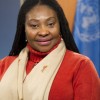
Q&A: “It’s Time to Wage War on Homophobia”
For more than two decades, the internationally beloved singer and human rights activist Yvonne Chaka Chaka has been at the forefront of the South African pop music scene.
Salvaging Waste Food for the Hungry in Spain
A recurring question in crisis-stricken Spain is how to ensure that surplus agricultural products reach those most in need. One response is citizen initiatives to protest the waste of food and to advocate efficient management along the full length of the food chain.
New Patient Profile and Treatment for Chagas Disease
Chagas disease, the third most serious infectious disease in Latin America, is developing a “new face” and moving into urban areas, while a new treatment may offer hope for millions of sufferers.
The Politics of Polio in Pakistan
The murder of nine health workers vaccinating children against polio in Pakistan’s northwest cities of Peshawar and Charsadda in the Khyber Pakhtunkhwa (KP) province, and its southern port city Karachi, have elicited shock and outrage.
Forests, Fruit and Fish Could Save Coastal Communities
Scientists predict that in the coming years, Bangladesh will be battered by even more climate disasters than it has already endured. Global warming has caused devastating damage in this lower Himalayan delta country of 150 million people, where seawater intrusion, increasingly intense cyclones, dried up rivers and extreme weather events have become the norm.
Colombian Landowners, Peasants Listen to Each Other
Colombia's large-scale agricultural producers and peasant farmers managed to listen to each other for the first time about the core cause of the decades-long armed conflict: the concentration of rural land ownership and the social and economic development of the countryside.
Girls Fight to Stay in School
Balancing her school bag on one shoulder and holding her three-year-old son by the hand, Farida Haque (19) ignores her in-laws’ complaints and her husband’s frown as she heads each morning for the tiny school in her remote village of Allah Bachayo, located in the Thatta district of Pakistan’s Sindh Province.
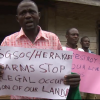
Q&A: Fighting to Save Africa’s Richest Rainforest
Protests against a controversial palm oil plantation in the Korup National Park, Africa’s oldest and richest rainforest in terms of floral and faunal diversity, in Mundemba, southwest Cameroon will continue despite the arrests and intimidation of local environmental campaigners.
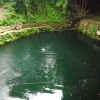
Community Water Management Stuck in Legal Limbo*
Community-based water supply systems, which serve thousands of rural communities in Mexico, are seeking official recognition under the new federal legal framework currently under development.
Bolivia’s Ayoreo Indians, Devoured by the City
No one knows exactly when they will show up, but when they do, it’s impossible not to notice them. In one of the busiest street markets in this bustling city in eastern Bolivia, a handful of members of the Ayoreo indigenous community periodically take over a portion of the sidewalk.« Previous Page — Next Page »


 Romani people in Cairo, Egypt, forage through trash. Credit: UN Photo/Armineh Johannes
In 2015, the United Nations adopted the Sustainable Development Goals (SDGs) in an effort to promote “peace and prosperity for people and the planet.” To achieve that goal, it is essential to provide equal opportunities and access to basic services to all people. The 2025 UN SDG Report found that 35% of the 169 SDG targets are on track or making moderate progress, while 18% have reversed compared to the 2025 baseline. One in ten people still live in extreme poverty, one in eleven experience food insecurity, and over 1.1 billion people live in slums without access to clean water and sanitation. It is imperative to acknowledge the societal, technological, economic, and political issues that sustain poverty in countries around the world. Eradicating poverty will require significant frameworks in policy and governance on a national and international scale to ensure that all people will have equal access to basic services and economic opportunities by 2030. Furthermore, a dramatic reduction of United States foreign aid in 2025, including the termination of 83% of USAID programmes, threatens to erode years of fragile development gains.
Throughout the world, violent conflict and natural disasters also contribute to extreme poverty. The complete destruction of infrastructure and blockage of aid has significantly impoverished Palestine since October 7th. The destructive impact of Hurricane Maria in Puerto Rico left $91 billion in damage. An inadequate US government response also revealed significant and enduring questions within the issue of mitigating poverty: how do we rebuild infrastructure after its destruction? How do we restimulate economic development and bring in financial aid after disasters? Similar questions have been raised in the realm of regional cooperation, as devastating floods have wrecked hundreds of thousands of homes across multiple Southeast Asian nations in the past few years. Furthermore, the COVID-19 pandemic has greatly exacerbated the global poverty crisis, particularly in developing countries, setting back the United Nations goal of eradicating poverty by 2030.
IPS is committed to providing comprehensive features that focus on the persisting environmental, sociopolitical, and systemic issues that sustain poverty, and the steps taken worldwide towards poverty eradication.

The Week with IPS

NEXT STOP - SDGs
Tracking global progress towards a sustainable world
Tracking global progress towards a sustainable world

