Languages
Sunday, July 26, 2026



News and Views from the Global South
Green Economy
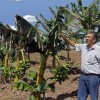
Rising Temperatures Hurt Pollination – and Food Production
A rise in temperature modifies the physiological features of some plants – a consequence of climate change that is less perceptible than stronger and more frequent hurricanes, but just as harmful to food production.
Sunshine Gets Slowly More Energetic in Zimbabwe
On top of a small wooden cabin in Norton, a dormitory town outside the capital of Zimbabwe, is a solar panel that Silvester Ngunzi uses to light up his household.
TransBrasil Could Boost Integration in Rio de Janeiro
The TransBrasil bus rapid transit system, which will connect poor suburbs with the centre of Rio de Janeiro, will be the high-speed bus corridor that serves the largest number of commuters in the world.
OP-ED: Sustainable Development Goals After 2015
Reducing the proportion of undernourished people by half until 2015 was one of the Millennium Development Goals that the international community set in 2000. It will not be reached: At least 870 million people worldwide – and one child in five – still go hungry; this in a world where we already produce enough food today to feed nine billion people in 2050.
Tallying the Benefits of Climate Action
More than a half-dozen governments on Tuesday launched a yearlong collaborative investigation into the economic benefits of taking broad action to combat global climate action.
Pressure Mounts to Cap Airline Emissions
A contentious global agreement on how to limit greenhouse gas emissions from the global airline industry will be at the top of the agenda over the next two weeks at an international summit, potentially solidifying details that have yet to emerge after more than a decade and a half of talks.
Forest Communities Draw a REDD Line
As the ink dries on a 3.6 million dollar agreement between Uganda and the World Bank to support the country's preparations for REDD, some analysts are pessimistic over the mechanism's potential.
U.S. Debates Climate Impact of Development Investments
A debate is heating up here over the extent to which U.S. government-facilitated private-sector development investments should be required to take into account how those ventures impact on climate change.
Q&A: “The Last Great Exploration Is to Survive on Earth”
Newly arrived from London, Robert Swan is facing a promise he made to famed marine researcher and conservationist Jacques Cousteau decades ago.
Pashmina Withers on the Roof of the World
The famed pashmina shawl that keeps the cold away – in style and at a price – could itself have become the victim of winter. Thousands of goats whose fine wool is weaved into pashmina have perished in extreme cold being associated with climate change.
Q&A: Everyone Loses in War Over Amazon Dams
In the war over major hydropower dams in the Amazon jungle, everyone loses - even the winners who manage to overcome the opposition and build them, but who suffer delays, costs that are difficult to recoup, and damage to their image.
Exclusive Bus Lanes Speed Things Up in Buenos Aires
A new system of exclusive lanes for bus rapid transit appears to be benefiting public transport passengers and bus drivers in the most congested part of the centre of the Argentine capital.
New Initiative Aims to Integrate Agriculture and Conservation
It took Brazil four decades to overcome food insecurity and earn a place as a major global food supplier. Now its experiences will contribute to the evidence base for a new initiative that seeks to reconcile agriculture and the conservation of biological diversity.Cheap Power Stymies Renewables in Kyrgyzstan
Almost five years ago, as his village in northern Kyrgyzstan endured daily power outages, rays of light always emitted from Sabyr Kurmanov’s garage. They came from his egg incubator, a 12-volt contraption powered by something he and his neighbours have in abundance – wind.
Five Caribbean States Join Pilot for Energy Efficiency
Every year, the Caribbean's electric sector burns through approximately 30 million barrels of fuel. Overall, the region imports in excess of 170 million barrels of petroleum products annually.
GM Seeks New Pastures in Pakistan
After a string of setbacks in India in recent years, the genetically modified seed industry is now targeting Pakistan as its next frontier, say activists.
Sustainable Technologies Safeguard the Soil in Cuba
The furrows are hard to make out in fields of the Finca de Semillas, a farm on Havana’s outskirts, because its administrators, Esmilda Sánchez and Raúl Aguilar, protect every centimetre of soil with mulch.
Ecological Cuban Recipes Boost Sustainable Agriculture
Vilda Figueroa and her husband, José Lama, live in Marianao on the outskirts of Havana, where they share hundreds of recipes based on Cuban-grown foods and sun-drying, along with other ecological food preservation methods.
Critics Push to Stall New Obama “Social Cost of Carbon” Calculations
The U.S. Department of Energy has announced it is accepting a petition from a conservative advocacy group critical of a recent substantial increase to official calculations of the so-called “social cost of carbon”.
India and China Oil Palms Dangerously
When there is feasting in India, Pakistan and Bangladesh, there could just be a connection between the celebrations and the fires on Indonesia’s Sumatra Island that trigger frequent transboundary smog.
Cameroonians See REDD
Uncertainty over property rights and access to forest land is potentially a major stumbling block for implementing the United Nations collaborative initiative on Reducing Emissions from Deforestation and forest Degradation in Cameroon.« Previous Page — Next Page »


The Week with IPS

NEXT STOP - SDGs
Tracking global progress towards a sustainable world
Tracking global progress towards a sustainable world
