Languages
Monday, November 23, 2026



News and Views from the Global South
Global Governance

Ceasefire Means ‘Nothing’ to Gaza Fishers
Shortly after Israel and Hamas signed a ceasefire agreement on Nov. 21, the Israeli navy abducted 30 Palestinian fishers from Gaza's waters, destroyed and sank a Palestinian fishing vessel, and confiscated nine fishing boats in the space of four days.
Remittances Soothe the Scourge of Militancy
Fifty-nine-year-old Sherdil Shah, a resident of South Waziristan – a hotbed of militancy in northern Pakistan’s Federally Administered Tribal Areas (FATA) – used to run a modest grain shop that fetched enough money to keep his family of 10 well-fed and looked after.
Kashmiri Separatists Scrabble for Political Relevance
Amid growing scepticism among Kashmiri people that the separatist leadership has lost relevance in the region’s fast-changing political landscape, the All Parties Hurriyat (Freedom) Conference – an alliance of separatist political parties and religious and social groups - is making a Herculean effort to reclaim some relevance in this disputed region.
Q&A: “Syria Needs a Political Solution with Peace, Justice and an End to Impunity”
The first woman to preside over the United Nations Human Rights Council, Uruguayan diplomat Laura Dupuy, has made it with flying colours through one of the periods of greatest tension and conflict since the council replaced the U.N. Commission on Human Rights in 2006.U.S. Pivot Heightens Asian Disputes
With newly re-elected President Barack Obama having chosen Southeast Asia as his first foreign destination, where he also attended the much-anticipated pan-Pacific East Asia Summit, the U.S. has underscored its commitment to its so-called strategic ‘pivot’ to the Asia-Pacific region.
OP-ED: A Universal Climate Change Agreement Is Necessary and Possible
The results of the United Nations climate change conference that closed in Doha, Qatar on Dec. 8 show once again that the international negotiations are moving steadily in the right direction, but alarmingly slow.
Washington Struggles for Relevance as Assad’s Fall Approaches
This week, the United States officially recognised the newly-formed National Coalition for Opposition and Revolutionary Forces as the legitimate representatives of the Syrian people, culminating a two-year process of legitimising the Syrian opposition with the U.S. government.Civil War on the Egyptian Horizon
Egypt is facing its worst political crisis since the January 2011 revolution ousted former dictator Hosni Mubarak, with analysts warning of a possible civil war. Furthermore, unlike during the revolution, opposition to the current regime is bitterly divided between Islamists and more secular Egyptians.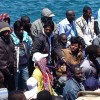
Despite Crises, Migration Still a Political Hot Potato
The United Nations will commemorate its annual International Migrants Day next week amidst reports of a rising tide of anti-migrant sentiments – primarily in Europe.
Brazil’s Economic Model Offers Ray of Hope
As governments struggle to find ways out of the persistent global financial crisis, Brazil’s development model offers an alternative path to recovery and growth, according to some economists and politicians.
Cambodian Activists Challenge ASEAN Policies
For a brief moment last month, mainstream international media turned the spotlight on Cambodia, one of the world’s 48 least developed countries (LDCs), as a high-level visit from U.S. President Barack Obama and the annual summit of the Association of Southeast Asian Nations (ASEAN) gave this country of 14.3 million people a glamorous edge.
First Muslim Human Rights Commission to Launch End December
Gathering for the first time here in Washington, representatives of the newly established human rights commission of the Organisation of Islamic Cooperation (OIC) stated Thursday that they plan to start their substantive work by the end of the month.
Iranian Bomb Graph Appears Adapted from One on Internet
The suspect graph of a nuclear explosion reportedly provided to the International Atomic Energy Agency (IAEA) as evidence of Iranian computer modeling of nuclear weapons yields appears to have been adapted from a very similar graph in a scholarly journal article published in January 2009 and available on the internet.
Major Study Suggests Crimes Against Humanity in Sudan
Reporting on the results of a two-year investigation, on Wednesday the U.S.-based Human Rights Watch presented findings that suggest that the Sudanese government’s aerial bombardment of civilians in the country’s south could amount to crimes against humanity.Syria Opposition Wins International Backing
More than 100 countries have recognised a new Syrian opposition coalition, opening the way for greater assistance to the forces fighting to topple President Bashar al-Assad, including possibly military aid.
Changing the Game to Achieve Nuclear Disarmament
Twenty-five years ago, on Dec. 8, presidents Mikhail Gorbachev and Ronald Reagan signed the Intermediate-Range Nuclear Forces (INF) Treaty. This historic agreement eliminated a modern class of land-based “theatre” weapons - the SS20s, cruise and Pershing missiles - that had been brought into Europe in the early 1980s.
U.S. Defends Low-Key Stance on Rwanda, Congo
President Barack Obama’s top diplomat on African affairs on Tuesday defended the U.S. administration’s response to the continued crisis in the Democratic Republic of Congo (DRC), in the face of stepped up criticism from both civil society and U.S. lawmakers.
Q&A: The Challenges of Women’s Empowerment and Equality
Today, approximately 125 countries have laws that penalise domestic violence - a great advance from a decade ago. Yet 603 million women around the world still live in countries where domestic violence is not a crime, and up to seven in ten women are targeted for physical or sexual violence, or both.
Tunisia Gears Up to Host World Social Forum
Following in the wake of the wave of revolutions dubbed the ‘Arab Spring’, which originated here nearly two years ago, North Africa is gearing up to host the World Social Forum (WSF) for the first time.Iran Debates Talking with the U.S.
As the Iranian leadership prepares to engage in negotiations with the five permanent members of the U.N. Security Council plus Germany (P5+1) over the fate of its nuclear programme, the conversation inside Iran has moved beyond the nuclear issue, and now includes a debate about the utility of engaging in direct talks - even relations - with the United States.
Youth Call for ‘Change of Course’ to Solve Climate Crisis
While world leaders were wrapping up the United Nations conference on climate change (COP 18) in Doha, Qatar this past weekend with the annual vague promise to tackle the enormous crises brought on by extreme weather and global warming, a delegation of youth gathered far from the high-level conference halls to say “no” to advocacy without action.« Previous Page — Next Page »


The Week with IPS

NEXT STOP - SDGs
Tracking global progress towards a sustainable world
