Languages
Thursday, November 19, 2026



News and Views from the Global South
Editors' Choice

Native Communities in Mexico Demand to be Consulted on Wind Farms
“It hurts us that our land is affected, and the environmental impacts are not even measured. Wind farm projects affect streams and hurt the flora,” said Zapotec Indian Isabel Jiménez, who is taking part in the struggle against the installation of a wind park in southern Mexico.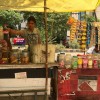
The Neglected Street Vendors of India
For the past nine years, 27-year-old Jignesh has been hawking bed sheets on the bustling pavements of Janpath, a major throughway in India’s capital, New Delhi, as kamikaze traffic swirls around him.
Despite Setbacks, Global Sanitation Makes Progress, Says Fund
When the United Nations hosted a panel discussion last year urging its partners to “break their silence” on open defecation, Singapore’s deputy permanent representative Mark Neo was outspoken in his characterisation: “Open defecation is a euphemism. What we are talking about is shitting in the open.”
Jamaican Gov’t Sees IMF Successes but No Benefits for the Poor
For Jamaicans like Roxan Brown, the Caribbean nation's International Monetary Fund (IMF) successes don’t mean a thing. Seven consecutive tests have been passed but still, the mother of two can’t find work and relies instead on the kindness of friends and family.
Growing Mobilisation Against Introduction of Fracking in Spain
Thousands of people in Spain have organised to protest the introduction of “fracking” – a controversial technique that involves pumping water, chemicals and sand at high pressure into shale rock to release gas and oil.
Garment Sweatshops in Argentina an Open Secret
The death of two Bolivian boys in a fire and the mistreatment and sexual abuse of a young Bolivian woman put the problem of slave-like labour conditions in clandestine sweatshops back in the headlines in Argentina.
Australia’s ‘Stolen Generations’ Not a Closed Chapter
Every year since 1998, Australia has marked ‘National Sorry Day’ on May 26, a day to remember the tens of thousands of indigenous children who, between the 1890s and 1970s, were forcibly removed from their communities by government authorities and placed into the care of white families or institutions to be assimilated into settler society.
Latin America’s Relative Success in Fighting Hunger
The Latin American and Caribbean region is the first in the world to reach the two global targets for reducing hunger. Nevertheless, more than 34 million people still go hungry.
Sri Lankan Women Stymied by Archaic Job Market
Wathsala Marasinghe, a 33-year-old hailing from the town of Mirigama, just 50 km from Sri Lanka’s capital, Colombo, once had high hopes that the progressive education and employment policies of this South Asian island nation would work in her favour. Today, she feels differently, believing that “an evil system” has let her down.
ACP Aims to Make Voice of the Moral Majority Count in the Global Arena
“Four decades of existence is a milestone for the ACP as an international alliance of developing countries,” Dr Patrick I. Gomes of Guyana, newly appointed Secretary-General of the African, Caribbean and Pacific group of countries, said at the opening of the 101st Session of the group’s Council of Ministers.
Laissez Faire Water Laws Threaten Family Farming in Chile
Family farmers in Chile are pushing for the reinstatement of water as a public good, to at least partially solve the shortages caused by the privatisation of water rights by the military dictatorship in 1981.
Terror Groups May Be Winning Digital War on Extremist Ideology
The United Nations is quick to point out the increasing pace at which digital technology is racing across the world.
Pineapple Industry Leaves Costa Rican Communities High and Dry
Twelve years after finding the first traces of pesticides used by the pineapple industry, in the rural water supply, around 7,000 people from four communities in Costa Rica’s Caribbean region are still unable to consume their tap water.
Accusations of ‘Apartheid’ Cause Israelis to Backpedal
A decision by the Israel Defence Forces (IDF) to segregate buses in the occupied West Bank has backfired after causing an uproar in Israel’s Knesset, or parliament, and political damage on the international stage.
When Kenyan Children’s Lives Hang on a Drip
Acute watery diarrhoea is a major killer of young children but misunderstanding over the benefits of fluid treatment is preventing many Kenyan parents from resorting to this life-saving technique and threatening to reverse the strides that the country has made in child health.
School Gardens Combat Hunger in Argentina
In Argentina, where millions of families have unmet dietary needs despite the country’s vast expanse of fertile land, the Huerta Niño project promotes organic gardens in rural primary schools, to teach children healthy eating habits and show them that they can grow their own food to fight hunger.
Bougainville: Former War-Torn Territory Still Wary of Mining
From Arawa, once the capital city of Bougainville, an autonomous region in eastern Papua New Guinea in the southwest Pacific Ocean, a long, winding road leads high up into the Crown Prince Ranges in the centre of the island through impenetrable rainforest.
A Chimera in Growing Cooperation Between China and Brazil
A total of 35 agreements and contracts were signed during Chinese Prime Minister Li Keqiang’s visit to Brazil, as part of the growing ties between the two countries. But there is one project that drew all the attention: the Transcontinental Railway.
Germany’s Asylum Seekers – You Can’t Evict a Movement
In a move to take their message of solidarity to refugees across the country and calling for their voices to be heard in Europe’s ongoing debate on migration, Germany's asylum seekers have taken their nationwide protest movement for change on the road under the slogan: “You Can't Evict a Movement!”.
Climate Change: Some Companies Reject ‘Business as Usual’
When it comes to climate change, business as usual is simply “not an option”.
Pakistan’s Streets Kids Drop the Begging Bowl, Opt for Pencils Instead
Khalil Ahmed's life story sounds like it could have come straight out of the plot of a Bollywood flick, but it didn’t. And that makes it all the more inspiring.« Previous Page — Next Page »


The Week with IPS

NEXT STOP - SDGs
Tracking global progress towards a sustainable world
Tracking global progress towards a sustainable world
