
Saturday, November 21, 2026



News and Views from the Global South
Environment

Across U.S., Health Concerns Vie with Fracking Profits
Peter “Pete” Seeger is a 93-year old U.S. folk legend who resides near Wappingers Falls in southern New York. He can be spotted occasionally on the traffic-heavy Route 9, flanked by world peace signs and armed with a banjo.
U.S. Abstains on Controversial World Bank Mongolia Mine Project
The United States has refused to vote for involvement by the World Bank Group in a massive but controversial mining project in Mongolia.
“We Aren’t Fighting Poverty Here, We’re Improving the Quality of Life”
The residents of San Crisanto, a small communal village nestled in an idyllic setting in the southeastern Mexican state of Yucatán, have learned that valuing and protecting natural resources can generate employment and income.
At the Bottom of Lake Nyasa is ‘Rare Earth’
The local Tanzanian community bordering Lake Nyasa is no nearer to understanding what the conflict between their country and Malawi is about, nor why so much is at stake, as mediation efforts between Malawi and Tanzania are expected to begin soon.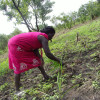
World Bank Urges African Agriculture Rethink
The World Bank is urging African governments to retool their agriculture policies, particularly to include a far greater focus on agribusiness as a critical driver of future development.Microbes Thriving Deep Within the Earth
Every living thing from bacteria to President Barack Obama is made of carbon from exploding stars.
Putting Local Climate Know-How on the Map
A new weapon in the arsenal against climate change is tapping local knowledge to bridge the policy gap and let communities make their own informed decisions about how to manage livelihoods, natural resources, culture and heritage.
Indigenous Community Takes Forest Law into Own Hands
An indigenous community in Brazil has decided to single-handedly take action against illegal loggers who are moving into their territory in search of highly valued timber.
Cuba Diversifies – But Energy Focus Still on Oil
Cuba continues to focus heavily on oil for its energy needs, through agreements with partners like Venezuela, with the hope of discovering commercially exploitable wells in the Gulf of Mexico.
Two Million People Hold their Breath Over Lake Malawi Mediation
Over two million families who solely depend on Lake Malawi for their livelihoods are anxiously putting their hopes into an upcoming mediation between Malawi and Tanzania intended to put an end to a longstanding ownership dispute.
Draft Assessment of Tar Sands Pipeline “Devastatingly Cynical”
The U.S. State Department late Friday released a draft environmental impact assessment of a contentious pipeline project that simultaneously acknowledged the dangers posed by climate change while also noting the project would “not likely result in significant adverse environmental effects”.
“Eco-Reconstruction” Still an Impossible Dream for Chilean Village
The reconstruction of the fishing village of Boyeruca, destroyed by the tsunami that swept over central-south Chile on Feb. 27, 2010, was meant to serve as a model of ecological and sustainable reconstruction.
U.S. Security Establishment Increasingly Worried about Climate Change
More than three dozen national security officials, members of Congress and military leaders are warning of the threat climate change poses to U.S. national security, the latest in an indicator that U.S. intelligence and national security circles are increasingly worried about a warming planet.
Q&A: Climate Change Front and Centre in Cuban Development Model
Each of Cuba’s 168 municipalities faces the challenge of designing its own strategic development which, as well as economic and social progress, minimises the impact of extreme weather and other problems caused by global warming.
Killer Heat Waves and Floods Linked to Climate Change
Killer heat waves, floods and storms are increasingly caused by climate change, new research reveals.
Peace and Dead Sea at a New Low
Two of the three main objectives of the Red Sea-Dead Sea canal project grapple with how to “save the Dead Sea” and “build a symbol of peace in the region.” With Israeli-Palestinians relations and the Dead Sea at an all time low, questions arise whether the ‘Red-Dead Canal’ (as it is known in environmental jargon) could save not only the hyper-saline desert lake but peace itself.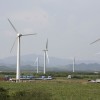
Green Energy Solves Dual Crises of Poverty and Climate
Green energy is the only way to bring billions of people out of energy poverty and prevent a climate disaster, a new study reveals.
More Dead Than Red
The World Bank has declared the Red Sea-Dead Sea canal project feasible. Designed to “save the Dead Sea”, “desalinate water and/or generate hydroelectricity at affordable prices in Jordan, Israel and the Palestinian Authority”, and “build a symbol of peace in the Middle East”, the scheme, green groups warn, is fraught with environmental hazards.
Biofuels Converting U.S. Prairielands at Dust Bowl Rates
The rush for biofuels in the United States has seen farmers converting the United States' prairie lands to farms at rates comparable with deforestation levels in Brazil, Malaysia and Indonesia – rates not seen here since the Dust Bowl of the 1930s.
India Undercuts Tribal Rights
Over a decade ago, the Dongria Kondh tribe – tucked away in the Niyamgiri hills, a mountain range in the eastern Indian state of Orissa – found itself under attack.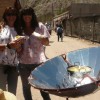
Carnival Food Carts Go Solar in Northern Argentina
It’s carnival time in sunny northwest Argentina, and as usual, food vending carts are everywhere. But some of the carts are different this year: they offer food cooked on the spot – by the sun.« Previous Page — Next Page »


Through our global network of local writers, we are continuing our award-winning coverage of global and local environmental challenges, with a focus on the people for whom the ecosphere matters in a direct way: rural dwellers who have little means to protect themselves against adverse conditions; communities that need to switch to sustainable development in order to survive; poor women and children, who are the most vulnerable in natural disasters. Sponsored by the United Nations Environment Program (UNEP), the United Nations Development Program (UNDP) and The World Bank (WB), IPS also maintains the award-winning Tierramérica, a specialised information service on environment and development.

The Week with IPS

Tracking global progress towards a sustainable world


