Languages
Thursday, November 26, 2026



News and Views from the Global South
Food and Agriculture

Food Security, Trade Facilitation Clash in Bali
The World Trade Organisation’s ninth ministerial meeting at Bali, Indonesia has morphed into a fierce battle between the countries seeking social safety nets for hundreds of millions of poor people and those insisting on having advanced import-facilitation programmes in the developing countries on par with the industrialised nations.
The African Battle to Access Climate Change Funds
Livias Duri, 72, from Zimbabwe’s Mwenezi district in Masvingo province, 436 km southwest of the capital Harare, depends on agriculture for his livelihood.
WTO Urged Not to Treat Water Like Widgets
As government representatives gather Tuesday in Indonesia for what could be final negotiations towards a global trade agreement under the World Trade Organisation (WTO), environmentalists and social justice campaigners are urging them to specify that water resources cannot be treated as commodities.
U.S. Vows Support for Colombia Peace Talks
Despite looming differences over Colombia's drug policy, President Barack Obama renewed his support for a peaceful settlement to the civil war that has plagued the country for over half a century in a meeting with Colombian President Juan Manuel Santos Tuesday.
Restoring Sight to Africa’s Gender-Blind Rice Sector
For more than 20 years, Anastasia Ngwakun from Bamunkumbit village in central Cameroon has been farming rice the hard way – using only hand tools. But Ngwakun knows that if she were a man, she would have access to the technology that would not require her to work so hard.
Argentine Protesters vs Monsanto: “The Monster is Right on Top of Us”
The people of this working-class suburb of Córdoba in Argentina’s central farming belt stoically put up with the spraying of the weed-killer glyphosate on the fields surrounding their neighbourhood. But the last straw was when U.S. biotech giant Monsanto showed up to build a seed plant.
When Calamity Strikes, Think Local
More than a month after Cyclone Phailin battered Orissa, tribes in the eastern Indian coastal state are still feeling its wrath. Besides the damage to their homes and hearths, it has also meant a loss of their traditional food.
Arab World Sinks Deeper into Water Crisis, Warns UNDP
The Arab world is widely perceived as blessed with an embarrassment of riches: an abundance of oil (Saudi Arabia), one of the world’s highest per capita incomes (Qatar), and home to the world's tallest luxury building (United Arab Emirates).
In Haiti, Planting Trees Is No Simple Matter
Reforestation and soil conservation programmes costing many thousands of dollars in this rural community have resulted in hundreds of small ledges built of straw or sacks of earth. In certain areas, the earthworks seem to be lasting, but in others, they are disintegrating.
The Very Future of Third World Agriculture Is at Stake
The battle lines are clearly drawn. At a time when food security in the developing countries is snowballing into a major trade conflict between the developed and developing countries, what in reality is at stake is the livelihood security of an estimated 1.5 billion small farmers in the majority world.
Green-Friendly Enterprise Helps Save Biggest Caribbean Wetlands
The 18 communities in Cuba’s Ciénaga de Zapata, the largest wetlands in the Caribbean, have long survived on the abundant local hunting and fishing and by producing charcoal. But that is no longer possible, due to climate change.
GM Crop Could Migrate Dangerously
Food security activists who secured a moratorium on introducing genetically modified brinjal (aubergine) into India fear that their efforts are being undermined by the release of GM brinjal in neighbouring Bangladesh.
Today’s Forecast Is for Climate-Proof Farming
Even as weather extremes bedevil Caribbean farmers, Ramgopaul Roop has turned his three-acre fruit farm into a showcase for how to beat climate change.
Multinationals’ Interest Grows in Sustainable Bioplastics
Eight major multinational consumer products companies have come together to investigate whether it is possible to produce a sustainable form of “bioplastic”, made from plants rather than petroleum products.
Trinidadian Fishers Choose Jail over “Seismic Bombing”
The demonstration took place on land and sea simultaneously. In the end, police had arrested three people, including Gary Aboud, president of the Trinidadian NGO Fishermen and Friends of the Sea (FFOS), but protesters were undaunted. They would be back.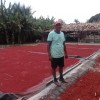
Oil Palm Changes Rural Culture in Brazilian Amazon
Thousands of small farming families in Pará, in the Amazon jungle in northeast Brazil, have turned to the African oil palm as a new source of income, through contracts with biofuel companies. Strange bedfellows, which poses cultural and economic challenges.
Malawi’s Failed Subsidy Programme Left Millions to Starve
Gogo Munthali, from Rumphi, a village over 400 km north of Malawi’s capital Lilongwe, dissolves into tears every morning as she worries about what to feed her five orphaned grandchildren, the youngest of whom has full blown AIDS.
Typhoon Haiyan Exposes Flaws in U.S. Food Aid
Even as Washington has mounted a strikingly robust response to the humanitarian crisis in the Philippines, the ongoing effort is highlighting important gaps in the United States’ emergency relief capability – gaps that could start to be addressed through legislative reforms currently under debate in the U.S. Congress.
New Hope for Haiti’s Decimated Forests
Small farmers could play an important part in making Haiti – where just two percent of trees are still standing – green again.
Fishing Communities Will Face Warmer, Acid Oceans
Eating fish has been an integral part of the Caribbean's cultural traditions for centuries. Fish is also a major source of food and essential nutrients, especially in rural areas where there are scores of small coastal communities.
Las Pavas Extracts a Miracle from God
The rural community of Las Pavas in northern Colombia received this year’s National Peace Prize Wednesday in recognition of its peaceful struggle for land that is claimed by an oil palm company, in a case that became an international symbol of the conflict over land in this country.« Previous Page — Next Page »


 Farming on the Outskirts of Juba. Credit: UN Photo/JC McIlwaine
Promoting human and planetary health is a central focus of the United Nations, as laid out in the 2030 Sustainable Development Goals (SDGs). World hunger and unsustainable farming practices continue to be pressing concerns for the world. According to the 2025 State of Food Security and Nutrition in the World report by the Food and Agriculture Organization (FAO), 673 million people faced hunger in 2024. There are stark regional disparities, with the FAO projecting that 60% of the world population facing hunger will reside in Africa by 2030. Globally, the prevalence of food insecurity has remained consistently higher for women than men.
Sustainable and efficient national food systems are essential in preserving health, education, environmental well-being, peace, economy, and security. However, creating sustainable food systems can be a challenging endeavor, as food production takes a heavy toll on the environment. The agricultural sector accounts for a significant portion of greenhouse gases. Finding safe, sustainable, and ethical strategies to feed the world is crucial in ensuring planetary longevity. A recent initiative from 2023, the EU Regulation on Deforestation-free Products (EUDR), seeks to advocate for sustainable food systems. The main driver of deforestation is the expansion of agricultural land used to produce commodities like cattle, wood, cocoa, coffee, etc. The EUDR is part of the 2020 European Green New Deal and the EU Biodiversity Strategy for 2030 and aims to limit Europe’s consumption of products linked with deforestation by requiring that companies prove that their products are deforestation-free. Despite aiming to achieve major strides in sustainability, policies such as EUDR also raise socioeconomic concerns for targeted countries. Many emerging Latin American economies are impacted by the policy, and have raised the question of how developing countries can grapple with the tensions between economic development and advancing sustainability.
IPS has been at the forefront of providing compelling and insightful stories on communities facing hunger as well as the cost of food production. IPS uses statistics from FAO, the World Food Programme (WFP) and the International Fund for Agricultural Development (IFAD) to bring relevant and hard-hitting facts to readers. This gathering of information and data from such organizations helps bring the best stories from IPS journalists working in the different regions in consultation with experts on the ground.

The Week with IPS

NEXT STOP - SDGs
Tracking global progress towards a sustainable world

