Languages
Friday, November 20, 2026



News and Views from the Global South
Green Economy

Legislation Alone Will Not Address Africa’s Climate Challenges
Despite a raft of legislation dealing with the environment, African countries are still falling short when it comes to enforcing the legal instruments that respond to challenges posed by climate change, researchers say.
Climate Legislation Up Against ‘Abenomics’ in Japan
Undaunted by Japan’s national consensus to boost the economy, which has been mired in lackluster growth for decades, environmentalists are taking baby steps towards incorporating climate change into national legislation.
Small Farmers’ Loss of Land Increases World Hunger
The world is increasingly hungry because small farmers are losing access to farmland. Small farmers produce most of the world’s food but are now squeezed onto less than 25 percent of the world’s farmland, a new report reveals. Corporate and commercial farms, big biofuel operations and land speculators are pushing millions off their land.
Offsets to Cushion South African Carbon Tax
To curb greenhouse gas emissions, South Africa wants to put a tax on carbon emissions from big polluters.
Peaceful Transitions From The Nuclear To The Solar Age
Japanese Buddhist and president of Soka Gakkai International (SGI) Daisaku Ikeda’s Peace Proposal 2014 elevated my focus from the daily news to my longer term concerns for more peaceful, equitable and sustainable human societies to assure our common future. These broader concerns are now shared by millions of humans who have transcended purely personal, local and nationalistic goals and become prototypical global citizens.
Hemp Defies Hurdles to Make a Comeback in Spain
Spain is experiencing a resurgence of hemp, one of the species of cannabis with the lowest THC content, which has been used for millennia to produce textile, medicinal and food products.
Permaculture Poised to Conquer the Caribbean
Erle Rahaman-Noronha is not a revolutionary, not in any radical sense at least. He is not even that exciting. In truth, Rahaman-Noronha is merely a man with a shovel, a small farm, and a big dream. But that dream is poised to conquer the Caribbean.
Caribbean Forced to Choose Between Climate Change Impact and MDGs
Climate change is forcing the nine-member Organisation of Eastern Caribbean States (OECS) to choose between expending scarce resources to deal with its impact or other pressing development goals.
Agroecology Movement Addresses Challenges of Food Security
Agriculture in this Caribbean island is going through its worst moment. Whereas this sector accounted for 71 percent of its gross domestic product in 1914, now it amounts to no more than one percent.
Lagging Urban Transport Works Hinder World Cup Sustainability
Brazil’s efforts to promote the image of an environmentally sustainable World Cup have focused on the stadiums built for the tournament. But the 12 cities where the matches will be played are in a race against time to complete the urban transport projects.
Saving West Africa’s Last Intact Tropical Rainforest through Tourism
Jonas Sanhin Touan has big dreams. As he sits under a canopy, he greets the rare tourist to Gouleako, one of the many villages near the entrance of Côte d’Ivoire’s Taï National Park, with a meal.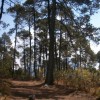
Mexico’s Climate Laws Ignore Women
The rural communities of San Miguel and Santo Tomás Ajusco, to the south of Mexico City, are preserving 3,000 of their 7,619 hectares of forest in exchange for payment for environmental services. But the inequality in the communities is far from ecological.
Community Electricity Lights Up Spain
Until recently it was inconceivable for small groups of organised citizens in fully electrified industrialised countries like Spain to generate their own power from clean sources of energy, challenging the prevailing energy model.
Myanmar Wakes Up to Climate Change
Between 2008 and 2013, when Myanmar remained largely closed off to the rest of the world, it suffered a terrible toll at the hands of nature that remained largely unknown.
Petrotrin Aims to Shrink Its Carbon Footprint
Trinidad and Tobago holds the dubious distinction of being among the top 10 emitters of carbon dioxide per capita in the world, much of it due to the petrochemical industry that is the main driver of its economy.
Energy Efficiency Is an Untapped Goldmine
The U.S. could create more than 600,000 skilled jobs, cut air pollution and fight climate change while its citizens reap 17 billion dollars in energy savings by doing one simple thing: Boost energy efficiency.
Capitalism Unable to Deal with Climate Change
It is time to craft new politics and economic policies to address the sustainability crisis, according to the latest edition of a flagship report by the Worldwatch Institute, a think tank here.
Finding the Needle in the Post-2015 Haystack
How will the U.N. prioritise the goals of its Post-2015 Development Agenda? Which goals deserve more funding? And which goals will help the most people? These are the questions that the Copenhagen Consensus Centre (CCC) seeks to answer.
Governments Crushing Their Own
The global spectre of state violence against political dissent, with paramilitary law enforcement units advancing against citizens they are employed to protect in cities such as Cairo, Bangkok and Kiev is daily news. But in some developing countries, the police are being used to put down indigenous opposition to the alliance of state and corporate power over resource extraction.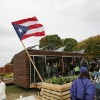
Debt and Dirty Energy Weigh Heavy on Puerto Rico’s Utility
Everyone in Puerto Rico agrees that the island's ailing Electric Power Authority (PREPA) is badly in need of an overhaul, both in engineering and economic terms.
The Opportunity of a Plastic Bag
The European Union was founded to create conditions for a lasting peace on the old continent, establishing an internal market, integrating agriculture and industry. As new generations emerge that have never experienced war or terrorism in Europe, the concept of quality of life increasingly dominates the debate. Will Europe offer its citizens the future all aspire to?« Previous Page — Next Page »


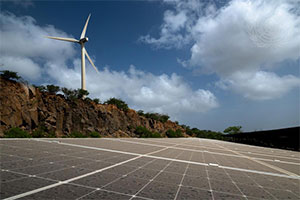 Renewable Energy in Cabo Verde. Credit: UN Photo/Mark Garten
A green economy is an economic model that aims to reduce environmental risks and build a sustainable future. Many of the UN SDGs seek to facilitate a green economy, such as ensuring access to affordable and reliable clean energy, building sustainable cities and communities, and implementing urgent action to combat climate change. Various key negotiations have strived to achieve a green economy, such as the Green New Deal and the Inflation Act of 2022. COP30, held in Belém, Brazil in 2025, agreed to mobilize $1.3 trillion annually for climate action and launched the Belém Mission to 1.5°C. However, the conference was not able to develop a fossil fuel reduction roadmap. Recent years have witnessed a sharp transformation in the geopolitical landscape of international sustainability cooperation. In March 2025, the United States stepped back from formal multilateral support for the SDGs, while China is on the rise as an international leader in renewable energy production. The actions of these global powers may shape shifting alliances on environmental governance. IPS is dedicated to sharing timely news on international developments in building a sustainable future.

The Week with IPS

NEXT STOP - SDGs
Tracking global progress towards a sustainable world
Tracking global progress towards a sustainable world
