Languages
Thursday, November 19, 2026



News and Views from the Global South
Humanitarian Emergencies
Is the Sewol Tragedy South Korea’s Katrina?
In the weeks since the South Korean ferry Sewol sank—taking with it the lives of over 300 passengers, the vast majority of them high school students — the country continues to be wracked by a palpable mix of grief, guilt, and outrage.
Days After African Leaders Vow to Defeat Boko Haram, Bombings and Terror Continue
Multiple car bombs killed dozens Tuesday in the central Nigerian city of Jos, Plateau state, days after a security summit in France where African leaders committed to a “war” on Nigeria’s Islamist rebels, Boko Haram.
Syrian Rebel-held Mountain Villages Preparing for Bigger Battles
In the mountains east of the coastal port of government-held Latakia, three years of regime bombardment has left swaths of blackened stumps in the mountain forests and crumbling concrete structures in Sunni villages, most of whose inhabitants support opposition forces.
OP-ED: Violence Leaves Women, Girls, and Young People on the Edge in South Sudan
As with many conflicts and other humanitarian emergencies around the world, those who suffer the most are women, young girls and children. The current terrible crisis in South Sudan is no exception.
U.N. Decries Water as Weapon of War in Military Conflicts
The United Nations, which is trying to help resolve the widespread shortage of water in the developing world, is faced with a growing new problem: the use of water as a weapon of war in ongoing conflicts.
Syrian Doctors Grapple With Medical Emergency and Ethics
As once-eliminated diseases resurface and barrel bombs and alleged chlorine attacks target civilians, doctors in rebel-held areas and across the border struggle with issues of how best to serve their profession.
OP-ED: Militarised Humanitarianism in Africa
As the world remains transfixed by the kidnapping of almost 300 Nigerian girls, there have been increasing calls for international intervention in the effort to rescue them. But what many people don’t know is that the U.S. military has been active in the region for years.
Bulgaria, No Country For Syrian Refugees
Since November last year, Bulgaria has virtually closed its borders to an inflow of Syrian asylum seekers and other migrants trying to enter the country from Turkey, while EU institutions concerned appear to have acquiesced to this.
Traditional Wisdom to the Rescue in Cyclone Season
May and November bring the most vicious cyclones to the Bay of Bengal rim countries in Southeast Asia.
New Gestures to Opposition Unlikely to Change U.S. Syria Policy
Despite new gestures of support for the Syrian opposition, the administration of President Barack Obama is unlikely to change its longstanding policy of restraining U.S. involvement in the country’s more than three-year-old civil war, according to experts here.
U.N. Probe Chief Doubtful on Syria Sarin Exposure Claims
The head of the U.N. team that investigated the Aug. 21, 2013 Sarin attack in the Damascus suburbs, Ake Sellstrom, is doubtful about the number of victims of the attack reported immediately after the event.
U.S. Food Aid Reforms May Be Rolled Back
Lawmakers here may roll back recent landmark reforms to how the United States provides international food aid, despite warnings that doing so would reduce assistance for some two million people worldwide.
Kerry Draws Israel Hawks’ Ire Amid Failed Talks
In the wake of the collapse of U.S.-led peace talks between Israel and the Palestinian Authority, the angry rhetoric around this conflict has only escalated.Going Beyond the Arms Trade Treaty to Secure Peace in Africa
Even as countries around the world have started to sign on to and ratify a landmark international treaty that would for the first time regulate the international trade in conventional weapons, experts here are warning that the treaty in itself will not be able to maintain peace and security in Africa.
Violence in South Sudan at a Savage Turning Point
After a week that saw a massacre inside a U.N. base and wide-scale ethnic-based slaughter in an oil-producing region, the international community is grappling with what, if any, options remain to save lives in South Sudan.
Bringing the Bridges Home
As foreign forces withdraw slowly from Afghanistan, they leave behind a vulnerable band of people who were their ears and guides on the ground. These people who served as interpreters, face a life of threats and uncertainties. Many have been killed.
Valparaíso Blaze Highlights the City’s Poverty
The blaze that tore through the Chilean port city of Valparaíso revealed the dark side of one of the most important tourist destinations in this South American country, which hides in its hills high levels of poverty and inequality.
Trauma Still Fresh for Rwanda’s Survivors of Genocidal Rape
Claudine Umuhoza’s son turned 19 this Apr. 1. And while he may be one of at least thousands of children who were conceived during the Rwandan genocide, he’s not officially classified as a survivor of it. But his mother is.
Peacekeepers Greenlighted for CAR, but Mission Will Take Months
Amid alarming reports of ethnic cleansing in the Central African Republic, the U.N. Security Council voted unanimously Thursday to send an official peacekeeping mission to the conflict-torn country where the minority Muslim population has all but disappeared in much its Western half.
When Medicines Don’t Work Anymore
The growing crisis of antibiotic resistance is catching the attention of policy-makers, but not at a fast enough rate to tackle it. More diseases are affected by resistance, meaning the bacteria cannot be killed even if different drugs are used on some patients, who then succumb.
Soaring Child Poverty – a Blemish on Spain
“I don’t want them to grow up with the notion that they’re poor,” says Catalina González, referring to her two young sons. The family has been living in an apartment rent-free since December in exchange for fixing it up, in the southern Spanish city of Málaga.« Previous Page — Next Page »


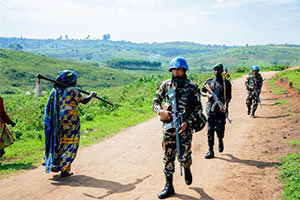 MONUSCO Peacekeepers and FARDC Soldiers Patrol Fataki Area. Credit: UN Photo/Jorkim Jotham Pituwa
Conflict, human rights violations, natural disasters, and famine have been at the forefront of concerns for humanitarian organizations. The escalation of humanitarian crises has led to over 239 million people in need of humanitarian assistance at the start of 2026, as estimated by OCHA’s Global Humanitarian Overview. The 2025 humanitarian appeal received only $12 billion, the lowest funding in over a decade, which has left 24 million fewer people reached in comparison to 2024. Conflict has remained the primary driver of crisis.
Humanitarian emergencies massively impact progress towards the Sustainable Development Goals (SDGs), adversely affecting economic development, inequality, education, planetary well-being, and poverty. Millions of people are faced with reduced access to essential services, including shelter, food, healthcare, and access to clean drinking water. UN Organizations such as UNHCR and the United Nations Children’s Fund (UNICEF) are committed to providing direct relief to affected communities when state governments cannot.
The United Nations 2024 Summit of the Future discussed measures that will be taken to reduce global inequality and promote peacekeeping efforts around the world. The recent UN Climate Change Conference (COP30) in Belém, Brazil, agreed to mobilize $1.3 trillion annually for climate action by 2035, operationalize the loss and damage fund, and triple adaptation finance. However, a fossil fuel transition commitment was not secured, despite climate change and the greenhouse effect being major contributors to humanitarian crises worldwide.
Countries across the world have also rallied to end humanitarian crises, as witnessed in conflicts such as Palestine and Ukraine. IPS is committed to providing relevant and in-depth reports of humanitarian emergencies around the world and their implications.

The Week with IPS

NEXT STOP - SDGs
Tracking global progress towards a sustainable world
Tracking global progress towards a sustainable world