Languages
Sunday, November 15, 2026



News and Views from the Global South
Natural Resources
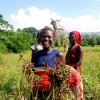
No-till Farming Holds the Key to Food Security
No-till farming is a response to climate change that fits well with the needs of the Caribbean: it increases the ability to capture water, while withstanding both drought and excessive rains, says expert Theodor Friedrich, representative of the United Nation’s Food and Agriculture Organisation (FAO) in Cuba.Mexico Mired in Oil Debates
Oil, the symbol of modern Mexico, is once again stirring up local political waters, with turbulent debates on the fate of the state-owned oil monopoly and conflicts over the privatisation of key economic and strategic areas.
Haiti-Dominican Republic Trade: Exports or Exploits?
"I get everything at the Haiti-Dominican Republic: carrots, squash, eggplant, cabbage, peppers, eggs, salami," explained a merchant at the Croix des Bossales marketplace, her stand teeming with goods. "The border is what feeds us."
Climate Change Added to U.S. Government “High Risk” List
For the first time, a U.S. government auditor has added climate change to a list of issues that pose the greatest financial risk to the government and country. It is also warning that Washington is markedly unprepared to deal with the scope of the problem.
Brazilian Ethanol in the Slow Lane to Global Market
Following a promising start, Brazil's dream of positioning ethanol in the global market on an equal standing with petroleum-based fuels is hindered by new and old challenges.
Q&A: Venerable Sierra Club Gets Radical on Tar Sands
The term “civil disobedience” takes its roots from an 1849 essay by U.S. poet, philosopher and environmentalist, Henry David Thoreau, originally entitled “Resistance to Civil Government”.Climate Change Threatens Caribbean Coral Reefs
Scientists and researchers are working together in a new initiative to collect data that will help determine the effects of climate change on coral in the Caribbean Sea.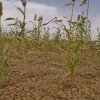
Sahel Region Learning to Reap the Benefits of Shade
In Africa's Sahel region, agroforestry techniques using traditional plantings known as "fertiliser trees" to increase soil fertility, as well as harvesting and grazing regulations, are offering new solutions to both food and human security.
Land Is Life, and It’s Slipping Away
Nean Narin, a humble man and father of three children, says his family is going hungry. Narin lives in the village of Boeung Kak, situated on the edge of Cambodia’s capital, Phnom Penh. For years, he and other villagers relied on the Boeung Kak Lake for fish and plants, which they would eat and sell.
Trout Trump the Taliban
The rivers in northern Pakistan’s Khyber Pakhtunkhwa (KP) province were once thick with trout. Spanning hundreds of kilometres, these water bodies played host to the exotic fish, first introduced by the British in the early 1900s, which eventually became a staple in the diets and livelihoods of the province’s 20 million residents.
‘No Blue Skies Opportunities’ in South African Mining
A calamitous year in mining has left many wondering whether it should still have a part in South Africa’s future. Illegal strikes, including one that left 47 people dead near Marikana in the northwest of the country, soaring costs and depressed world commodity markets have left the industry in its worst crisis in years.
Energy, Economy Key in Major Obama Address
In a major annual address Tuesday night, President Barack Obama offered further details on a broad and ambitious range of policy priorities, taking advantage of perhaps his single most significant opportunity to guide the public conversation on his second-term agenda.
Native Peoples Say: No Consultations, No Concessions
Representatives of native communities in the Amazon region of Peru, where the first ever "prior consultation" about a project affecting their territory will be held, have pressured the authorities into promising that their views will be taken into account every step of the way. But the government's word is no longer enough to assuage their mistrust.In the Land of Gas, the Residents Have None
The 19,000 inhabitants of the municipality of Caraparí, the area supplying a third of Bolivia’s gas exports, do not have access to gas or petrol, six years after the nationalisation of the mega deposit and almost a quarter century after its discovery.U.S. Arms Fuel Asian Tension
After a year of intense diplomatic standoff and territorial brinkmanship among disputing states in the South and East China Seas, the U.S. military ‘pivot’ to the region appears to be in full swing - a move that could further aggravate an already combustible regional dynamic.
Corruption Muddies the Waters in Argentina
Two corruption scandals - one homegrown and the other originating in Spain – are again highlighting the connections in Argentina between irregular investments, the misuse of environmental remediation projects for private gain, and plans that contribute to the degradation of natural resources.
Fishers Fight Over Dwindling Catch
Boats were tying up at the jetty and there was a bustle of activity as vendors cried their wares, offering shellfish to potential buyers, while young people, sharp knives in hand, filleted sea bass and red snapper. Meanwhile, on the promenade, octogenarian musicians played old-style cumbias and boleros for restaurant patrons.
Draft Arctic Oil Spill Agreement “Inadequate”
Environmentalists are warning that a meeting of environment ministers that took place Monday in Sweden has agreed on a weak and inadequate response plan in case of an oil spill in the Arctic Ocean.
Hydroelectric Project Threatens Chile’s Lake Neltume
“This is paradise and they want to destroy it. This has had an enormous psychological impact on us,” says Guido Melinao, leader of the Mapuche indigenous community of Valeriano Cayicul, referring to the Neltume hydroelectric power plant project planned by the Spanish-Italian consortium Endesa-Enel.
Think Tank Urges “More Ambitious” U.S.-Mexican Agenda
The electoral and political stars are aligning in ways that offer the United States and Mexico major opportunities to substantially deepen their cooperation, particularly on trade, energy, and immigration, according to a report released here Wednesday by a special commission of the Inter-American Dialogue (IAD).
World Bank Unmoved on Auditor’s Criticism of Forest Policy
Officials at the World Bank are forcefully rejecting a new internal evaluation that is highly critical of the institution’s decade-long forest policy, expressing their “strong disagreement” with some assertions in the report.« Previous Page — Next Page »


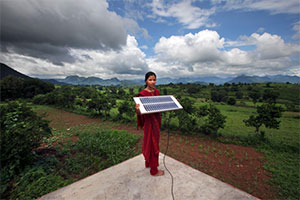 Bringing clean energy to rural India. Credit: Abbie Trayler-Smith / Panos Pictures / Department for International Development
Large reserves of oil, gas and minerals in developing countries generate opulent revenues. They could be used to stimulate economic growth and reduce poverty, but often result in environmental destruction and conflict, benefiting large companies and corrupt governments. Furthermore, competition over natural resources often manifests through geopolitical conflict. For example, before the US-Iraq war, Iraq’s domestic oil industry was nationalized. With US aggression came weakened Iraqi institutions and foreign intervention, thus eventually leading to the privatization of Iraqi oil, leaving the industry now largely dominated by Western companies. As another example, China’s rising investments within the lithium sector in South America are increasing the US-China rivalry across the Western Hemisphere. Notably, Bolivia has the largest reserves of lithium in the world, and the nation’s state-owned lithium extraction firm recently signed a contract with China’s CBC Consortium, while rejecting the entry of Western firms into the nation. In Bolivia’s case, rising Chinese investment in the nation’s lithium sector also raises concerns about environmental sustainability and the sociopolitical rights of Indigenous communities. More broadly, Sub-Saharan Africa holds nearly 30% of global reserves of critical minerals required for low-carbon technologies. Despite this, the region attracts less than 10% of global exploration investment, depicting a critical barrier to both the clean energy transitions and Sub-Saharan Africa’s economic development. Furthermore, resource wealth continues to fuel conflict like Sudan’s civil war, which has led to 9.1 million internally displaced people and is intensely connected to competition over gold, water, and agricultural land. IPS covers news about major oil, gas, and mining projects, their effects on the environment and local communities, and the ideas and actions of the interest groups involved.

The Week with IPS

NEXT STOP - SDGs
Tracking global progress towards a sustainable world
Tracking global progress towards a sustainable world
