Languages
Wednesday, November 11, 2026



News and Views from the Global South
Global

Let’s Fight for What Counts to End AIDS, Tuberculosis and Malaria
Next week, taking place alongside the UN General Assembly, President Biden hosts a financing summit in New York of such importance that it will determine if millions of people live, will shape the world around us for years to come and will set the future direction of global health. At least $18 billion is needed to fund the work of the Global Fund to Fight AIDS, Tuberculosis and Malaria.
UN South-South Event Highlights Power of Cooperation for Peace and Development
A UN panel held underlined the impact of South-South Triangular Cooperation (SSTC) projects as vital tools for enabling sustainable development and peace in developing countries.
USA and Russia: Pursuit of Global Hegemony
Can a pitiless, offensive war waged against a sovereign state be justified? In my opinion the answer is an unequivocal “No!”. Ukraine has the right to defend itself against Russia’s reckless and extremely destructive invasion and EU’s support to a neighbouring country attacked by a superior enemy is definitely correct. However, several Latin American intellectuals and leaders are willing to accept Putin’s narrative, instead of Zelensky’s, namely that the war in Ukraine is actually a war between Russia and USA, which by stalling Russia’s and China’s ambitions intends to maintain its supremacy as a superpower, while using Ukraine as a pawn in its power game.
Unsettled Lives in a Troubled World
Cross-continent vacations seem to be the norm once again with the lessening of COVID-19 while new cities are being built with skyscraping $4M condos shooting up in a matter of months, and just-out-of-University millennials launching into their careers with minimum start-off salaries of $75K.
Building Leadership for Teachers in the Developing World
If we truly want to re-imagine the role education can play in the decades to come, it is going to be indispensable to take drastic measures to elevate the role of teachers in developing countries.
What Must COP27 Deliver?
Preparations for COP27 in November are proceeding apace and we are now well past the halfway mark between the preparatory meetings in June in Bonn and the start of the summit in Sharm El-Sheikh, Egypt. The agenda for Sharm El-Sheikh is complex and challenging. Furthermore, the meeting is taking place during a time of international turmoil. So, what are the factors influencing whether Sharm El-Sheikh can be a success? And what, exactly, does COP27 need to deliver?
World Leaders, Mostly Autocrats, Plan to Skip Upcoming UN Sessions
When the high-level segment of the UN General Assembly sessions begin September 20, the official list of speakers include 92 heads of state (HS) and 56 heads of government (HG). But the “usual suspects,” mostly leaders of authoritarian regimes, are missing, including Vladimir Putin of Russia, Xi Jinping of China, Kim Jong-un of North Korea, Bashar al-Assad of Syria, Crown Prince Mohammed bin Salman of Saudi Arabia and the much-maligned military leaders of Myanmar.
Africa Struggles with Neo-Colonialism
After a quarter century of economic stagnation, African economic recovery early in the 21st century was under great pressure even before the pandemic, due to new trade arrangements, falling commodity prices and severe environmental stress.
Multi-Faith Team Urges Repeal of Blasphemy Laws– in the Name of Religious Freedom
In nations lacking certain religious freedoms, the bold multi-faith membership of the International Religious Freedom Roundtable’s Campaign to Eliminate Apostasy and Blasphemy Laws, would be forbidden.
United We Stand to Achieve Sustainable Development
The world today faces a future that is in peril. Our challenges have become more complex and interconnected, as we see the impacts of the COVID-19 pandemic, an uneven economic recovery, a climate emergency, growing inequalities, and an increase in conflicts globally. This year also marks a grim milestone, with over 100 million people forcibly displaced.
As New Covid Boosters Move Forward, Better Outreach is Needed to Save US Lives
This week––nearly ten months after the emergence of the Omicron variant––the United States is rolling out Covid-19 booster vaccines that specifically target newer, now-dominant strains of the virus.
Climate Collapse Is Not Inevitable But ‘Great Leap’ Needed
In 1972 the Club of Rome alerted the world to the harm human economic systems were doing to the health of our planet in its seminal, best-selling report, The Limits to Growth. With the devastating impacts of the climate crisis hitting home harder than ever, especially in the Global South, that warning about the dangers of exponential economic growth has been fully vindicated.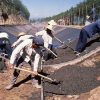
Developing Countries Must Grow More Food
Climate change and war on Ukraine a wake-up call
As our planet continues to heat up, extreme weather has affected many of us. From the west coast of North America across Europe, the Middle East and Asia to Pakistan and New Zealand, wildfires and flash floods have destroyed homes and property and disrupted the daily lives of millions.

UN Report Details Taliban Abuses in Afghanistan
This week, the United Nations special rapporteur on human rights in Afghanistan, Richard Bennett, released his first report. It is a catalog of abuses under Taliban rule since August 2021 and their devastating impact on Afghans.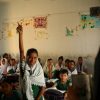
Hundreds of Millions of Children Sentenced to Ignorance
More than two-thirds of 10-year-olds are unable to read and understand a simple text. This shocking finding should be enough to be alarmed about the horrifying fate of an entire generation. But there is much more.
Eight International Development Priorities for the new UK Prime Minister
The UK’s new Prime Minister (and former Foreign Secretary), Liz Truss, enters Downing Street with a full and urgent in-tray, dominated by the highest inflation rate for 40 years and concerns across the country about the cost-of-living crisis.
1980s’ Redux? New context, Old Threats
As rich countries raise interest rates in double-edged efforts to address inflation, developing countries are struggling to cope with slowdowns, inflation, higher interest rates and other costs, plus growing debt distress.
The Dying Children Divide
The chances of a child dying before reaching age five years have dropped substantially worldwide during the recent past. However, a significant divide remains among countries as well as within regions in the chances of children dying.
A Plea for the Creation of a UN Youth Assembly
There are many ways the UN can have a sizeable role in promoting the engagement and participation of youth and helping them becoming a central pillar of a new way of doing policy-making.
Air Pollution Kills Millions Every Year: Action Needed
Tarik, age 42, lives in a village adjacent to a decades-old coal power plant in Bosnia and Herzegovina. On the day we visited, Bosnian cities were some of the most polluted places on Earth. Describing the devastating health toll the air pollution took each year on the village’s older residents he voiced his fear for his aging parents, who had lived there for over 40 years: “The older people in this village are desperate. They put up with this air for months. They don’t get out, they don’t socialize, they can’t get groceries or medication. It’s a terrible existence.”
100 Million People with Long COVID is a Crisis We Must Address
More than two-years in, the COVID-19 pandemic rages on with rising cases and deaths every day. A silent and more long-term pandemic occurring simultaneously is long COVID. The impact of long COVID has serious consequences for the future of humanity and should worry us all.« Previous Page — Next Page »





The Week with IPS

NEXT STOP - SDGs
Tracking global progress towards a sustainable world
Tracking global progress towards a sustainable world
