Languages
Saturday, November 14, 2026



News and Views from the Global South


Obama Calls for Compromise in Egyptian Crisis
U.S. President Barack Obama Monday called for both the Muslim Brotherhood-dominated government of Egyptian President Mohamed Morsi and opposition forces to compromise in the fast-developing political crisis.
Media Scholars Decry Financial Crisis, Call for Action
Communications scholars from around the world deplored the global financial crisis and called on their peers to take more active roles in the search for solutions at a recent four-day conference in Dublin, Ireland.
The New Fascism
The atrocious Second World War left behind lasting damage by lowering our standards for what is marginally acceptable.
Tunisia Tiring of Transition
In the third year after the revolution that toppled former dictator Ben Ali, true democracy is still work in progress in Tunisia.
Spring Brings Differing Fruits for Tunisian Women
The revolution that ousted dictator Ben Ali in January 2011 brought new, hard-won freedom to the Tunisian people. However as the country discovers whether secularism and growing political Islam can co-exist, some women are enjoying greater liberty to practise their religion while others are concerned that their rights may be eroded.
A President Fights His People
Egyptian President Mohammed Morsi faces massive demonstrations, but he faces also his own government on many fronts.
Tunisia Now Searches an Economic Spring
Nearly two-and-a-half years since the toppling of the autocratic regime of Zine el-Abidine Ben Ali in the first regime change of the now famous Arab Spring, the high expectations of change to come with the revolution have hardly been met.Polio Fear at Europe’s Door
The Ukraine is facing a “real threat” of a return of polio as well as outbreaks of other serious diseases such as mumps, rubella and measles because of a combination of state inefficiency and public mistrust of vaccinations, health experts have said.
U.S. Supreme Court Strikes Down Gay Marriage Ban
Large crowds cheered outside the U.S. Supreme Court here on Wednesday morning as the justices inside announced their majority decision that a key part of two-decade-old federal legislation banning same-sex marriage is unconstitutional.OP-ED: Why Bahrain’s Al-Khalifa Family Is Losing the Right to Rule
By continuing its repressive policies and refusing to engage civil society and moderate political groups in meaningful dialogue for genuine reform, the Khalifa family has squandered its legitimate right to rule Bahrain. King Hamad could still salvage his rule, but he would need to act boldly by taking the following steps.
Q&A: Through “My Afghanistan”, Rural Afghans Share Their Stories
A bomb blast on a road. A suicide attack near a grocery store. Such is the uncertainty for ordinary men and women in Afghanistan, where daily life is still marred by violence.
Agriculture Leans on Japanese Women
Yukako Harada, an energetic 29-year-old, is part of a small but determined band of women farmers working hard to revitalise Japan’s moribund agricultural sector, which is feeling the crunch of an ageing population and a flood of cheap imports.
Q&A: How One Woman Demands Answers and an End to FGM
Bogaletch Gebre knows exactly what women in her Ethiopian community are going through. Along with her sisters, the women's rights activist was a victim of female genital mutilation (FGM) when she was a child in a part of Ethiopia where the practise was carried out on every girl.
U.N. Downplays Health Effects of Nuclear Radiation
The United Nations has come under criticism from medical experts and members of civil society for what these critics consider inaccurate statements about the effects of lingering radioactivity on local populations.
Q&A: Empower Indigenous Women to Assert Their Rights
Women around the world are exposed to domestic violence, sexual and economic exploitation, gender-based violence, female genital mutilation and child marriage. For indigenous women and girls, however, the risk of being victims of such issues is especially high.
Education in Afghanistan – the Good, the Bad and the Ugly
Despite impressive advancements in enrolment rates, media reports of gas attacks on girls’ schools, shoddy books, and a lack of classroom facilities continue to mar the reputation of the education system in Afghanistan.
Creating Their Own Spring
The soldiers of former Libyan strongman Muammar Gaddafi had left just a few days before, but a group of about 50 children were already singing in the Amazigh language in the village of Yefren, 110 kilometres south of Tripoli. This month will mark two years since the establishment of the first Amazigh school in Libya.
Police Brutality Fuels Protests in Brazil
Matheus Mendes Costa, a 21-year-old university student, spent 13 hours in a three-square-metre police station holding cell after he was arrested in this Brazilian city for allegedly assaulting police officers and destroying public property.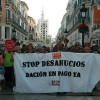
New Faces of Social Unrest in Spain
Economy professor Arcadi Oliveres has become a popular face of the growing discontent in Spain because he calls a spade a spade.
If Not Quantitative Easing, Then What?
It took world leaders some time to realise that the financial crisis initiated by the collapse of the subprime mortgage segment of U.S. financial markets in 2007 would not exhaust its effects in an ordinary recession.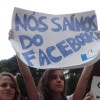
Deteriorating Urban Transport Sparked the Protests
A group of young people touched a nerve in Brazil’s large cities, triggering an outpouring of urban outrage at the deterioration of transportation conditions and of the quality of life.« Previous Page — Next Page »


Due to significant overlap in the themes and stories of interest to subscribers of both our European and UN newsletters, we have decided to consolidate both under the flag of IPS' popular daily TerravivaUN newsletter. Existing subscribers to the TerravivaEurope newsletter will continue to receive a daily selection of stories through the IPS TerravivaUN list and readers interested in global policy and development news from the EU, the UN and beyond are encouraged to subscribe below.

The Week with IPS

NEXT STOP - SDGs
Tracking global progress towards a sustainable world
Tracking global progress towards a sustainable world
