Languages
Sunday, November 29, 2026



News and Views from the Global South


Rural Malawians About to Go Online
This month, many Malawians, especially those in rural areas, will be able to start accessing the internet as easily as opening a tap to get water.
Int’l Effort to Help Ethiopia Shoulder Its Refugee Burden
A concerned-looking group of refugees gather around a young woman grimacing and holding her stomach, squatting with her back against a tree. But this is no refugee camp, rather the Jesuit Refugee Service (JRS) compound just off a busy main road leading to Sidist Kilo roundabout in the Ethiopian capital.
Longer, But Less Meaningful Lives?
The last one hundred years life expectancy has increased by about 25 per cent-from near 80 to near 100-in some countries. But, instead of increasing playful childhood, education, work and retirement by 25 per cent, the age of retirement has moved much less than the age at death.
Q&A: Bangladesh’s ‘Higher Trajectory of Development’ Not Easy but Achievable
Bangladesh, a country of 160 million people, has made significant progress in its efforts to accelerate economic growth, reduce poverty and promote social development, but it now faces certain challenges in consolidating these achievements and marching forward on the higher trajectory of development, says one of its leading economists.
Reparations owed for “Racial Terrorism” says UN Committee
Stressing the enduring relationship between injuries inflicted by slavery and contemporary injustices, a UN committee has recently issued a strongly-worded call for reparations for black U.S. Americans.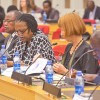
Africa and the Paris Agreement: Which Way Forward?
The Paris Agreement on climate change is set to enter into force on Nov. 4, after it passed the required threshold of at least 55 Parties, accounting for an estimated 55 per cent of the total global greenhouse gas emissions, ratifying the agreement.
Dying to Get to Europe
They are not just data or numbers for statistical calculations. They are desperate human beings fleeing wars, violence, abuse, slavery and death. They hear and believe the bombastic speeches about democracy and human rights and watch the many images of welfare and good life in Europe.
Gorbachev Appeals for Sanity, Dialogue
President Mikhail Gorbachev, former leader of the Soviet Union and recipient of the 1990 Nobel Peace Prize, has appealed to world leaders to reduce the dangerous tensions, which today threaten to plunge human civilization and the biosphere into an all-destroying nuclear war.
Cities Address a Key Challenge: Infrastructure Needs
“We as mayors have to govern midsize cities as if they were capital cities,” said Héctor Mantilla, city councilor of Floridablanca, the third-largest city in the northern Colombian department of Santander.
Are Public Enterprises Necessarily Inefficient?
From the 1980s, various studies purported to portray the public sector as a cesspool of abuse, inefficiency, incompetence and corruption. Books and articles with pejorative titles such as ‘vampire state’, ‘bureaucrats in business’ and so on thus provided the justification for privatization policies. Despite the caricature and exaggeration, there were always undoubted horror stories which could be cited as supposedly representative examples. But similarly, by way of contrast, other experiences show that SOEs can be run quite efficiently, even on commercial bases, confounding the dire predictions of the prophets of public sector doom.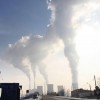
Climate Doomsday – Another Step Closer
Almost inadvertently, humankind is getting closer everyday to the point of no-return towards what could be called the ‘climate doomsday’. Now, globally averaged concentration of carbon dioxide (CO2) in the atmosphere has surged again to new records in 2016… and will not dip below pre-2015 levels for many generations.
UN Cuba Embargo Vote: United States Abstains for First Time
After 25 years of voting against a United Nations resolution condemning the United States (U.S.) embargo on Cuba, the U.S. Wednesday chose for the first time to abstain from voting. An overwhelming 191 UN member states voted for the resolution, with only Israel joining the United States in abstention.
Funding Lags to Combat Land Degradation
Land degradation already affects millions of people, bringing biodiversity loss, reduced availability of clean water, food insecurity and greater vulnerability to the harsh impacts of climate change.
Cuba’s Fish Farming Industry Seeks to Double Output by 2030
Protected from the sun by broad-brimmed hats and long- sleeved shirts, workers at the La Juventud fish farm throw fish feed into the tanks for the tilapias, a fish that is scarce and in high demand in the Cuban markets.
UN Must Fight Tax Evasion, Says UN Expert
A UN Human Rights Expert has called on the international community to fight tax evasion and abolish tax havens that siphon off essential resources from human rights protection and global development.
Kenya Greens Drylands to Combat Land Degradation
Faced with growing degradation that is swallowing large swathes of land in arid and semiarid areas, Kenya is heavily investing in rehabilitation efforts to stave off the threat of desertification.
Social Media Becomes Mugabe’s Nightmare
In a WhatsApp video that went viral in September, a middle-aged Zimbabwean man addresses President Robert Mugabe, telling him that 90 percent of the people in the country are unemployed and do not contribute to the economy because Mugabe cannot provide jobs.
Who Should Lead the WHO Next?
Health problems increasingly transcend the borders of the World Health Organization’s 194 member states, a challenge which the six candidates vying to lead the global body must address with care.
How to Save Thousands of Children’s Lives
When disasters strike, children are among the most vulnerable, and humanitarian aid agencies need to be able to respond immediately to save their lives.
Farming Brings Stability to Remote Villages in Papua
Only two decades ago, Usku, Molof and Namla, three villages in Senggi District, Papua, were the battlefield of feuding tribes fighting for their ulayat (communal land). Afra, the triumphant tribe, then settled in the villages and led a life of hunting and gathering.
World Must Tackle the Biggest Killer of Whales – and it’s not Whaling
Every two years, governments from across the globe gather to debate the fate of the world’s whales. And every two years, Japan, Norway and Iceland find themselves in the firing line for their refusal to end commercial whaling.« Previous Page — Next Page »


Want to keep up with the latest news and views from the Global South? Sign up for IPS Daily News Report for daily emails with our top stories about international development, climate change, gender and more. (Formerly IPS TerraViva since 1993).

The Week with IPS

NEXT STOP - SDGs
Tracking global progress towards a sustainable world
