Languages
Monday, November 9, 2026



News and Views from the Global South
Asia-Pacific

Women Turn Drought into a Lesson on Sustainability
When a group of women in the remote village of Sadhuraks in Pakistan’s Thar Desert, some 800 km from the port city of Karachi, were asked if they would want to be born a woman in their next life, the answer from each was a resounding ‘no’.
Indonesia’s Palm Oil Industry in Need of a Makeover
Over the past three decades, 50 percent of the 544,150 square kilometres that comprise Kalimantan, the Indonesian portion of the island of Borneo, has been taken over by the palm oil industry.
Cyclone Pam Prompts Action for Vanuatu at Sendai Conference
Cyclone Pam has not only caused unprecedented damages to the Pacific island of Vanuatu but also lent urgency to U.N. Secretary-General Ban Ki-moon’s plea that disaster risk reduction is in “everybody’s interest”.
Canada’s Waste Still Rotting in a Philippine Port
Filipino Catholic priest and activist Reverend Father Robert Reyes, dubbed by media as the “running priest”, joined a protest of environmental and public health activists last week by running along the streets of the Makati Business District, the Philippines’ financial capital, to urge the government to immediately re-export the 50 Canadian containers filled with hazardous wastes that have been in the Port of Manila for 600 days now.
Meet the 10 Women Who Will Stop at Nothing
On Apr. 6, 2013, Nadia Sharmeen, a crime reporter, was assigned to cover a rally organised by Hefazat-e-Islam, an association of fundamentalist Islamic groups in Bangladesh whose demands included a call to revoke the proposed National Women Development Policy.
Jailed Journalist’s Family Looks to Iran’s New Year with Hope
The lawyer for Jason Rezaian, the Iranian-American Washington Post reporter detained in Tehran since Jul. 22, 2014, has officially requested temporary bail for her client during Nowruz, the beginning of the Persian calendar year when some prisoners have customarily been granted furlough requests.Women Walk for Peace in the Korean Peninsula
A group of international women peacemakers announced on Wednesday at the United Nations their intention to walk across the two mile De-Militarized Zone (DMZ), in a call for peace and reunification of Korea.
What’s Driving the Merciless Asylum Seeker Policies in Australia?
As conflicts in the Middle East and elsewhere pushed the number of refugees to 13 million last year, the international community is struggling to shoulder the humanitarian responsibility of protecting those fleeing violence and persecution in their homelands.
Coal: Burning Up Australia’s Future
With less than a year to go before the United Nation’s annual climate change meeting scheduled to take place in Paris in November 2015, citizens and civil society groups are pushing their elected leaders to take stock of national commitments to lower carbon emissions in a bid to cap runaway global warming.
First the Taliban, then the Army, now Hunger: The Woes of Pakistan’s Displaced
A doctor shakes his head in despair as he examines a 10-year-old child at the Jalozai refugee camp, about 35 km by road from Peshawar, capital of Pakistan’s northern Khyber Pakhtunkhwa (KP) province.
From the Mountains to the Sea, Timorese Women Fight for More
In Timor-Leste, the gap between rich and poor is most keenly felt by rural women and children. But while women are working hard to help rebuild Timor-Leste, their contributions are not always recognised, in a country where men’s narratives still heavily dominate.
In India, an Indoor Health Crisis
For years, Kehmli Devi, a middle-aged woman from the village of Chachadeth in India’s northern Himalayan state of Uttarakhand, has prepared her family’s meals on a wood-burning stove.42 Human Rights Groups Slam Indonesia’s Death Penalty
More than 40 human rights groups from around the world have penned an open letter to Indonesian President Joko Widodo, pleading for the halting of 10 imminent executions.
Opinion: Reforming Mental Health in India
India is not only poised for greatness, some say it is already on its way. The events that have shaped the nation's dialogue over the past month showcase an India with a bold vision – to transform industry, to close the gap on inequality and ultimately, to redefine its place as a leader among the world.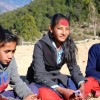
By Girls, For Girls – Nepal’s Teenagers Say No to Child Marriage
If not for a group of her school friends coming to her rescue, Shradha Nepali would have become a bride at the tender age of 14.
Tech-Savvy Women Farmers Find Success with SIM Cards
Jawadi Vimalamma, 36, looks admiringly at her cell phone. It’s a simple device that can only be used to send or receive a call or a text message. Yet to the farmer from the village of Janampet, located 150 km away from Hyderabad, capital of the southern Indian state of Telangana, it symbolises a wealth of knowledge that changed her life.Illegal Wildlife Trade Booms on Chinese Social Media
Despite a major online crackdown on the sale of illegal wildlife products in China, merchants are still peddling their wares in a thriving social media market.
For Women in Asia, ‘Home’ Is a Battleground
Nearly half of the four billion people who reside in the Asia-Pacific region are women. They comprise two-thirds of the region’s poor, with millions either confined to their homes or pushed into the informal labour market where they work without any safeguards for paltry daily wages. Millions more become victims of trafficking and are forced into prostitution or sexual slavery.
Farm Projects Boost Bangladeshi Women, Children
Women in Bangladesh are carving healthier, wealthier futures for themselves and their children – and they have chicken eggs and pineapples to thank.June Election Offers Asia-Pacific a Chance for Greater Influence in ICC
The health-related resignation of an International Criminal Court (ICC) judge has paved the way for Asia-Pacific governments to improve their legal representation in the international legal system, said the group Coalition for the ICC on Thursday.
From the Police Station Back to the Hellhole: System Failing India’s Domestic Violence Survivors
“One time my husband started slapping me hard on the face because I had not cooked the rice to his satisfaction,” Suruchi* told IPS. “He hit me so hard that my infant daughter fell from my arms to the ground.”« Previous Page — Next Page »





The Week with IPS

NEXT STOP - SDGs
Tracking global progress towards a sustainable world
Tracking global progress towards a sustainable world
