Languages
Sunday, November 22, 2026



News and Views from the Global South
Latin America & the Caribbean

Human Rights Education Shows Its Potential
The impact of human rights education, a rising star, is highlighted in a short documentary sponsored by United Nations experts and civil society.
Young People Caretaking in an Aging Cuba
Mabel Suárez, a 22-year-old Cuban woman, can’t concentrate on enjoying her youth. She helped take care of her great-grandmother for two years, and she knows that, whether she likes it or not, it will fall to her to take care of her grandparents and parents in their old age.
Religious Groups in Brazil Condemn Attacks on Islam
The Brazilian Commission for Combating Religious Intolerance (CCIR) condemned the film “Innocence of Muslims" as “disrespectful” of the prophet Mohammed, and organised a mass protest demanding respect for freedom of religion in this country.
Q&A: “Pacification of Favelas Not a Real Public Policy Yet”
The “pacification” of the favelas in this Brazilian city, aimed at driving out armed groups and fighting drug trafficking, has not yet become a fully effective public policy, says Eliana Sousa Silva, who has lived in one of Rio’s shantytowns for nearly 30 years.
Little Concern for the Environment in EU-Central America Agreement
The Association Agreement between Central America and the European Union (EU) will increase environmental and social pressures on the region, warn experts and activists. But some observers stress its potentially positive impacts.Taking Justice to the Neighbourhoods in Argentina
The Argentine government has opened legal aid centres in slum neighbourhoods, to provide a range of services, from assistance for immigrants and victims of domestic violence to dental care services.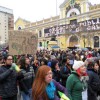
16-Year-Old Vote on the Agenda in Latin America
A bill that would lower the voting age from 18 to 16 is headed for approval in the Argentine Congress, in line with a reform that has already been adopted in Cuba, Brazil, Ecuador and Nicaragua, and that has begun to be debated in Bolivia, Chile and Uruguay.
Nicaragua Stands Out in War on Drugs in Central America
With strict security measures and the deployment of special heavily-armed troops, Nicaragua is waging a successful war in the courts, by sea, and on land against drug traffickers shipping drugs through Central America to the United States.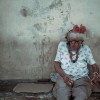
Cuba Faces Challenge of Aging Population
“We age much more quickly than we learn how to,” says Juan Carlos Alfonso, director of the Population and Housing Census that begins to be carried out on Saturday, Sept. 15 in Cuba. The question of aging is on many minds in this country, where important social progress has been made but acute economic problems persist.
The Press in Colombia “Rediscovers” Peace
What are the obstacles to peace in war-torn Colombia? When government and rebel negotiators asked themselves this question, they concluded that one problem was that the media in this country had turned “peace” itself into a dirty word.
U.S. Guns Bring Mexican Casualties
Mexican activists winding down a month-long U.S. tour warned Tuesday that guns licensed in the United States were playing a massive part in gang- and drug cartel-related violence in Mexico.
Ecotourism Helps Amazon Jungle Communities Survive
The Tsimane Mosetene people in Bolivia’s Amazon jungle region have found a tool to preserve their habitat and way of life: a community ecotourism project that won a United Nations-sponsored international award.
OP-ED: MEXICO-U.S.: La Caravana Has Arrived
On Monday, after a month-long trek across the United States, a caravan of victims of violence in Mexico made its way to Washington, D.C.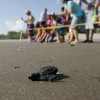
Salvadoran Bay Breeds Hope for Sea Turtles
El Salvador’s Jiquilisco Bay, a tiny hidden corner of the Pacific Ocean, is becoming a haven for endangered sea turtles.
Small Dams – from Heroes to Villains in Brazil
A recent Brazilian court decision to suspend construction of small hydroelectric dams along the Paraguay River has highlighted the doubts raised about a growing alternative source of energy that until recently was considered one of the most environmentally-friendly sources.
Caribbean Seeks Leg Up from Economic Doldrums
As governor of the Eastern Caribbean Central Bank (ECCB) that groups seven countries, Sir Dwight Venner is all too aware of the low economic growth, debt and financial instability confronting the wider Caribbean.
Informal Sector Work Survives Economic Boom in Argentina
Behind “yerba mate”, a caffeinated herbal brew that is popular in Argentina and neighbouring countries, lies a shameful reality: the dismal labour and living conditions of the workers who harvest the leaves of the bush used to make the infusion.
Colombia’s Rebels Insist Peace Is Only Possible with Reforms
The Revolutionary Armed Forces of Colombia (FARC) are taking a pragmatic, reformist stance in the new attempt to negotiate a peace agreement with the Colombian government, to put an end to nearly half a century of civil war.
Indigenous Consultations in Peru to Debut in Amazon Oil Region
Peru will debut a new mechanism for prior consultation with indigenous peoples by seeking their approval for a new stage of oil drilling operations in the infamous Lot 1AB in the northeastern Amazon region of Loreto.
Families of ‘Disappeared’ and Forensic Institute on Good Terms Again
Relations between the families of people “disappeared” by Chile’s 1973-1990 dictatorship and the forensic institute, which have been tense since a 2006 scandal when the state body admitted that it had misidentified 96 of the 126 bodies found in a common grave in 1991, are beginning to mend.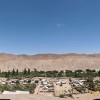
Ruling Against Thermoelectric Plant Sparks Debate
A Chilean Supreme Court decision ordering a halt to the construction of the Castilla thermoelectric power plant has sparked a debate over the country’s energy security.« Previous Page — Next Page »


The Week with IPS

NEXT STOP - SDGs
Tracking global progress towards a sustainable world
Tracking global progress towards a sustainable world

