Languages
Saturday, October 17, 2026



News and Views from the Global South
Drought

Living Laboratory for Coping with Drought in Brazil
The first surprise on arriving at Abel Manto's farm is how green it is, in contrast with the dry brown surroundings. His beans and fruit trees seem oblivious to the persistent drought in the semi-arid hinterland of northeast Brazil, the worst in 50 years.
Q&A: World Needs a Plan for Expected Waves of Climate Refugees
Untold thousands dead and thousands more stranded or missing - these are the latest figures from various reports on the devastation caused by flash floods in the Indian state of Uttarakhand.
Diversifying Income Helps Ease Climate Woes
When 45-year-old Kaswati joined an income-generating project in her village in Indonesia’s West Java province in 1999, all she hoped to do was supplement her family’s income at a time of erratic harvests.
FAO Highlights Inseparable Links Between Food and Water
Since food and water are so closely interlinked, there is a lingering fear based on the assumption, if there is no water, there will be no food.

Small Ponds Bring Bumper Harvests
“I would never have believed it possible to get a bumper rice harvest during the drought season,” 43-year-old Mohammad Shajahan Ali, a farmer hailing from the village of Magtapur in Bangladesh’s northern Chapainawabganj district, told IPS.
Small Farmers Buffeted by Climate Change
The U.N. Food and Agriculture Organisation (FAO) has long warned that a quarter of the world’s farmland is “highly degraded".
In Swaziland, Seeds Beat Drought
The overcast sky is a sign that it might rain, and Happy Shongwe, a smallholder farmer from rural Maphungwane in eastern Swaziland, is not exactly happy.
Weather Forecasts Go Mobile in Thailand
It was another Monday afternoon in the remote Thai village of Baan Dong when an incoming text message lit up the black, dust-covered Nokia phone belonging to Eiem Sompeng.
Fresh Water “More Precious Than Gold” in Bangladesh
Fahima Begum rises each morning at dawn and walks two kilometres to a small pond, the nearest source of fresh water. On her way she passes the rusty old hand-pumped tube well that used to supply water to her village in Bangladesh’s arid Barind region until the water table here dropped out of reach.
Water Flows Again in the Valley
Staring out at his golden wheat field with satisfaction, 50-year old Alamgir Akbar says with a sigh of relief: "We've had a good crop this season.”
South Asia in Search of Coordinated Climate Policy
With a combined population of over 1.7 billion, which includes some of the world’s poorest but also a sizeable middle class with a growing spending capacity, South Asia is a policymaker’s nightmare.
U.N. Says Somalia Famine Killed Nearly 260,000
Almost 260,000 people, half of them young children, died of hunger during the last famine in Somalia, according to a U.N. report that admits the world body should have done more to prevent the tragedy.
Aiming to Conserve Energy, Antigua Turns to Its Residents
In drought-plagued Antigua, where water and energy top the list of most precious resources, one campaign is encouraging islanders to conserve both of these commodities.
Beitbridge Still Counting the Cost of Floods
 The Beitbridge area in southern Zimbabwe was hit by serious flooding earlier this year. Those affected are still trying to get back on their feet.

Transparency Could Tighten Drought Policy
Scientists gathered in Geneva for the first High-level Meeting on National Drought Policy (HMNDP) in over 30 years have identified data collection and sharing as some of the main challenges to effective prevention of drought. Clear goals and strong political will are vital to building policies at the national level, they say.
India Strives to Become ‘Drought Proof’
In a country of 1.2 billion people, the threat of drought takes on epic proportions. Over a period of two centuries (between 1801 and 2002), India experienced 42 severe droughts, according to the Indian Space Research Organisation. One of these, in 1979, cut food grain production by 20 percent; another, in 1987, damaged 58.6 million hectares of cultivated land, affecting 285 million people.
Killer Heat Waves and Floods Linked to Climate Change
Killer heat waves, floods and storms are increasingly caused by climate change, new research reveals.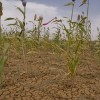
Sahel Region Learning to Reap the Benefits of Shade
In Africa's Sahel region, agroforestry techniques using traditional plantings known as "fertiliser trees" to increase soil fertility, as well as harvesting and grazing regulations, are offering new solutions to both food and human security.
Digging for Water, But Striking Oil
The volatile politics of the Middle East have long been dominated by the fluctuating fortunes of a single commodity: oil.
Between Drought and Floods – A Year of Extremes in Sri Lanka
Wild elephants are usually the primary attraction in the remote shrub jungles of Udawalawe, about 180 kilometres southeast of Sri Lanka’s capital Colombo. But this Christmas season, the massive Udawalawe dam stole the limelight from the lumbering beasts.
Q&A: Mutant Fruit Trees to Grow in Saline Soils in Cuba
During some parts of the year, a layer of salt can be seen on the ground in eastern Cuba, which makes it difficult, and sometimes impossible, to farm. Since agronomist Orlando Coto saw this with his own eyes, he has been searching for salt-tolerant fruit trees.« Previous Page — Next Page »





The Week with IPS

NEXT STOP - SDGs
Tracking global progress towards a sustainable world
Tracking global progress towards a sustainable world
