Languages
Friday, November 6, 2026



News and Views from the Global South
Millennium Development Goals (MDGs)

Major New U.S. AIDS Plan Disallows Funding for Family Planning
At perhaps a critical turning point in the global fight against HIV/AIDS, the U.S. government, the single largest funder in that fight, on Thursday unveiled a major new strategy for pushing towards achieving an “AIDS-free generation”, the stated U.S. goal.
Mapuche Indians Fight New Airport in Southern Chile
“This is a project that reflects the occupation…of Mapuche territory,” said Iván Reyes, an indigenous leader staunchly opposed to the construction of an international airport in the southern Chilean region of Araucanía.
Feminists Want to Paint Cuba Purple
There are no purple billboards on city streets, and no public service announcements on television to mark the date. But many different voices in Cuba remember that this year marks the centennial of the birth of the local feminist movement, a platform for fighting for equality and against gender-based violence.
Settlement Begins in U.S. Mismanagement of Native Funds
After 17 years in litigation, the U.S. government has announced that hundreds of thousands of Native Americans will soon be receiving payments from what has been described as the United States’ largest class-action lawsuit, which accused the government of massive mismanagement of trusts covering indigenous peoples’ monies and lands.
Using the Airwaves to Empower Quechua Women in Bolivia
"Atispa mana atispa ñawpajman rinanchis tiyan" ("Power without power, we have to keep moving forward”) in the Quechua language, Ruth Rojas told her listeners at the end of a series of radio programmes on political culture, broadcast to indigenous women in Bolivia.
Chinese and Brazilian Firms Building the New Angola
"In Luanda there are no matches." This was the first line of a report written by Nobel Literature laureate Gabriel García Márquez in the Angolan capital in 1977.
A Green Needle in the Haystack of Cuban Small Enterprise
Oasis Nelva is a refreshing green space in the midst of the grey asphalt landscape of Old Havana. The ornamental plant shop is also one of only a handful of eco-friendly initiatives among the upsurge of private small businesses in Cuba.
Cooperatives as Business Models of the Future
When the International Year of Cooperatives (IYC) concluded last week, some of the overwhelming success stories highlighted at a two-day interactive session came both from developing and developed countries, including India, Brazil, China, Kenya, Rwanda, Ethiopia, Italy, France and the United States.
Development Targets Ride on Vitamins
One hundred and ninety million – that’s more than the populations of Germany, France and Poland combined. It is also the number of children affected by vitamin A deficiency around the world.
Q&A: “Latin America Could Eradicate Hunger by 2025”
The hunger suffered by 49 million people in Latin America could be eradicated by 2025, according to Spanish agricultural engineer Ricardo Rapallo.
Young Women Face Double Whammy in Pacific Islands
With youth populations growing faster than jobs in the Pacific Islands, young women, who are also confronting social pressures to conform to traditional gender roles, account for the highest rates of unemployment in most countries.Building More Democratic Families in Argentina
A wide-ranging reform of Argentina's civil code is looking to replace traditional concepts of parental authority and control with one of parental responsibility, while expressly prohibiting corporal punishment for children and adolescents.
The Planet’s Thermostat Moves to Doha
The upcoming United Nations climate talks may have a renewed sense of urgency with a new World Bank report warning that the planet is on a dangerous path to four degrees Celsius of global warming by 2100.
Mental Health, Another Victim of Climate Change
"The city looked as if it had been bombed. On the way to my office, I passed people who had the same shocked look on their faces as I did. We would look at each other, and even though we were strangers, we’d ask ‘How did things go for you? Did anything happen to your house?’ It was a kind of warm solidarity that did me a lot of good.”
Chile in the Vanguard of Monitoring AIDS Therapy
In Chile, not only do all people diagnosed with HIV/AIDS receive treatment, but the country also has advanced mechanisms for monitoring outcomes of the antiretroviral therapy.
Pakistan Attacks Pneumonia With Free Vaccine
Medical practitioners at the National Institute of Child Health (NICH), a leading government-run children’s hospital in Karachi, hope that this will be the last winter they have to treat a stream of children suffering from pneumonia.
Sustainable Fashion Born in Brazil’s Favelas
A Brazilian designer has taken fashion from the exclusivity of the catwalk to the reality of the favela, to demonstrate that styles, trends and fads are also born in these poor neighborhoods of cities like Rio de Janeiro.
An Agreement For Peace Means a Promise of Tourism
International travellers may soon get to enjoy the scenic spots and rich cultural heritage of Muslim Mindanao, the Philippines’ southernmost island group, without the threat of being caught in the crossfire of the region’s conflict.
Remittances Rise Despite West’s Economic Weakness
Despite recession in Europe and a weak recovery in the United States, remittances to developing countries have been growing at a strong pace over the last year and are likely to accelerate further through 2015, according to a new report released here Tuesday by the World Bank.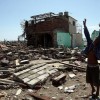
Tomorrow Is Too Late for Adaptation to Climate Change
You can still see broken plates, toys, books and some photographs among the rubble that was once the homes of Rey Antonio Acosta’s family and other families in Mar Verde, the beach community where Hurricane Sandy made landfall in this eastern Cuban city.
Q&A: “War Helped Unify Angola”
A visitor to Angola might be surprised at the calm surrounding Angola’s accelerated rehabilitation and construction of infrastructure a decade after the end of so many years of war, and at the lack of after-effects like ethnic violence, armed gangs, or the settling of accounts.« Previous Page — Next Page »





The Week with IPS

NEXT STOP - SDGs
Tracking global progress towards a sustainable world
Tracking global progress towards a sustainable world
