Languages
Monday, May 6, 2024



News and Views from the Global South
Asian Tsunami

The Biggest Lessons Nepal Will Take Away From This Tragedy
There has never been any doubt that Nepal is sitting on one of the most seismically active areas in South Asia. The fact that, when the big one struck, damages and deaths would be catastrophic has been known for years.
OPINION: No Nation Wants to Be Labeled “Least Developed”
Since 1971, Maldives is one of only three countries that have graduated from the ranks of the world’s “least developed countries” (LDCs) – the other two being Botswana and Cape Verde.
Organic Farming in India Points the Way to Sustainable Agriculture
Standing amidst his lush green paddy fields in Nagapatnam, a coastal district in the southern Indian state of Tamil Nadu, a farmer named Ramajayam remembers how a single wave changed his entire life.
Sri Lanka Still in Search of a Comprehensive Disaster Management Plan
About six months after a massive tsunami slammed the island nation of Sri Lanka on Dec. 26, 2004, large plumes of smoke could be frequently seen snaking skywards from the beach near the village of Sainathimaruthu, just east of Kalmunai town, about 300 km from the capital, Colombo.
Poverty and Fear Still Rankle, Ten Years After the Tsunami
It took just 30 minutes for the killer waves to leave 350,000 dead and half a million displaced. Less than one hour for 100,000 houses to be destroyed and 200,000 people to be stripped of their livelihoods.
‘Cyclone College’ Raises Hopes, Dreams of India’s Vulnerable Fisherfolk
Ten years have now passed, but Raghu Raja, a 27-year-old fisherman from the coastal village of Nemmeli in southern India’s Kanchipuram district, still clearly remembers the day he escaped the tsunami.
How a Small Tribe Turned Tragedy into Opportunity
When the Asian tsunami washed over several Indian Ocean Rim countries on Boxing Day 2004, it left a trail of destruction in its wake, including a death toll that touched 230,000.
Lacklustre Early Warning System Brings Tragedy to a Languid Mountainside
When early warning systems fail, death comes quickly to unsuspecting victims of natural disasters. It is a reality that millions of Sri Lankans have experienced repeatedly in the last decade, and yet those responsible for preventing human fatalities continue to make the same mistakes.
When a Disaster Leaves Bathrooms in its Wake
When the 2004 Asian Tsunami lashed the coasts and island territories of India, one of the hardest hit areas were the Andaman and Nicobar Islands (ANI), which lie due east of mainland India, at the juncture of the Bay of Bengal and the Andaman Sea.
When Faith Meets Disaster Management
A consortium of faith-based organisations (FBOs) made a declaration at a side event Wednesday at the 6th Asian Ministerial Conference On Disaster Risk Reduction (AMCDRR), to let the United Nations know that they stand ready to commit themselves to building resilient communities across Asia in the aftermath of natural disasters.
Relief Brings Its Own Disasters
In Uttarakhand, the small Indian state in the Himalayan foothills that was a victim of flash floods that killed at least a thousand people in June this year and uprooted thousands of families, the story is told of a child who went every day to the helipad, believing his father will return when, in fact, the father died in the floods.Radioactive Mushrooms Cloud Compensation Plans
The discovery of radioactive contamination in ‘shiitake’ mushrooms grown in Manazuru town, Kanagawa prefecture, some 300 km away from the crippled Fukushima Daiichi nuclear power plant, has raised public clamour for compensation.
Community Radio Tunes Into Ad Revenues in India
Community Radio (CR) broadcasting in India, long bound by red tape, has received a fillip with the government announcing a hike in advertising tariffs and the auction of licenses.
Gales, Cyclones Follow the Tsunami
The gentle waves of Weligama bay that lap at the small, tight-knit fishing village of Kaparratota, 140 km south of Colombo, can be deceptive.JAPAN: Tsunami Brings Sea Change to Tohoku
Yumi Goto, 60, lives with her husband in a temporary shelter on a windy hill that overlooks vast stretches of tsunami-devastated seacoast where her home was once located.JAPAN: Pushing Nuclear Exports After Fukushima
Japan plans to boost civilian nuclear exports even as it tries to appease its population angered at radiation leaks from the Fukushima Daiichi nuclear power plant, crippled by an earthquake and tsunami on Mar. 11, last year.JAPAN: New Year Brings Economic Aftershocks
Hideo Sato, 47, and his family escaped to this snowy city 200 km from the radiation emitting Fuksuhima power plant that was struck by a massive earthquake-driven tsunami on Mar. 11.SRI LANKA: Tsunami Demons Haunt the Coast
Seven years after monster waves crashed into homes, hotels and vehicles on Sri Lanka’s coast, people in this island nation continue to be haunted by demons from the sea.Floods Leave Thai Economy Gasping
No guns are needed in this battle. Only the muscle of Thai soldiers defending a sprawling industrial estate on the eastern end of this city from an advancing enemy - flood waters.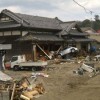
JAPAN: Training Volunteers to Deal With Disasters
Seven months after a massive earthquake and tsunami devastated northeastern Japan, Japanese citizens and relief organisations are working to learn from the tragedy in order to mitigate the fatal impact of future natural calamities at home and abroad.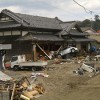
JAPAN: Women Fight to Save Fukushima’s Children
Hundreds of Japanese women have been converging on the Japanese capital demanding better relief for some 30,000 children exposed to nuclear radiation by the Fukushima meltdown.Next Page »









The Week with IPS

NEXT STOP - SDGs
Tracking global progress towards a sustainable world
Tracking global progress towards a sustainable world
