Languages
Sunday, November 8, 2026



News and Views from the Global South
Active Citizens
Poland Cornered Over Its Secret Prisons
A Polish official investigation into the existence of a secret CIA prison on its territory is being stalled, according to official sources, while pressure on the country to tell the truth mounts.U.S. Austerity Ripples Outward
Since the 2008 financial crisis, and most recently with the broad federal spending cuts beginning Mar. 1, experts have warned that an austerity-minded political system could bring about dramatic changes in the U.S. foreign aid model.
Haiti Moves to Tighten Laws on Sexual Violence
Haiti is poised to enact major reforms to its penal code to make it easier for victims of rape to prosecute their attackers.
Victims Want Voice and Vote in Colombia’s Peace Talks
Victims of crimes of the state want their recommendations to be taken into consideration by the peace talks between the Colombian government and the FARC guerrillas that are seeking to end half a century of armed conflict.
Gaza Women Suffer on ‘Their’ Day
“In Gaza we don't lead normal lives, we just cope, and adapt to our abnormal lives under siege and occupation,” says Dr. Mona El-Farra, a physician and a long-time human rights and women's rights activist in the Gaza Strip. On International Women's Day, when many of the world's women are fighting for workplace equality and an end to domestic violence, Farra and the majority of Gaza's women fight for the most basic of rights.Cigarette Companies Mock Tobacco Control Laws in Latin America
Despite the great strides made in Latin America with tobacco control legislation, the industry deploys a range of strategies to circumvent the restrictions imposed on cigarette advertising, social organisations and experts complain.‘Humanitarian Diplomacy’ Fights Nukes
For the first time, ‘humanitarian diplomacy’ is being deployed to drive home the need for banning nukes - though under the self-imposed exclusion of the P5, the five permanent members of the UN Security Council, who own a crushing majority of the 19,000 nuclear weapons capable of destroying the world many times over.Fishing Labour Out of the Dark Ages
When Ko Mynt fled poverty in Myanmar for a job in neighbouring Thailand, the thought of labouring long hours in a shrimp peeling shed was far from his mind. So was this seaside town south of Bangkok. The 29-year-old had set his sights on employment in a garments factory.
Afghanistan a Minefield for the Innocent
Efforts to clear Afghanistan of landmines have been painfully slow. At least 45 people on average lose their limbs every month to deadly anti-personnel mines, according to the Mine Action Coordination Centre of Afghanistan, formerly a project of the UN Mine Action Service, and now a national entity.
“We Aren’t Fighting Poverty Here, We’re Improving the Quality of Life”
The residents of San Crisanto, a small communal village nestled in an idyllic setting in the southeastern Mexican state of Yucatán, have learned that valuing and protecting natural resources can generate employment and income.
U.N. Declares Zero Tolerance for Violence Against Women
U.N. agency heads gathered Tuesday to reassert their unified commitment to ending the epidemic of violence against women and girls, and bringing justice and healing to survivors.Press Freedom on the Chopping Block
Saddled with a long list of woes brought on by an economic crisis, debt-stricken Greece now finds itself tackling a different kind of austerity than the one implemented by its European creditors: this time it is press freedom, not public budgets, on the chopping block.
After the Tigers, Fishers Face Poachers
The sea is all that 40-year-old Arul Das has mastered. From looking at the clouds or from the direction of the wind, this fisher from northern Jaffna can predict the condition of the sea fairly accurately.Activists Urge Cardinals Who Concealed Sex Abuse to Skip Conclave
As the Roman Catholic Church gets ready for the conclave that will select a new pope, activists and victims worldwide are stepping up their efforts to keep cardinals directly or indirectly involved in cases of paedophilia from participating in the papal election process.
Putting Local Climate Know-How on the Map
A new weapon in the arsenal against climate change is tapping local knowledge to bridge the policy gap and let communities make their own informed decisions about how to manage livelihoods, natural resources, culture and heritage.
Indigenous Community Takes Forest Law into Own Hands
An indigenous community in Brazil has decided to single-handedly take action against illegal loggers who are moving into their territory in search of highly valued timber.
Taliban Can’t Beat This Act
The applause has continued long after the curtain came down on the last performance of Khushal Khan Khattak in the northern Pakistan city of Peshawar last month. The enthusiastic reception should have the Taliban worried.U.S. “Stalling” Could Force Acceptance of Onerous TPP
Civil society opposition here has strengthened against a U.S.-proposed free trade zone that would include some dozen countries around the Pacific Rim.Immigrant Groups Say Spanish Hospitality in Danger
“We used to be seen as really useful, and now we’re a pain in the neck,” said Roberto Suárez, an Ecuadorian who was complaining about proposed fines or prison sentences that could target Spanish citizens who help undocumented immigrants.
Reframing Gender, from Chaos to Creativity Post-2015
The U.N. has opened up public platforms to engage the world on how best to replace the expiring Millennium Development Goals (MDGs) and frame a new development agenda, post-2015.Bangladesh Finds a Touch of the Arab Spring
Is Bangladesh just trying to process its dark legacy, the trauma of the genocide that took place during the country´s liberation war in 1971? Or is something more afoot?« Previous Page — Next Page »





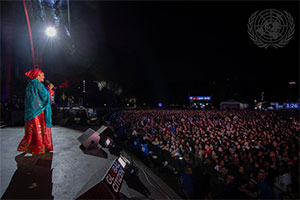 Global Citizen Festival in New York. Credit: UN Photo/Eskinder Debebe
Active citizens are committed to social change because they know that it is achievable. However, major political challenges face active citizens across the world. For example, in authoritarian regimes in Latin America where the hegemonic party has been in power for decades on end, protestors and human rights activists face enormous repression and struggle to materialize their advocacy into concrete results. The same can be said for Africans, where a shift towards elected government in recent decades has yet to translate into an effective voice in decision-making. Now, the Strengthening Citizen Demand for Good Governance, which uses evidence-based approaches – funded by DFID's Governance and Transparency Fund – seeks to raise their voices.
In 2025, the CIVICUS Monitor’s People Power Under Attack report revealed that civic freedoms are severely limited in 122 of 198 countries and territories, and only 7.2% of the global population now lives in countries where civic space is open. Through partnership with the Overseas Development Institute (ODI) and CIVICUS, IPS reporters across the continent will seek to define the extent and limits of state capability, government accountability and the responsiveness of leaders to the needs of citizens.

The Week with IPS

NEXT STOP - SDGs
Tracking global progress towards a sustainable world
Tracking global progress towards a sustainable world
