Languages
Saturday, November 21, 2026



News and Views from the Global South
Civil Society

U.N. GA Cold Shoulders International Day Against Homophobia
The 193-member U.N. General Assembly (UNGA), in its supreme wisdom, has declared over 100 commemorative "days" dedicated to peacekeepers, refugees, children, migrants, girl children, rural women and indigenous people, among others.
Gay Parents in Cuba Demand Legal Right to Adopt
Many lesbians and gays in Cuba find different ways of achieving their dream of becoming mothers and fathers and forming families. But this is complicated in a country where neither civil unions nor adoption by non-heterosexual persons are legally recognised.Workers Strike in Support of Turkey Protests
Thousands of public sector workers in Turkey are on a two-day strike in support of anti-government demonstrations.
Despite Peace Talks, Forced Displacement Still Climbing in Colombia
Drugs and arms traffickers are muscling in on Colombia's Pacific coastal region, forcibly displacing local people, according to a new report by the Consultancy for Human Rights and Displacement (CODHES).
Japan Seeks to Remake Asia-Africa Relationship
Acutely aware of China’s strong presence in resource-rich Africa, Japan, the world’s third largest economy, is beefing up its relations with the continent. Participants at a high-level donor conference hosted by Japan this week stressed the need for closer engagement, not through the traditional grants and assistance loans that have hitherto defined the relationship, but rather through trade and investment led by the Japanese private sector.
Historic Arms Trade Treaty Signed at U.N.
The United Nations witnessed a historic moment Monday with the signing of the Arms Trade Treaty, first adopted in April by the General Assembly, and the first time the 85-billion-dollar international arms trade has been regulated by a global set of standards.Anti-LGBT Rampage in Georgia Exposes Frustrations with the West
Georgia may be touted as the most pro-Western country in the South Caucasus, but the recent backlash against LGBT activists in Tbilisi underscores how wide the cultural divide is when it comes to defining democratic values.
Q&A: “The State Does Not Lose Sovereignty If It Respects Indigenous Rights”
"There is a belief that consent is about saying yes or no, about who wins," observed James Anaya, the United Nations special rapporteur on indigenous rights. But consultation with indigenous peoples is a matter of “creating open processes where they can voice their opinions and influence decisions, and where there is the necessary will to seek consensus.”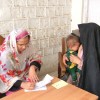
Good Health Lies Just Across the Border
Muzaffar Shah, a shopkeeper from Kabul, sits in a hospital waiting room, desperate for news. He has travelled nearly 300 km to get to the Khyber Teaching Hospital in Peshawar, capital of northern Pakistan’s Khyber Pakhtunkhwa (KP) province, where his wife is now in intensive care.U.N. Can Help Devalue Nukes as Geopolitical Currency
When the 193-member U.N. General Assembly (UNGA) holds is first-ever high-level meeting on nuclear disarmament next September, there is little or no hope that any of the nuclear powers will make a firm commitment to gradually phase out or abandon their lethal arsenals.
Local Communities Invest Money – and Hope – in Ecotourism
Forty-five-year-old Serah Kei began building her artificial island and eco-lodge resort 26 years ago in Langa Langa Lagoon, located on the Solomon Island’s Malaita Province, about four hours by boat from the nation’s capital, Honiara. Kei, a single mother, paid for the construction by undertaking the laborious task of making and selling ‘shell money’ and finally opened Serah’s Lagoon Hideaway, which accommodates up to twelve visitors, in 2006.
Walmart, Gap Seek Separate Safety Standards for Bangladesh Factories
Top U.S. companies are now in negotiations to agree on new safety standards for their clothing-producing contractors in Bangladesh, a month after a garment factory’s collapse in Dhaka killed more than 1,100 workers.
Obama Urged to Sign Arms Trade Treaty Immediately
Advocacy groups here are stepping up a campaign to pressure President Barack Obama to quickly sign on to a new United Nations treaty aimed at regulating, for the first time, the international small-arms trade.
Reactions to Gay Marriage Contradict French, Portuguese Stereotypes
The heated reaction to the legalisation of same-sex marriage has run counter to the widespread image of France as the cradle of the modern republic and equal rights since the 1789 revolution. In contrast, Portugal with its reputation for prudishness, has shown itself to be much more open and tolerant.Kazakhstan’s Green Zone on Slippery Slope
A group of flashmobbers took to the slopes in southeastern Kazakhstan on a crisp March morning this year to spell out a heartfelt SOS with their bodies.
Five Native American “Champions” Call for Change
It’s Sarah Schilling’s usual manner of greeting when she meets other members of her tribe: “Aanii Sarah Schilling n'diznakaas, which translates to ‘Hello, Sarah is my name’ in English,” she said.
Religious Intolerance Taints Award for Indonesian President
Standing in front of the two-metre concrete wall, barbed wire and corrugated iron fence that surrounds his mosque, Muhammad Iqbal says he feels like a second-class citizen in his own country.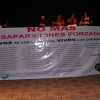
Mexico’s Desaparecidos: Unspoken, Unseen, Unknown
The last time Enrique Rangel heard his brother Héctor's voice was on the night of Nov. 10, 2009, when he called and said “they’re coming, they already stopped me and asked for money, and I already paid, but they’re coming.”
Sex Educators Struggle to Break Taboos
Liberian journalist Mae Azango says she spent a year living “like a bat, going from tree to tree” with her daughter in order to escape religious fanatics who were threatening to kill her for exposing the practice of female genital mutilation in her home country last year.
U.N. Panel Projects a Poverty-Free World by 2030
A U.N.-commissioned high-level panel of eminent persons, led by three world leaders, has moved the goal posts for the halving of extreme poverty and hunger: from the current 2015 deadline to a new targeted date of 2030.
Afghan Media Brace for Financial Drought
As Afghanistan prepares for the 2014 withdrawal of foreign forces that have occupied this country for over a decade, investors are already beginning to bid a hasty retreat amid rumours that “chaos” and civil war will replace NATO’s boots on the ground late next year.« Previous Page — Next Page »


 Representatives of Civil Society, Sierra Leone. Credit: UN Photo/Eskinder Debebe
Civil society faces mounting threats worldwide, even as it remains essential for democratic accountability, especially in countries struggling with economic instability and social inequality. However, at the same time, nations with weak democratic governance structures also systemically suppress the power of civil society. Human rights activists across the Global South frequently challenge issues such as political persecution and gender oppression, but in return face state-sanctioned punishment for their advocacy. Imprisonment and exile are common mechanisms of punishment that seek to erode the strength of civil society. The 2026 World Press Freedom Index has reached its lowest level in 25 years, with more than half of the world’s countries now falling into the "difficult" or “very serious” category for press freedom. IPS seeks to highlight the work of civil society across the Global South as well as the challenges that they face.
Updated by Yilan Batista and Shuli Wong August 2026

The Week with IPS

NEXT STOP - SDGs
Tracking global progress towards a sustainable world
Tracking global progress towards a sustainable world
