Languages
Sunday, November 1, 2026



News and Views from the Global South
Aid

Africa’s Growth Story Brightens
Not far from the headquarters of the United Nations Economic Commission for Africa (UNECA) in Ethiopia's capital city of Addis Ababa, a young woman named Bosena, 25, sits on the side of a busy road with a baby in her arms.Foreign Policy Elite Frets over Washington Shutdown
Three days into the partial shutdown of the federal government, foreign policy mavens are voicing growing concern about the closure’s impact on U.S. credibility overseas.
For the Disabled, Progress Unearths More Questions
When U.N. Secretary-General Ban Ki-moon opened a recent high-level meeting on disability and development that promised a place for the issue in the post-2015 agenda, he cited three examples of incapacity.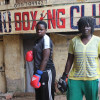
Ugandan Women Put On Their Boxing Gloves
Helen Baleke took up boxing at 16, after she was attacked by a man in Kampala’s Katanga slum. But the beating turned her into what she is today – one of only several female Ugandan amateur boxers.
Relief Brings Its Own Disasters
In Uttarakhand, the small Indian state in the Himalayan foothills that was a victim of flash floods that killed at least a thousand people in June this year and uprooted thousands of families, the story is told of a child who went every day to the helipad, believing his father will return when, in fact, the father died in the floods.
Hunger Decreases, but Unevenly, U.N. Reports
Some 842 million people still suffer from chronic hunger, according to the State of Food Insecurity in the World (SOFI 2013), published Tuesday by the three Rome-based U.N. food agencies.U.S. Government Shutdown Could Hit Foreign Aid
A deadlocked U.S. Congress proved unable to settle budgetary differences late Monday evening, leading to a federal government shutdown that could soon be felt by foreign aid programmes and their recipients.
Disabled Make Do with Scraps from the Aid Table
Amidst the incomprehensible suffering that followed the 2010 earthquake in Haiti, international aid agencies rushed to provide services to the displaced and injured.
The Medicines Are Fake, the Illnesses Real
Reports of fraudulent medicines in the south-west Pacific island states of Solomon Islands and Papua New Guinea have drawn attention to the need for more public awareness of the lethal trade and its tragic consequences.Nairobi Attack Exposes Flawed U.S. Terror Policies
In the aftermath of the worst terror attack in East Africa in three years, foreign policy scholars here are urging the U.S. government to rethink its counter-terror policy in the region.
Q&A: Congolese Wrongly Branded as “Pathological”
Western analysts all too often take a distorted and reductionist approach to the conflict in the Democratic Republic of Congo (DRC), says Kai Koddenbrock, who analysed more than 50 policy papers for a study published in the journal International Peacekeeping in November 2012.
U.S. Urged to Curb Militarisation in Latin America
The United States needs to phase down its drug war and tighten the reins on its cooperation with local militaries and police in Latin America, according to a new report released here Wednesday by three influential think tanks.OP-ED: Financing of Disaster Risk Reduction Needs Urgent Reform
Over 20 years, disaster losses in developing nations have amounted to 862 billion dollars (a considerable under-estimate). During this period the international community has spent just 13.5 billion dollars on disaster risk reduction (DRR), equivalent to 40 cents of every 100 dollars of development aid – this has to change.
Nigerians Uncertain of Future in Bakassi Peninsula
Thomas Effiom, a 35-year old fisher in Jabane, a small locality in Cameroon’s Bakassi Peninsula, scoops off floodwaters from the muddy floor of his house. It is a ritual he performs each time the Atlantic Ocean overflows.
The Emerging Economies and the G20 Summit at St. Petersburg
The eighth G20 Summit convened in St. Petersburg on Sept. 5-6, 2013 was dominated by the Syrian crisis, deflecting attention from the mandate of the gathering to serve as the premier forum for international economic coordination.
Forest Communities Draw a REDD Line
As the ink dries on a 3.6 million dollar agreement between Uganda and the World Bank to support the country's preparations for REDD, some analysts are pessimistic over the mechanism's potential.
OP-ED: Getting Children Into Somalia’s Classrooms
Somalia is well-known for being a country torn apart by decades of conflict, by hunger and instability. Today, with fragile stability emerging and a new government in place, there is an opportunity to define a new future of peace, prosperity and justice.
U.S. Debates Climate Impact of Development Investments
A debate is heating up here over the extent to which U.S. government-facilitated private-sector development investments should be required to take into account how those ventures impact on climate change.
DRC Peacebuilding Ignores Local Solutions
Despite existing local expertise and strategies in the Democratic Republic of Congo (DRC) to build peace-supporting structures at the community level, official debates and media coverage continue to focus predominantly on military interventions.
Somali President Rides Through a Bumpy Year
After his first year as president of the world’s most dangerous and failed state, Hassan Sheikh Mohamud is still grappling with limited financial resources, corruption, a lack of service delivery, and the ongoing assassinations of government officials, including attempts on his own life.
Europe Failing Syrian Refugees
Refugee rights organisations are demanding an EU-wide temporary protection regime for Syrian refugees. The announcement by some countries that they can take a few thousand refugees is not enough, the groups say.« Previous Page — Next Page »





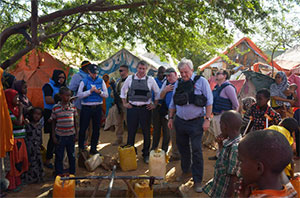 UN Emergency Relief Coordinator Visits Somalia. Credit: UN Photo/Tobin Jones
In recent years, conflicts have broken out across the world with no sign of slowing down or stopping. In times like this, millions of people globally are in dire need of humanitarian aid. Famine, warfare, natural disasters, and economic decline plague a host of nations, including Palestine, Sudan, Chad, Lebanon, and Haiti, to name a few. Humanitarian aid provides millions of people with critical services including healthcare, food, clean drinking water, psychosocial support, housing, and access to education. UN agencies such as the UNDP, UNICEF, the World Food Programme (WFP), UNHCR, UNRWA, and UNEP work with the UN Office for the Coordination of Humanitarian Aid (OCHA) and local organizations to come up with the best possible strategies to support affected communities. At the same time, humanitarian aid and those working on the frontlines are consistently threatened by both actors directly involved in conflict as well as those who are meant to contribute to the international humanitarian regime at large. The near-collapse of United States international aid structures in 2025, including the termination of 83% of USAID’s 6,300 global initiatives, has left millions of people without access to vital humanitarian assistance. 98 million people in 2025, only 65% of people targeted for humanitarian assistance, received the help they needed. In contrast, 123 million people received some form of humanitarian assistance in 2024, and OCHA’s 2026 Global Humanitarian Overview estimates that 239 million people are in need of assistance in 2026. IPS is well-positioned to discuss current initiatives to provide aid and relief through in-depth reporting and opinion content.

The Week with IPS

NEXT STOP - SDGs
Tracking global progress towards a sustainable world
Tracking global progress towards a sustainable world
