
Sunday, November 8, 2026



News and Views from the Global South
Environment

Landmark UN Report Issues Stark call for Sustainable Land Management to Save Human Health
With 50% of humanity affected by land degradation, the world must move to a ‘crisis footing’ to conserve, restore and use land resources sustainably, a major UN report has said.
Big Business Depletes Nature, Big Business Supplants Nature with Synthetic Food
In case you were not aware, please know that humanity used to cultivate more than 6.000 plant species for food, but now instead fewer than 200 of these species make major contributions to food production. Out of these, only 9% account for 66% of total crop production.
Poor Water Distribution Infrastructure Gives Jamaica a ‘Water Scarce’ Label
It will take billions of dollars and many years to fix a growing problem that has placed Jamaica into the unlikely bracket of being among the world's most water-scarce countries due to the unavailability of potable water.
Earth Day to Earth Disaster
Since the first Earth Day observed on 22 April 1970, world conditions have worsened greatly across three critically interrelated global dimensions that portend a disastrous future for life on planet Earth.
Earth Day is a Time to Reflect on What It Means to Invest in Our Planet
Around the world, Earth Day 2022 is being celebrated. The theme this year is “Invest in Our Planet”. To mark the day, activities such as planting trees, protests, marches, cleaning up litter, and conferences will be held to highlight the importance of investing and taking care of our planet.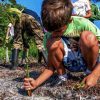
The Suicidal War on Nature Continues Unabated – International Mother Earth Day
The gloomy picture is drawn from indisputable scientific conclusions and should be already known by everybody, in particular by decision-makers, whether they are politicians… or rather not.
Kenyan Community Project Saving Forests, Saving Livelihoods
Despite an abundance of fisheries reserves along Kwale County’s lush coastline located on the south coast of Kenya, fishers can no longer cast a net just past the coral reef and expect an abundant crab or prawn harvest.
Commonwealth Climate Finance Hub to Boost Belize’s Delivery of Climate Change Projects
In September 2020, at the height of the COVID-19 pandemic, the UK-based Commonwealth Secretariat announced that it had dispatched highly skilled climate finance advisors to four member nations to help them navigate the often-complicated process of accessing climate funds. Belize, the Caribbean Community’s (CARICOM) only Central American member, was one of the recipients.
Mexico Embraces Gas, Scorns Renewable Energy
At home, Isabel Bracamontes uses gas only for cooking. "We try to prepare food that doesn't need cooking, like salads," she says in the southeastern Mexican city of Mérida.
Climate Risk Insurance in Pacific Small Island Developing States: Possibilities, Challenges and Vulnerabilities
The World Bank lists Fiji, Kiribati, Marshall Islands, Federated States of Micronesia, Nauru, Palau, Samoa, Solomon Islands, Tonga, Tuvalu and Vanuatu as Pacific Small Islands Developing States (PSIDS). . Some listings also include the Cook Islands, Niue and Tokelau. In September 2019, these countries had a combined population of 2.3 million spread over hundreds of islands spread over an area roughly equivalent to 15% of the surface area of the earth. Of these, the most populated country – Fiji – has a population of 900,000. The World Bank’s World Development Indicators reveal that annual per capita GDP of these islands fell from $4,340 in 2018 to $3,768 in 2020. It has probably fallen further during the pandemic.
Drugged Water: A New Global Pandemic Hiding in Plain Sight?
People around the world are unknowingly being exposed to water laced with antibiotics, which could spark the rise of drug-resistant pathogens and potentially fuel another global pandemic, warns a new report.
Africa Commits to Green Recovery from COVID-19 Amid Daunting Challenges
Climate change activist Mithika Mwenda, the Executive Director of the Pan African Climate Justice Alliance (PACJA), is not reluctant to engage African governments to do what’s necessary to commit to post-COVID-19 green growth strategies.
Connecting the Dots for the Transforming Education Summit
Look around the world at this very moment. Whether we look at it in stark numbers and statistics, whether we look at it as a generational loss of basic human rights, including the right to an education, or whether we look inwardly and feel the unspeakable human suffering and devastation taking place, we all agree: we are at a historically low point in our collective humanity.
Traditional, Time-Tested Methods and a Modern App Helps Beat Climate Change
Even as erratic weather and extremely high temperatures increase pest infestation and affect harvests, a combination of traditional methods, integrated pest management through intercropping and multilayering is helping farmers in Ahmednagar and Aurangabad districts of Maharashtra, India.
The Mayan Train and the Fight for Mexico’s Ancient Jungle
Along the wide slash of white earth in southwestern Mexico there are no longer trees or animals. In their place, orange signs with white stripes warn visitors: "Heavy machinery in motion," "No unauthorized personnel allowed".
Worrying Insights from UN’s First-Ever Assessment of Water Security in Africa
When it comes to water security – a reliable, good supply of safe water – just 29 African countries have made some progress over the past three to five years. Twenty-five have made none.
How a Massive Climate Project Can Help Win Peace for Ukraine – And Help African Job + Food Crises
How would the late Archbishop Desmond Tutu have reacted to the Russian Invasion of Ukraine? Differently than you might think. The invasion of Ukraine is a mass human tragedy. It is killing Ukrainians, exposing families to violent atrocities, and has driven a refugee crisis of over 4 million people and counting. The war in Ukraine has also reawakened our fear of global war - even nuclear war - and the importance we place on global peace.
Warning: Climate Crisis Is Now the Single Biggest Health Threat Facing Humanity
While the world’s top scientists and experts continue their arduous work to finally submit to politicians at the 27th session of the Conference of the Parties (COP 27) in Sharm El-Sheikh, Egypt (7-18 November 2022), a new alert now emerges: the climate crisis has already become the single biggest health threat to humankind.
Proposed Animal Protection Legislation Ignores Rights of Local Communities to Practice their Approach to Conservation
On the battleground that has become African wildlife conservation, rural communities find themselves in the middle of a tug-of-war that is bound to the past on one side, and their future, on the other.
Perils of Hunger, Food Insecurity in Southern Africa- Challenges & Opportunities
Food systems are under severe stress around the world now. The thresholds of tolerance are already exceeding limits with millions facing acute food and water scarcity throughout all continents. Over a quarter of Africa’s population are facing hunger and food insecurity. Conflict, droughts, flooding, rising unemployment, inequality, economic crises, and the impacts of Covid-19 pandemic have been ravaging the Continent on an unprecedented scale.
Indian Agriculture Towards 2030
India began its journey as an independent nation in 1947 with fresh memory of the Bengal Famine of 1943 which claimed 1.5 to 3 million lives. Against this backdrop, the First Five Year Plan (1951-56) prioritized agriculture which, however, shifted to heavily industrialization in the second Plan.« Previous Page — Next Page »





Through our global network of local writers, we are continuing our award-winning coverage of global and local environmental challenges, with a focus on the people for whom the ecosphere matters in a direct way: rural dwellers who have little means to protect themselves against adverse conditions; communities that need to switch to sustainable development in order to survive; poor women and children, who are the most vulnerable in natural disasters. Sponsored by the United Nations Environment Program (UNEP), the United Nations Development Program (UNDP) and The World Bank (WB), IPS also maintains the award-winning Tierramérica, a specialised information service on environment and development.

The Week with IPS

Tracking global progress towards a sustainable world


