Languages
Wednesday, November 11, 2026



News and Views from the Global South
Gender

ARGENTINA: Women Gain Budget Know-How
"After so many years of feminist activism, we still hadn't realised that you need money to get things done. When I finally understood that, it was like seeing the light. It was a whole new avenue to explore," Argentine activist Noemí Chiarotti told IPS.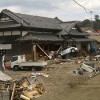
JAPAN: Women Fight to Save Fukushima’s Children
Hundreds of Japanese women have been converging on the Japanese capital demanding better relief for some 30,000 children exposed to nuclear radiation by the Fukushima meltdown.
GUATEMALA: “We Want Girls to Be Visible”
"I learned to not be afraid, and to love myself. Before, I never wanted to talk to people because I felt like they looked down on me and that I was no good," says 12-year-old Hilda Tura, one of the participants in a programme fostering leadership among indigenous girls in Guatemala.
As Arab Spring Turns to Winter, Women Fear Pushback
For the women who participated in the political and social revolutions during the Arab Spring in 2011, there is a significant opportunity to enact real change for women's roles and relationships in the region - and also the possibility things could go the other way.
MALAWI: No Social Safety Nets for the Poor
In Mbedza village, a remote rural community in southern Malawi, Fedson Feston beams an infant’s awkward smile and swings his tiny arms up towards the face of his mother. Four months old, Fedson is too young to know how lucky he is to be alive.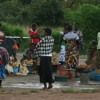
Zambian farmers blame climate change for drought
 Zambian farmers say a lack of rain is putting a strain on their crops and they are starting to point their fingers at climate change. Brian Moonga reports from Lusaka.

GHANA: No Pensions for Majority of Elderly Women
On the grubby edge of Old Fadama, Accra’s infamous illegal slum settlement, 67-year-old Mariana Sayitou sits under a parasol and tends to her livelihood – selling several dozen kola nuts and a few piles of bagged beans to passers-by.
Women Losing Ground in Economic, Political Equality
While gender equality ratios have improved in 85 percent of countries over the past six years, economic participation and political empowerment for women has failed to match the steady progress of health and education, says a new report by the World Economic Forum.
Q&A: Female Empowerment, In-Depth: More Than Just a Resolution
The first United Nations (U.N.) Security Council resolution to specifically address women's contributions to conflict prevention and sustainable peace was passed just 11 years ago, on Oct. 31, 2000.Syria Agrees to Arab League Plan
The Syrian government has accepted several measures suggested by the Arab League aimed at halting the violence in the country, including the removal of tanks and armoured vehicles from the streets.
Q&A: “Food Is Not a Business, But a Human Right”
Rural women and small-scale producers play a key role in providing food security and food sovereignty, but many large multinational corporations threaten that progress by undermining populations' independence when it comes to food.
DR CONGO: Rehabilitating Former Child Soldiers Who “Liked” Killing
Murhula’s* life changed forever when he was nine years old. It was the year that he learned to kill, torture and rape.
HORN OF AFRICA: Human Trafficking on the Rise Amid Drought and Famine
Amina Shakir (not her real name) fled the drought and famine in Somalia for a better life in Kenya. But she did so illegally, placing her faith in the hands of a criminal network headed by Mukhalis or agents in Swahili. In the end her faith was misplaced as she was "sold" into employment upon finally reaching Kenya.
EGYPT: First Woman Candidate Begins Campaign
When post-revolution Egypt holds presidential elections next year, Buthaina Kamel is set to become the first woman in the country's modern history to run for the highest office. Although she knows her chances of winning are slim to none, she says she's doing it out of principle.
DR CONGO: Women Candidates Needed
Women make up just 12 percent of the roughly 18,000 candidates who will stand for election to parliament in the Democratic Republic of Congo's Nov. 28 elections.PHILIPPINES: Prisoners Find Their E-Families
For the first time since giving birth in prison 13 years ago, Sarah, an inmate in the Philippines’ largest detention centre for female convicts, saw her daughter via Skype video chat in her prison cell.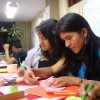
In Latin America, Closing the Gender Gap Brings Fresh Challenges
Over the past four decades in Latin America and the Caribbean, women have made remarkable strides in education, health, labour, and beyond, with girls now outperforming boys in school, the rate of working women more than doubling in many countries, and female participation rising in politics.
Seven Billion People, Seven Billion Possibilities, Says UNFPA
When Adnan Nevic was born in Bosnia-Herzegovina back in October 1999, he was hailed as the world's six billionth person, triggering a visit to Sarajevo by then Secretary- General Kofi Annan.POPULATION: Youth Bulge Adds to Pakistan’s Woes
Pakistan’s population explosion is posing a greater danger than militancy and religious intolerance, says noted medical doctor and demographer Farid Midhet.
Citizens of Nowhere
When Mona Kareem, a member of the Bidoun population of Kuwait, was 11 years old, a neighbour Kuwaiti woman asked her where she was from. When Kareem answered, "I am from Bidoun," the woman laughed at her. "There is no country called Bidoun. There is no Bidoun."
NICARAGUA: “We Women Want to Be Heard”
Fátima Hernández, a young Nicaraguan rape victim who has become a symbol in her country in her fight for justice, is now working to help women in a similar situation, and preparing to take her case to the Inter-American Commission on Human Rights.« Previous Page — Next Page »





Women make up half the world's population, but don't nearly share half of the world's wealth, well-being and opportunity. Two-thirds of the world poor are women, disproportionally exposing women to precarious living conditions, disease and unmitigated natural disasters. The media, meanwhile, remains a male-dominated sector in much of the world, contributing to women's voices lacking a crucial amplifier to put their concerns on political agendas and unleash the development potential of their ingenuity. Rather than then stereotypical victims of local and global forces, women are also organizer, innovators, conservators and community builders. These are some of their stories.

The Week with IPS

NEXT STOP - SDGs
Tracking global progress towards a sustainable world
Tracking global progress towards a sustainable world
