Languages
Wednesday, November 11, 2026



News and Views from the Global South
Gender

Activists Tie Occupy Movement to Global Gender Rights
On the International Day for the Elimination of Violence Against Women on Nov. 25, a group of feminist organisations will unite to launch a campaign calling for an end of the "immoral and unethical economy of Wall Street" against women and people of colour.
UGANDA: Single Mothers Left Behind in Flooded Swampland
Life in Bwaise – a slum on the outskirts of the capital of Uganda – has never been easy. But increasingly erratic rains over the last three years have brought constant floods to the former swampland. Residents who can afford to are moving out, leaving the poorest – often single mothers and grandmothers – behind.
ISRAEL: Women Push Back Into Public Space
They're looking at you "uncensored". Posters of women by women have recently multiplied on the holy city walls. "Women on billboards are back in Jerusalem," they proclaim defiantly.
Microcredit – Women Demand More Than Incomes
Microcredit can help a woman to have an income. It can, for better or worse, also transform gender equations in the public and private spheres.
CLIMATE CHANGE-PERU: Rural Women Share Their Trials and Wisdom
"This year the freeze killed my crops, our small livestock died, and now I can't even sleep because I'm worried sick thinking about how to put food on my family's table, since I'm a widow," said Rosaura Huatay, an indigenous farmer in Peru's northern Andes highlands.
Angolan Spring – Protests Shaking Up Authorities
Adolfo Andre knows what he wants for his country and says he will fight on until he gets it.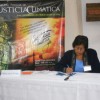
Mexican Women Demand Climate Justice
After two weeks without water, the taps finally started running again in the home of Araceli Salazar and her neighbours in the poor, crowded neighbourhood of Iztapalapa on the east side of the Mexican capital.
TUNISIA: Women Fearful of Islamists’ Rise
Tunisian women poured into the streets armed with the vote, their latest weapon, when the country voted in its first democratic election since a popular uprising unseated former president Zine Abidine Ben Ali, ending his 27-year- long stronghold on the country.
China Will Need Many More Singles Parties
In a country of 180 million single people and a growing gender imbalance, tens of thousands of people across China went looking for love on Singles’ Day Nov. 11. But events on the day may only have helped point to the continuing and growing difficulty of being single.
Gender must be on COP17 agenda: SADC
 The head of SADCs gender unit, Magdeline Mathiba-Madibela, says climate change affects women in Southern Africa and their plight must be discussed at COP 17 in Durban later this month. Zukiswa Zimela interviews Mathiba-Madibela in Gaborone and asked her what is needed to protect women against climate change.

Gender must be on COP17 agenda: SADC
The head of SADCs gender unit, Magdeline Mathiba-Madibela, says climate change affects women in Southern Africa and their plight must be discussed at COP 17 in Durban later this month. Zukiswa Zimela interviews Mathiba-Madibela in Gaborone and asked her what is needed to protect women against climate change.
DR CONGO: Election Promises of Peace and Security
The 11 candidates contesting presidential elections in the Democratic Republic of Congo all pledge to improve peace and security in the country - promises received with varying degrees of scepticism by Congolese voters.
Q&A: “Gender Violence Is Not Natural and Not Inevitable”
Dedicated efforts by women's rights advocates are bearing fruit, UN Women says: for example, two-thirds of the world's countries now have legal provisions to stop domestic violence.DR CONGO: No Real Programme Behind Campaign Promises
"In truth, none of the candidates and none of the parties have a programme for society," asserts Mastaki Mushosi, one of the leaders of the National Union of Catholic School Teachers in the Democratic Republic of Congo.ARGENTINA: Fighting ‘Machismo’ Is a Guy Thing
An original campaign led by men is getting thousands of men in Argentina to reflect on the abuse of power and commit themselves to helping eradicate violence against women.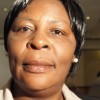
Kenya’s Two Female Supreme Court Justices Set to Work
Deputy Chief Justice of Kenya’s Supreme Court Nancy Baraza, who made history as the first woman appointed to the post, has begun overhauling the country’s judiciary.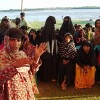
CLIMATE CHANGE: Bangladeshi Women on the Brink
Char Nongolia village is a basket case when it comes to climate change impacts such as increasing salinity, frequent cyclones, tidal surges, erratic rainfall and extended droughts.
ENVIRONMENT: Nepali Women Live With Climate Terror
Suntali Shrestha wrings her hands in tension and despair as she recounts how she has been spending sleepless nights fearing that the flood alarm in her village would go off while she slept and she would be submerged.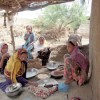
PAKISTAN: Wanted: A Revolution For Girls
Sixteen-year-old Noor Bano believes nothing short of a revolution will convince the men in Malangabad – her remote village in the Khairpur district of the Sindh province, some 460 kilometres from the southern port city of Karachi – to treat women as equals.
LIBERIA: Runoff Goes Ahead Despite Boycott and Killings
Liberians headed to the polls in what appeared to be modest numbers Tuesday morning for a presidential runoff that has been marred by an opposition boycott and the deaths of at least two demonstrators at an opposition rally.
Afghan Theatre Group Lets War Victims Tell Their Stories
On a small stage, a woman appears, grief written on her face as she wanders through the streets of Kabul, searching for her missing child. Suddenly, she stops by a scene of ruins and stares.« Previous Page — Next Page »





Women make up half the world's population, but don't nearly share half of the world's wealth, well-being and opportunity. Two-thirds of the world poor are women, disproportionally exposing women to precarious living conditions, disease and unmitigated natural disasters. The media, meanwhile, remains a male-dominated sector in much of the world, contributing to women's voices lacking a crucial amplifier to put their concerns on political agendas and unleash the development potential of their ingenuity. Rather than then stereotypical victims of local and global forces, women are also organizer, innovators, conservators and community builders. These are some of their stories.

The Week with IPS

NEXT STOP - SDGs
Tracking global progress towards a sustainable world
Tracking global progress towards a sustainable world
