Languages
Friday, November 20, 2026



News and Views from the Global South
Editors' Choice

Ugandan Teen Turns to Poultry to Fight Poverty
When Eunice Namugerwa, an 18-year-old living in Kampala’s Kisenyi slum, decided to start a business to support her family last August, she scrawled three ideas down on a bit of scrap paper: a piggery, a fashion boutique and a chicken farm.
Facing Tough Times, Barbuda Continues Sand Mining Despite Warnings
Arthur Nibbs was known for his staunch opposition to sand mining in his homeland of Barbuda, a Caribbean island with dazzling white sand beaches that comprise most of its deserted coastline.
Trapped Between Political Persecution in Eritrea and Misery of Refugee Camps
In February 2013, 20-year-old Mohamed*, like hundreds of thousands of other Eritreans, fled the brutal dictatorship in that East African nation in search of a better life in neighbouring Sudan.
Documenting Invasive Species on Colombia’s Plains
Along the unpaved road between the town of Orocué and the Wisirare private reserve in the eastern Colombian department of Casanare, biologist Juliana Cárdenas asks the driver to stop the bus so she can collect a specimen of West Indian foxtail, a kind of grass growing along the road.
Dams Threaten Mekong Basin Food Supply
The future of food security in the Mekong region lies at a crossroads, as several development ventures, including the Xayaburi Hydropower Project, threaten to alter fish migration routes, disrupt the flow of sediments and nutrients downstream, and endanger millions whose livelihoods depend on the Mekong River basin's resources.
Salvadoran Military List of Victims a Smoking Gun
The Salvadoran army kept a detailed list of names and photographs of leftists detained or sought during El Salvador’s 1980-1992 civil war. The report is the first official military document proving the armed forces’ direct involvement in forced disappearances and other abuses.
Straightening Out Accounts on Deforestation in the Brazilian Amazon
The bold strategy implemented by the Brazilian government has achieved an 84 percent reduction in deforestation in the Amazon rainforest in the last eight years. But when the natural resources and pesticides used in agricultural production are taken into account, the environmental progress made is not so impressive.
Somalia’s ‘Cultural Shift’ Means Less-Severe Form of FGM
Seven-year-old Istar Mumin lies on a bed, motionless, in one of the rooms of her family home in Mogadishu’s Hamarweyne district. She has just gone through the horrifying ritual of “the cut,” which was carried out by a local Somali nurse.
Fishing Undercuts Kiribati President’s Marine Protection Claims
A growing chorus of politicians, scientists and environmentalists are urging President Anote Tong of Kiribati to actually do what he claims was already done in 2008: create the world's most effective marine protected area in a remote archipelago in the Central Pacific Ocean.
Resurgence of Indigenous Identity in the Crossfire in Brazil
The powerful tractors and other farm machinery that landowners recently used to block roads at a dozen points from north to south in Brazil illustrated the economic clout of big agriculture, which rose up against the demarcation of indigenous reserves.
Reconstruction of Haiti Slum to Cost Hundreds of Millions of Dollars
Three years after its star-studded launch by President René Préval, actor Sean Penn and other Haitian and foreign dignitaries, the model “Corail-Cesselesse” camp for Haiti's 2010 earthquake victims has helped give birth to what might become the country's most expansive – and most expensive – slum.
Leasehold Forestry Brings a New Lease on Life
Nearly 300 km from Nepal’s teeming capital, Kathmandu, in a small village dug into the steep slopes of the mountainous Palpa district, 35-year-old Dhanmaya Pata goes about her daily chores in much the same way that her ancestors did centuries ago.
The Taliban Torches a Lifeline
The United States is laying meticulous plans ahead of its 2014 withdrawal from Afghanistan, but it has clearly overlooked how its continued drones strikes on the tribal areas of neighbouring Pakistan will affect the much-anticipated pullout.
Stealing Gas from the Poor to Power the Rich
In Kilwa District in southern Tanzania local community leader and fisherman Salim Riziki stands next to a set of turbines, newly imported from Dubai, talking about the gas finds on Songo Songo, an island 15 km off the mainland.
No Quick Fixes to Sorcery-Related Violence
Following worldwide outrage over a spate of brutal sorcery-related murders in Papua New Guinea, the government has rolled out a new hard-line approach to spiralling crime in this southwest Pacific island state.Pressure Building for U.S. to Remove Cuba from ‘Terror Sponsor’ List
Experts here are stepping up calls for the U.S. government to remove Cuba from an official list of "state sponsors of terrorism", arguing that the country's presence on the list is anachronistic and makes neither legal nor political sense.
Coming Out in Droves Against Drones
Though the constant hum of unmanned aerial vehicles flying overhead makes a strong case for staying indoors, residents of Pakistan’s North Waziristan Agency are emerging in droves from their humble homes, some no bigger than huts constructed from mud and stones.
‘Happy Prostitutes’ AIDS Campaign Sparks Debate
Happiness, the subject of endless philosophical discussions, has now become the focus of controversy in an HIV/AIDS prevention campaign aimed at prostitutes in Brazil. The campaign chief has been booted out and a further question has been raised: What are the limits of popular participation in the definition of public policies?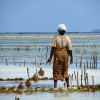
Zanzibar’s Encroaching Ocean Means Less Water
Khadija Komboani’s nearest well is filled with salt water thanks to the rising sea around Tanzania’s Indian Ocean island of Zanzibar.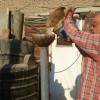
Cairo’s Poor Convert Kitchen Waste Into Fuel Savings
The bio-gas digester on the roof of Hussein Farag's apartment in one of Cairo's poorest districts provides a daily supply of cooking gas produced from the kitchen waste his family would otherwise discard in plastic bags or empty into the clogged sewer below his building.
Survivors Reluctant to Testify in New Genocide Trial
Fear and mistrust reign in Santa María Nebaj. The people of this Maya Ixil indigenous town in the highlands of northwestern Guatemala are worried about intimidation attempts to keep them from testifying again in a retrial of former dictator Efraín Ríos Montt.« Previous Page — Next Page »


The Week with IPS

NEXT STOP - SDGs
Tracking global progress towards a sustainable world
Tracking global progress towards a sustainable world
